A fine morning and six Friends met at the Cricket Pavilion at 10 am.
Litterpicking
Two of us had come to pick up litter. They made their way from the Cricket Pavilion to Crag Lane and then along to the Stairfoot Lane carpark. From the carpark they made their way north into the woods, down past the Hospice Woodland and from there through the rugby field to Crag Lane and to the King Lane carpark.
Working on Adel Bog
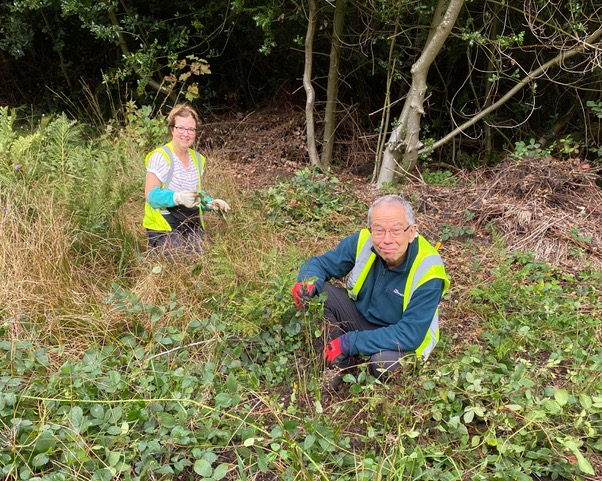
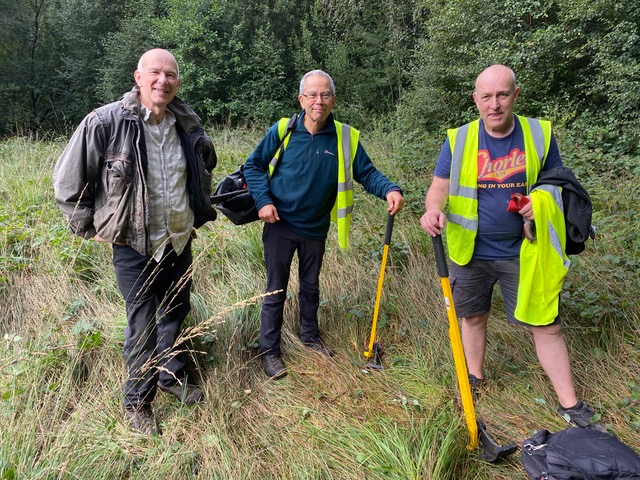
The other four of us chose to work on Adel Bog.
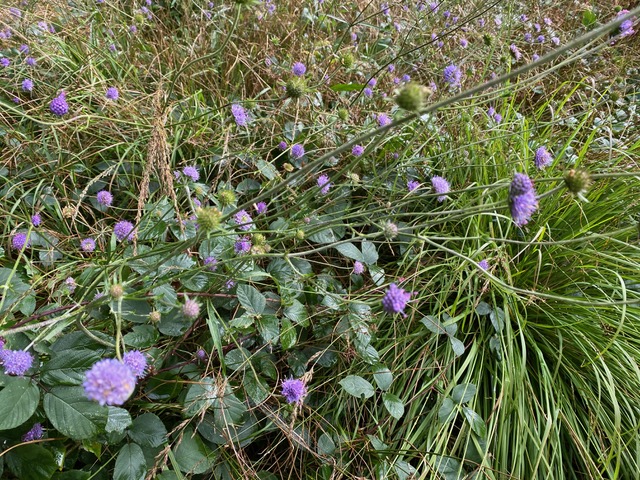
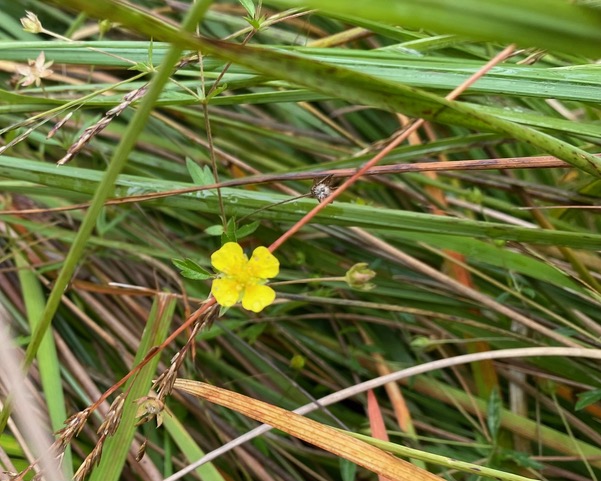
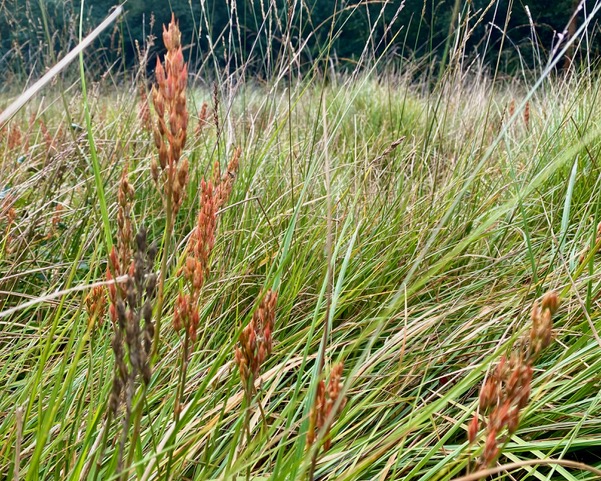
The bog is a lovely secluded part of Adel Woods near Adel Pond, and a habitat where we find rushes, flag irises, and wildflowers such as heath spotted orchids, tormentil, bog asphodel, devils bit scabious, and cotton grass. In Summer months it often has butterflies flitting around.
The bog used to reach as far as Adel Pond but has gradually reduced in size as more trees encroach on it, and today’s task was to clear saplings, brambles, and birch and oak seedlings.
Last Autumn, oak trees across the UK produced a remarkable quantity of acorns. This happens every five to ten years. The collective term for the acorns produced is “mast” and the year is called a “mast year”. Last year was a major mast year, with the largest acorn crop for at least twenty five years. You may have noticed last Autumn that when walking under oak trees in the woods or in the street, you were crunching across a thick carpet of acorns.
It is not understood why and how mast years occur. One theory is that by producing a smaller crop for several years, the oak trees keep populations of predators like squirrels, mice, and jays in check. Then when the mast year occurs, the trees produce so many acorns that the predators cannot possibly eat them all, so that some of the acorns will be untouched and germinate to grow into new trees.
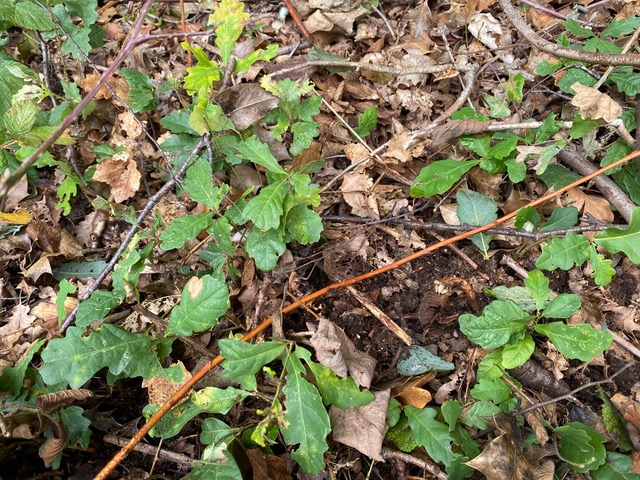
This Spring, those acorns all germinated and there were an amazing number of oak seedlings on the northern margin of the bog. Left to grow, these seedlings will soon become established and very difficult to remove, and so this morning we puled up many of them. We have lots of oak trees in Adel Woods, and only one bog. The bog is definitely a habitat worth keeping and Friends of Adel Woods and the Parks and Countryside Department have done a lot of work to conserve the bog over the last fifteen or so years.
Incidentally, jays apparently love acorns and their Latin name is “garrulus glandarius” which means something like “garrulous acorn collector”.
But we were not just removing seedlings: there were also lots of brambles to pull up, and many older saplings which we removed using our three tree poppers.
At the moment, after the long drought over the Summer, the bog is not very boggy. However, the work we have done over the years has paid off. A few years ago there was a lot of bracken in the bog. This has now virtually disappeared. Likewise, saplings are now largely confined to the edge of the bog.
Join Friends of Adel Woods
Friends of Adel Woods were formed in 2009 to help maintain Adel Woods and encourage people to enjoy them. We meet one weekend morning a month to carry out various jobs or ”work parties”, and we also put on educational events such as bat walks, fungal forays and birdsong walks.
We are a very friendly group and welcome new members who want to help preserve our special woods, enjoy fresh air, exercise in the woods, and make new friends.
If you would like to take part in our activities, keep an eye on our Home Page. You don’t need to book to come along to one of our work “parties”: just come along!
If you would like to join our email mailing list, please get in touch by leaving a comment on this website – you should be able to see a comment box at the bottom of this page.


