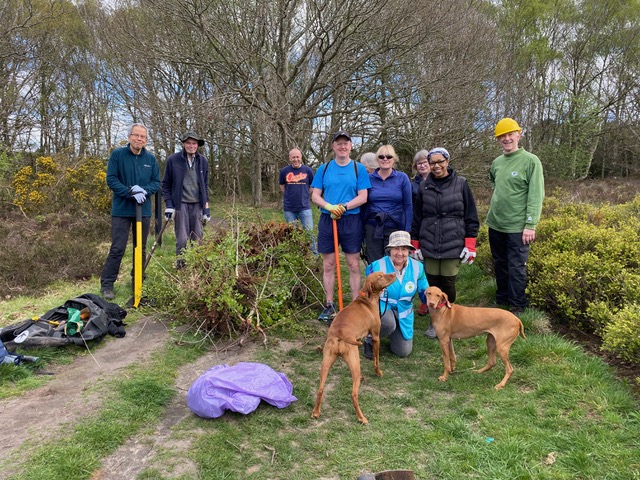
The Lord Mayor and Lady Mayoress of Leeds with proud representatives of local groups
Today Councillor Dan Cohen, the Lord Mayor of Leeds, hosted a reception for members of Friends of Adel Woods, Friends of Wigton Moor Woods, and Friends of Heath Nursery Woods at the Civic Hall in recognition of the work they do in looking after the community land in their local areas.
A certificate awarded to the Friends of Adel Woods
Following refreshments in the HMS Ark Royal room, which houses the bell of the fifth HMS Ark Royal, and presenting certificates of recognition, Dan took us on a fascinating tour of the Civic Hall.
Leeds has a historic link to ships named Ark Royal since raising funds of over £9m during the Second World War to build a fourth Ark Royal after the third Ark Royal was torpedoed in 1941.
Members of Friends of Adel Woods with the Lord Mayor and Lady Mayoress of Leeds, and local councillors Lyn and Neil Buckley(rear left) in the Reception Hall of the Civic HallThe whole group with the Lord Mayor and Lady Mayoress of Leeds
Thank you to the Lord and Lady Mayoress: we all thoroughly enjoyed our visit.
About Friends of Adel Woods
We hope that you have enjoyed reading about Friends of Adel Woods and would be delighted if you would like to join us. The mental and physical health benefits of getting out in the countryside and social contact are well-known.
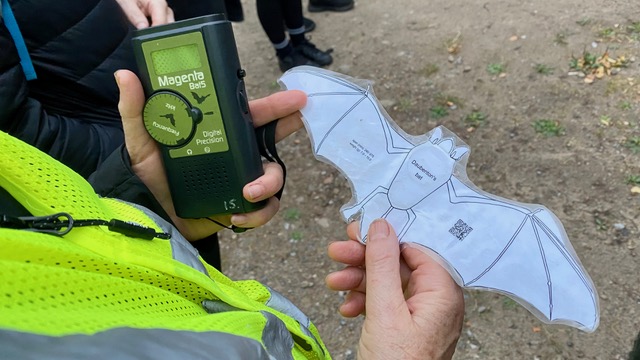
Friends of Adel Woods were formed in 2009 to help maintain Adel Woods and encourage people to enjoy them. We meet one weekend morning a month to carry out various jobs or ”work parties”, and we also put on educational events such as bat walks, fungal forays and birdsong walks.
We are a very friendly group and welcome new members who want to help preserve our special woods, enjoy fresh air, exercise in the woods, and make new friends.
If you would like to take part in our activities, keep an eye on our Home Page. You don’t need to book to come along to one of our work “parties”: just come along!
If you would like to join our email mailing list, please get in touch by leaving a comment on this website – you should be able to see a comment box at the bottom of this page.
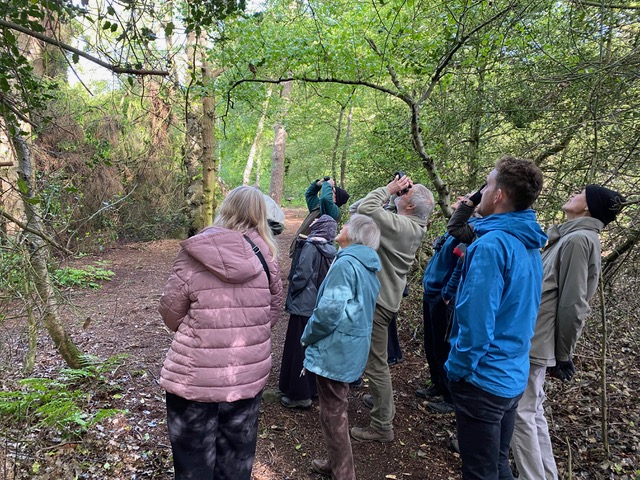
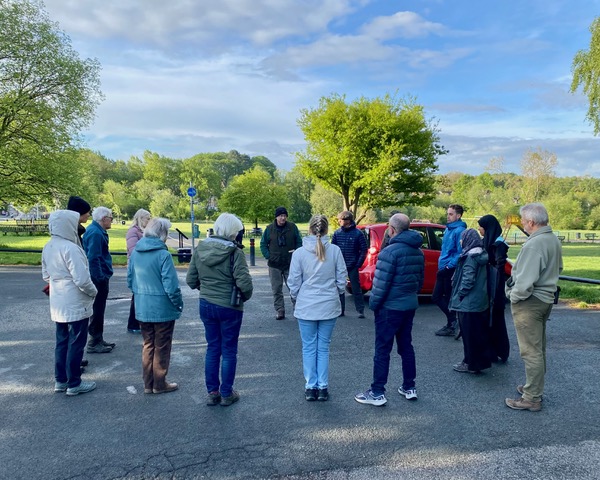
A birdsong walk led by local naturalist Steve Joul on the 4th May 2025
A beautiful morning and twelve volunteers met by the cricket pavilion at 10 am. Five of us chose to litterpick and seven to work on Adel Bog.
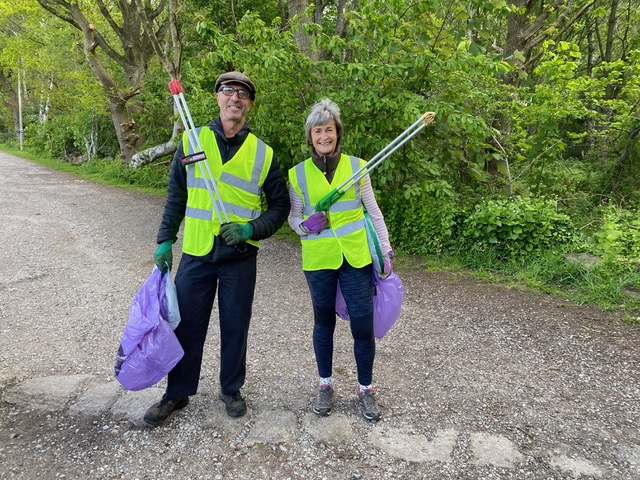
Litterpicking – five volunteers, coat hangers and a lot of poo bags!
Some of our litterpicking equipment
The five litterpickers split into two teams of two and one Friend who likes to pick up litter while walking her dog Coco.
One team worked their way up to Crag Lane and then along Crag Lane to the Stair Foot Lane carpark. In the carpark they found lots of litter, especially paper towels and a lot of bagged dog poo bags in the bushes. In all they collected about forty poo bags. In addition they found a number of empty pop cans and bottles. One of the team also took the opportunity saw off a branch that was blocking one of the paths.
The other team picked up litter from the Village Green, filling one bag with coat hangers, a full bottle of hand sanitizer and metal rods as well as the usual plastic bags, cans, and poo bags.
Our solo litter picker picked up two bags of litter, making her way though the woods to Gemma’s field, around Adel Crag and then back through the disused rugby field. After taking Coco home, she returned to pick up litter from around the edges of the Village Green. She found two areas where rubbish had been deliberately buried – five beer bottles and twenty to thirty Martin House charity bags.
Restoring Adel Bog – a team effort
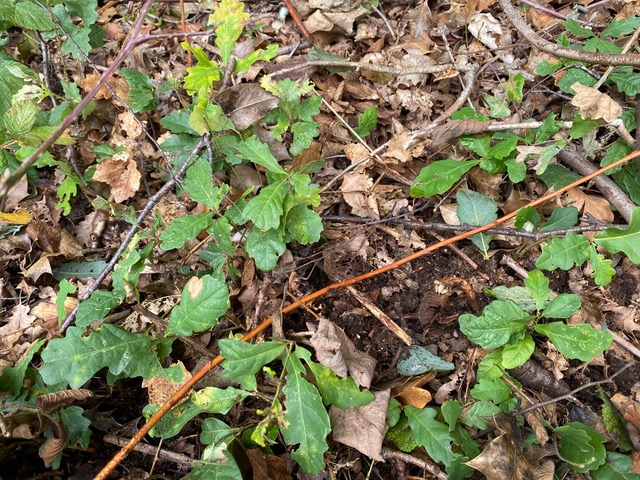
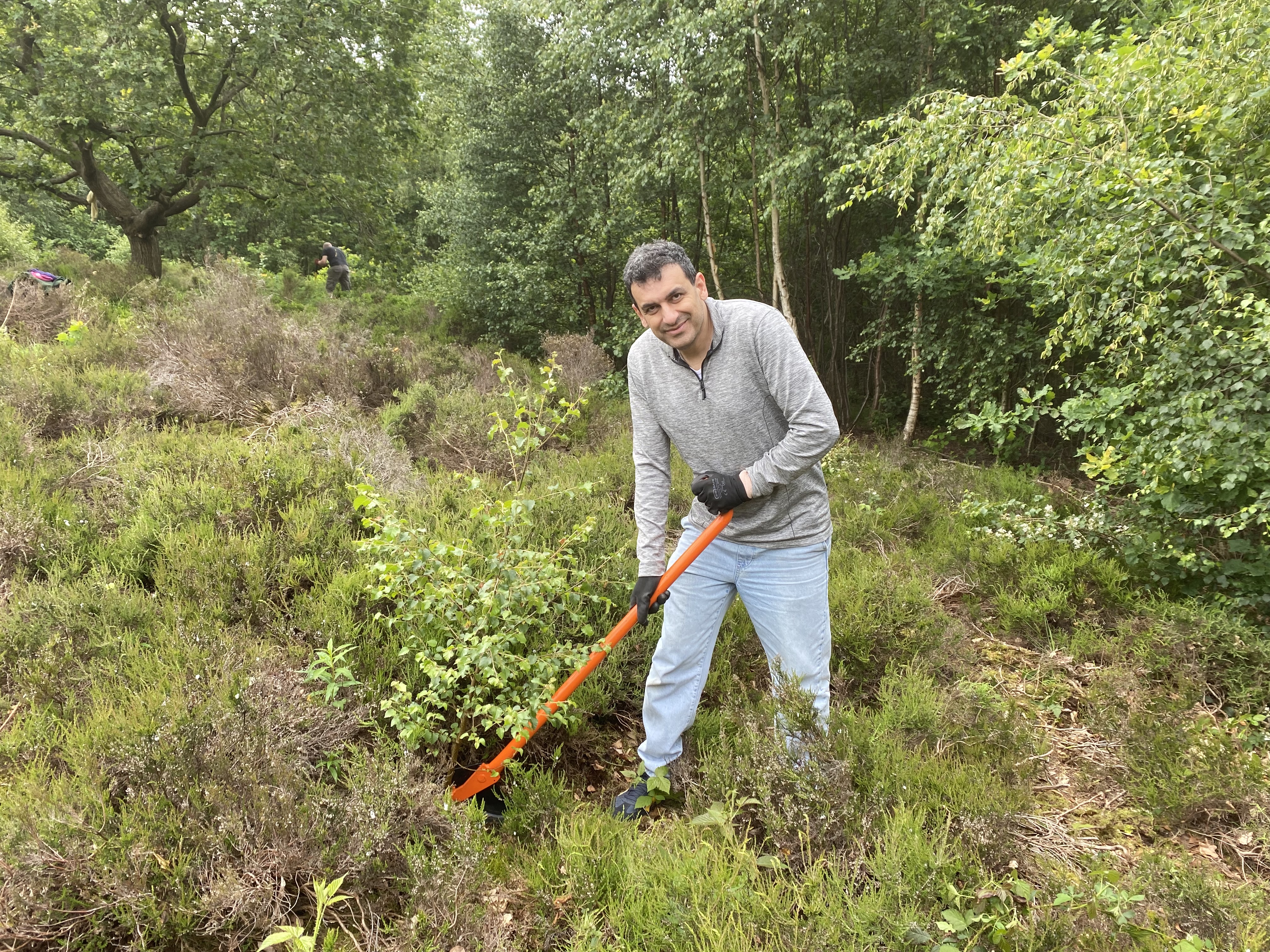
Using one of our tree poppers: – yes, there is a sapling in the photo!
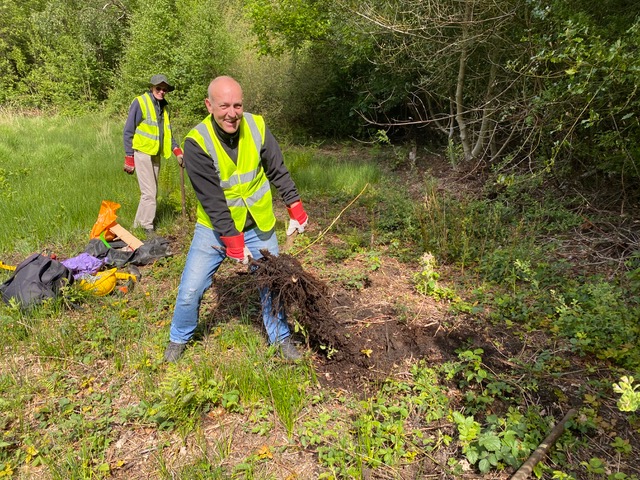
Friends of Adel Woods have been working on Adel Bog since 2011, removing saplings, bracken and brambles.
Today we were working mainly on the northern edge of the bog, where the boundary has moved several metres southwards because we were unable to do as much work during the Covid lockdowns.
We made full use of our three tree poppers bought with the aid of grants from Alwoodley Parish Council. These amazing tools enable us to pull up small saplings in a fraction of the time it would take to remove them using mattocks.
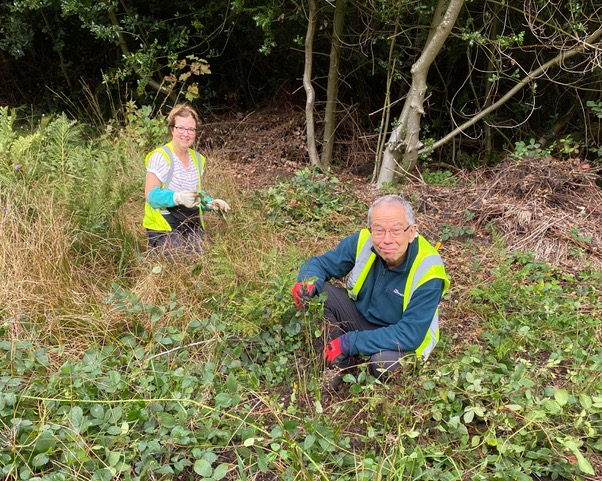
Two Friends enjoying a chat – with the dead hedge on the western boundary in the background
We also cut back a lot of the branches of larger trees – especially holly – which were reaching out over the bog.
We used the saplings, branches and brambles to build up the dead hedge created by ranger David Preston on the southern and western boundaries of the bog.
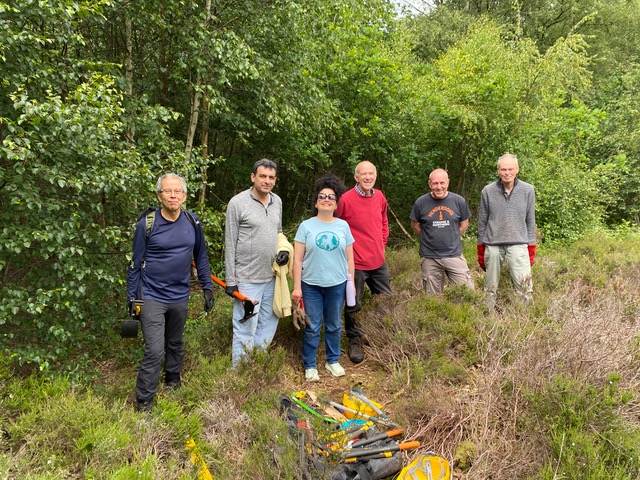
The happy team at the end of a morning’s work!
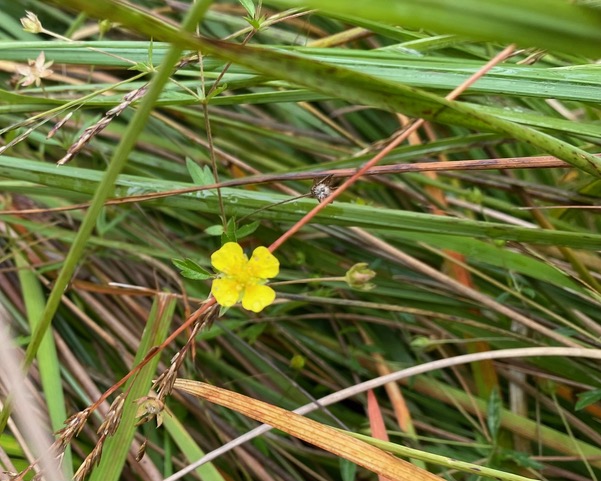
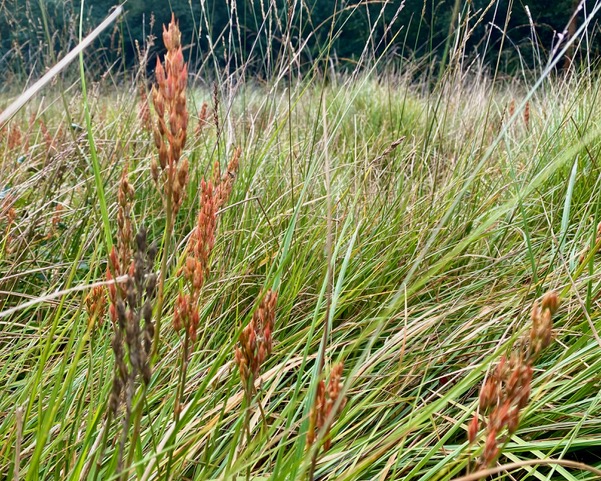
Whilst the bog may look very dry in the photos, it was actually pretty wet and in a couple of months it will be full of wild flowers such as heath spotted orchids, bog asphodel and torrential.
Looking eastwards across the bog
About Friends of Adel Woods
We hope that you have enjoyed reading about our activities and would be delighted if you would like to join us. The mental and physical health benefits of getting out in the countryside and social contact are well-known.
Friends of Adel Woods were formed in 2009 to help maintain Adel Woods and encourage people to enjoy them. We meet one weekend morning a month to carry out various jobs or ”work parties”, and we also put on educational events such as bat walks, fungal forays and birdsong walks.
We are a very friendly group and welcome new members who want to help preserve our special woods, enjoy fresh air, exercise in the woods, and make new friends.
If you would like to take part in our activities, keep an eye on our Home Page. You don’t need to book to come along to one of our work “parties”: just come along!
If you would like to join our email mailing list, please get in touch by leaving a comment on this website – you should be able to see a comment box at the bottom of this page.
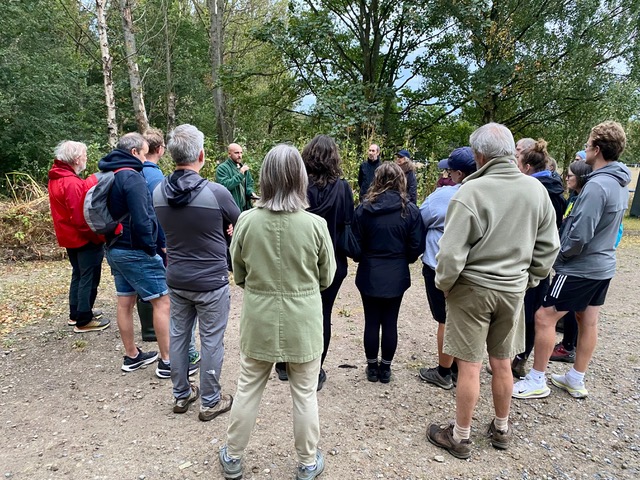
A Fungal Foray led by Steve Joul of Friends of Adel Woods
Another dire weather forecast, but six of us met up in the Stairfoot Lane carpark at 10 am – and as usual the weather was far better than predicted. In fact we had no rain until the odd spot as we finished our morning’s work.
One of us chose to litterpick, while the rest of us walked along Crag Lane to the disused rugby field to give some TLC to the fruit trees which Steve Joul and his son planted there in March 2021. At the time, Steve was Parks and Countryside Ranger with Leeds City Council. You can find out more about the trees and the reason for planting them in our post for 18th March 2021
Steve and his son also gave a lot of their own time to water the trees in the dry Summers of the last four years, and last February Steve and yours truly braved very cold weather to put tree guards around the trunks of the trees to prevent deer damage. We were pleased today to see that all the tree guards were still securely in place and the trees were all doing well.
Before…
When the trees were planted the area was all grassland, as can be seen in the post for 18th March 2021, and it was quite a suprise to find that most of the trees were surrounded by bracken, as can be seen in the photograph above. The area of bracken has increased very substantially even since last February as can be seen for the post for that date.
So today we spent an hour and a half clearing bracken and brambles from around the trees.
and after! (Steve in the centre of the photo)Some of the bracken and brambles removed by our trusty volunteers
As we completed our task, our wonderful lone litter picker arrived to have a look at what we had achieved.
Her litterpicking journey had taken her from the Stairfoot Lane car park, through the woods behind Adel Crag, across Gemma’s field to the Village Green. She focused on the edges of the Green where there was a lot of rubbish. From there she came back for a circuit around the disused rugby field. After dropping in to see us, she made her way back to pick up litter on the opposite side of the Green, finishing – beyond the call of duty – at 12.30 pm, having collected two bags of rubbish.
COME ALONG TO FRIENDS OF ADEL WOODS EVENTS!
We hope that you have enjoyed reading about our activities and would be delighted if you would like to join us in carrying out the important work of looking after our local woods.
Friends of Adel Woods were formed in 2009 to help maintain Adel Woods and encourage people to enjoy them. We meet one weekend morning a month to carry out various jobs or ”work parties”, and we also put on educational events such as bat walks, fungal forays and birdsong walks. Our next educational work event will be a birdsong walk at the beginning of May.
We are a very friendly group and welcome new members who want to help preserve our special woods, enjoy fresh air and exercise in the woods, and make new friends. If you would like to take part in our activities, keep an eye on our Home Page and come along to one of our work parties.
If you would like to join our email mailing list, please get in touch by leaving a comment on this website – you should be able to see a comment button at the bottom of this page.
On Saturday and Sunday, we were unable to find three of our nest boxes. On Monday and Tuesday yours truly had a quick look and found them easily – we must have been tired at the weekend.
One was a robin box and it was unused.
The other two were tit boxes and a ladder was needed to survey them, so Steve Joul and yours truly went out today to have a look.
Surveying nest box 32
One of the nest boxes contained a tit nest. The other contained a small amount of nesting material but no nest. Because this nest box was a lot smaller than other nest boxes, and it has never been used for nesting, we replaced it with a larger refurbished nest box.
Preparing to put our replacement nest box on the tree!
And to Conclude: a Summary of our January 2026 Nest Box Survey
Friends of Adel Woods currently have 41 nest boxes in Adel Woods – in Alwoodley Crags plantation, along Crag Lane and along the Meanwood Valley Trail between Adel Crag and the Seven Arches aqueduct.
Of the 41 nest boxes, 36 are tit boxes, 4 are robin boxes and one was intended to be a treecreeper nest box (more about that below!).
The tit boxes
We have a record of what we found in 26 of the 27 tit boxes – in the excitement we forgot to write down what we found in one of them!
Of the 26, 17 contained successful nests. 4 contained unfinished nests. 7 were used for roosting (indicated by droppings) of which 4 did not contain nests or nesting material.
So, in summary, 25 of the 26 tit nests were used – 17 for nesting, 4 for attempted nesting, and 4 for roosting only.
As in previous years we found that the nests were built using moss, grass and straw, and many nests contained man-made fuzzy material like the surface of tennis balls. The man-made material was of varying colours – white, red, orange, green and yellow.
Five of the nests contained 1 unhatched egg which indicates that on the whole all of the nests were very successful. In previous years we have found nests with a number of unhatched eggs, and sometimes a number of skeletons of chicks.
A typical tit nest photographed in January 2024 – unusually containing a clutch of 8 unhatched eggs
In previous years, we have often found that one or two of the nest boxes are used by nuthatches, but this year there were no nuthatch nests. Their nests are easy to spot from the outside because nuthatches seal up all holes and cracks in the nest box with mud. The nest itself is very different from a tit nest: the nesting material consists solely of bark chips so that the nest looks like a bowl of bran flakes!
A nuthatch nest photographed in our January 2019 survey
Some of the nest boxes provided homes for other creatures. Many contained spiders of varying species. Some of the nest boxes also provided a home for woodlice and slugs
Several of the nest boxes contained larvae of clothes moths.
One nest box contained a tit nest, a tree bumblebee nest and wax moth cocoons: see our blog for Sunday 25th January for more details.
The robin boxes
One of the Friends of Adel Woods robin boxes
Robins usually nest close to the ground and like an open nest. For this reason, robin boxes have an open front as shown in the photograph. They will not nest in tit boxes, but have been known to nest in old kettles, lanterns, flower pots, car bonnets, boots, post boxes and even clothes pockets.
Of the 4 robin boxes, 3 were completely unused and 1 contained some nesting material but no nest. In previous years, tits have occasionally nested in a robin box and so it is likely that the nesting material was put there by tits – it certainly looked like typical tit nesting material.
One of the robin boxes contained a population of springtails which was a first for yours truly.
The treecreeper nest box
The treecreeper nest box in Adel Woods
We put up the treecreeper nest box in January 2015. As you can see from the photograph it is very deep, and rather than having a round hole in the front, it has a slit in the right hand side as treecreepers like to nest in the cracks behind loose bark.
We have never had treecreepers nest in the box. One year we had a successful tit nest. More often we have found that squirrels have used the box for nesting and filled the box with small leaves. One year we found a mummified squirrel in the box!
This year we found a large amount of mossy material in the box but no nest.
About Friends of Adel Woods
We hope that you have enjoyed reading about our activities and would be delighted if you would like to join us.
Friends of Adel Woods were formed in 2009 to help maintain Adel Woods and encourage people to enjoy them. We meet one weekend morning a month to carry out various jobs or ”work parties”, and we also put on educational events such as bat walks, fungal forays and birdsong walks.
We are a very friendly group and welcome new members who want to help preserve our special woods, enjoy fresh air and exercise in the woods, and make new friends.
If you would like to take part in our activities, keep an eye on our Home Page. You don’t need to book to come along to one of our work “parties”: just come along!
If you would like to join our email mailing list, please get in touch by leaving a comment on this website – you should be able to see a comment box at the bottom of this page.
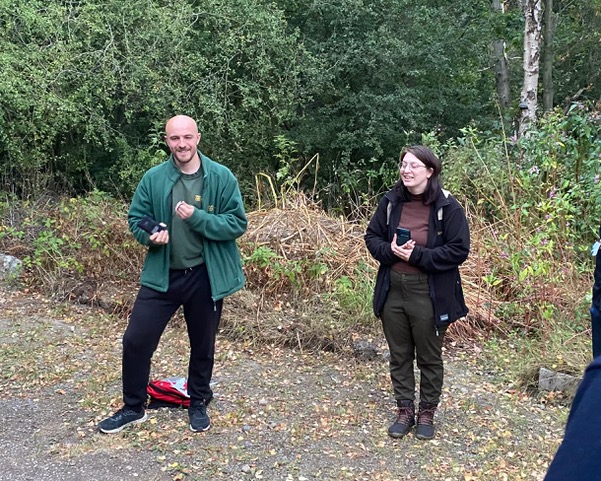
Working with ranger Joe Craig-Jackson on the orchid meadow
This was the second day of our annual nest box survey. To find out more, have a look at our blog post for day one, the 24th January, and our blog post of the 28th January summarising what we found.
Sunday morning
Another dire weather forecast for today and at 8 am it was raining hard. After exchanges of messages, it was agreed that we would meet as agreed at 9.45 and make a decision whether to go ahead at that time.
By 10 am six of us including Steve Joul and yours truly had gathered, and as the rain was becoming intermittent we set off into the woods at 10.30 am.
Our starting point today was nest box 42 just by Adel Pond, and so we made our way there along Crag Lane and then down to the Cricket Pavilion. On the path down to the Slabbering Baby we paused to remove a small tree which had fallen across the path overnight.
Finishing off the job – the tree was a lot bigger than shown!
When we surveyed box 42, we found it contained a tit nest and one unhatched egg.
It is quite hard to say whether any particular nest box was used by great tits or by blue tits as their nests are made with similar materials and are very similar in appearance. The best indicators are the size of the entrance hole to the nest, and the size of any eggs left in the nest.
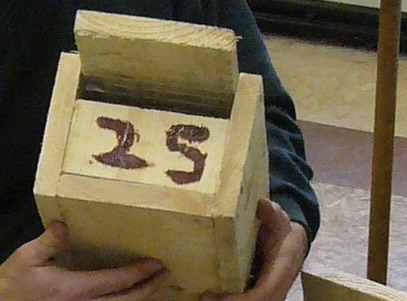
Our nest boxes have varying hole sizes: 25mm, 28mm and 32 mm. Blue tits are smaller than great tits and can get in through a 25mm hole while great tits can’t, so if the nest box has a 25mm hole, we can say it was used by blue tits. The larger holes are suitable for both blue tits and great tits.
Both blue tit eggs and great tit eggs are creamy coloured with brown speckles. However, they differ slightly in size. Different authorities give different sizes, but the Woodland Trust says that blue tit eggs are 1.6 x 1.2 cm in size, while great tit eggs are 1.8 x1.4 cm in size. It is difficult to measure these sizes accurately and there is of course variation between eggs of the same species.
Examining a tit nest with lots of man made fibres and containing one unhatched egg
We surveyed a further five nest boxes going down the Meanwood Valley Trail before lunch, leaving ten for the afternoon.
Weather beaten at lunchtime, but unbowed!
Sunday afternoon
The weather was much better in the afternoon and we managed to survey all the remaining nest boxes, save for one which we could not find.
Nest box 31 with a fibrous mass of wax moth cocoons on and around the lid
Our most exciting find of the afternoon was in box 31. It was quite difficult to open the lid, and when we opened it we found that the problem was caused by a mass of fibrous material holding the lid shut. Steve immediately identified this as the cocoons of the wax moth. If you look at the photograph above you can see that the moth larvae have used the wood of the box to make the cocoons.
The remains of a tree bumblebee nest, and hibernating queen, amidst the remains of a tit nest
Steve prophetically said that there would be a bee’s nest because wax moth larvae eat the wax of bees nests, and sure enough, as we opened the nesting material, we found the remains of a bumblebee nest. It is the blue-green material in the centre of the photograph above.
As we examined the material further we discovered a very sleepy hibernating queen tree bumblebee. We identified her by the ginger brown top to her thorax and white tail. We disturbed her as little as possible, closed the nest material up, and carefully placed all the material in the dry hollow of a tree.
The hibernating tree bumblebee queen
The nest box tells quite a story. Firstly, a pair of blue tits or great tits nested and raised their brood. Then a queen bumblebee moved in and built a nest and produced a colony of bees. Next the wax moths moved in and consumed the wax, honey and pollen in the beehive – moths do not eat the bee larvae or adult bees. Finally, a queen tree bumblebee born into the bee colony hibernated in the nest box.
Three of our team and a member of FOAW who stopped by to give us some encouragement
We finally completed this afternoon’s survey at about 4.15.
To find out how many of our nest boxes provided a home to our local population of blue tits and great tits, have a look at our blog entry for Wednesday the 28th January.
Join Friends of Adel Woods
We hope that you have enjoyed reading about our activities and would be delighted if you would like to join us.
Friends of Adel Woods were formed in 2009 to help maintain Adel Woods and encourage people to enjoy them. We meet one weekend morning a month to carry out various jobs or ”work parties”, and we also put on educational events such as bat walks, fungal forays and birdsong walks.
We are a very friendly group and welcome new members who want to help preserve our special woods, enjoy fresh air and exercise in the woods, and make new friends.
If you would like to take part in our activities, keep an eye on our Home Page.
You don’t need to book to come along to one of our work “parties”: just come along on the day.
If you would like to join our email mailing list, please get in touch by leaving a comment on this website – you should be able to see a comment box at the bottom of this page.
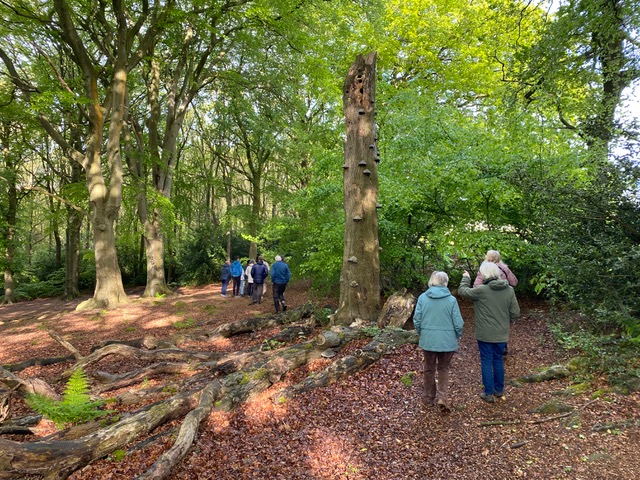
A fungal foray with Steve Joul on the 26th October 2025
As you walk along Crag Lane, wander through Alwoodley Crag Plantation (the area north of Crag Lane between King Lane and the rugby club), or hike along the Meanwood Valley Trail between the picnic area and Seven Arches, you will see an assortment of nest boxes.
These were put up by Friends of Adel Woods under Steve Joul’s tutelage from 2010 onwards. In all we have put up forty one and in each year since 2011 (except for 2021) we have surveyed them, cleaned them out, and repaired them where necessary.
One of our nest boxes damaged by squirrels or woodpeckers: part of the wooden roof has gone and the metal plate protecting the hole is very badly damaged
We clean them out because tits and nuthatches (the birds which are most likely to use our nest boxes) don’t re-use old nests. We know this because we were not able to survey the nest boxes in 2021 due to Covid, and when we surveyed them in 2022 (ie to see how the birds had fared in the 2020 and 21 breeding seasons) we found new nests had been built on top of the previous year’s nests!
Whilst the birds can clearly get by if the nest boxes are not cleaned out, we often find that the old nests are full of mites or fleas, or that the old nesting material is very wet and rotten. Frequently, the nest box may contain bird droppings. It is therefore a good idea to give the birds a fresh start each nesting season.
By the way, if we find droppings in the nest box, it is a sign that the nest box has been used for roosting by adult birds outside the nesting season. Birds do not defecate in the nest during the breeding season. In fact, the parents take away the chicks droppings.
Today was the first day of our 2026 survey.
Saturday morning
The weather forecast for this weekend was pretty dire. Nevertheless, we had an excellent turnout of six “Friends” and we set off into the woods with our ladders and equipment at about 10.15 am.
This morning we surveyed, cleaned and refurbished the nest boxes in Alwoodley Crags Plantation, starting with nest boxes 17 and 5, and finishing at 12.30 pm
A typical tit nest taken from one of the boxes this morning
Most of the tit boxes had been used. but neither of the two robin boxes had been used – presumably because our local robins can find plenty of natural nesting sites.
Great tits and blue tits make very similar nests from moss, grass, dog hair, and man made fibres which seem to come from tennis balls. You can see white and red fibres in the photograph above. In other nests we found yellow, green and even blue man-made fibres.
It is not unusual to find an unhatched egg in the nest. Bearing in mind that great tits lay a clutch of seven to nine eggs on average (according to the BTO), it is likely that all the other eggs hatched and the chicks fledged.
Cleaning out one of our tit boxes
Other things we might find in our nest boxes are clothes moth larvae, wax moth larvae, other insects, spiders and slugs.
The end of an enjoyable and interesting morning
As can be seen from the photographs, despite the forecast of rain all day we had a perfect morning for surveying our nest boxes
Saturday afternoon
In the afternoon, we had a team of four and we completed surveying the nest boxes along Crag Lane, and then made our way down the Meanwood Valley Trail from the picnic area to Adel Pond.
We finished work at about 4.15 pm by which time we had made our way down to, and surveyed, nest box 35.
Repairing damp proof protection to a nest box.
Please read our blog for details of the second day of our survey on Sunday the 25th January. A full report on our survey results will be included in a third blog post for the 28th January 2026.
About Friends of Adel Woods
We hope that you have enjoyed reading about our activities and would be delighted if you would like to join us.
Friends of Adel Woods were formed in 2009 to help maintain Adel Woods and encourage people to enjoy them. We meet one weekend morning a month to carry out various jobs or ”work parties”, and we also put on educational events such as bat walks, fungal forays and birdsong walks.
We are a very friendly group and welcome new members who want to help preserve our special woods, enjoy fresh air and exercise in the woods, and make new friends.
If you would like to take part in our activities, keep an eye on our Home Page.
You don’t need to book to come along to one of our work “parties”: just come along.
If you would like to join our email mailing list, please get in touch by leaving a comment on this website – you should be able to see a comment box at the bottom of this page.
Despite a misty and damp day and an unpromising weather forecast, eleven of us met by the Cricket Pavilion, bright-eyed and bushy-tailed, for this morning’s work party.
Five of us chose to litterpick, and six to clear holly on the Meanwood Valley Trail.
Litterpicking
“Despite the murky weather I enjoyed my litter picking walk through the woods.”
Our litterpickers picked up about five bags of rubbish between them. They ranged widely through the woods: around the rugby club, along Crag Lane, through the plantation woodland and the Stairfoot Lane carpark. They collected the usual stuff: sweet/crisp wrappers, bottles, poo bags and broken glass and found a car battery which had been dumped near Stairfoot Lane.
One of our litterpickers brought a saw so that she could clear some fallen logs on three paths in the northern part of the woods.
Path Clearing in Alwoodley Plantation
Path clearing on the Meanwood Valley Trail
We path clearers made our way down from the Cricket Pavilion to the pond, and and from there proceeded up the Meanwood Valley Trail as far as the picnic area, trimming back holly on our way.
Another successful morning! And a big thank you to all our volunteers!!
By the way, we left our off-clippings in the woodland on either side of the trail in accordance with guidance from Leeds City Council. However, someone has moved clippings into the centre of the trail – possibly to provide a surface on top of the mud. It wasn’t us!
About Friends of Adel Woods
We hope that you have enjoyed reading about our activities and would be delighted if you would like to join us.
Friends of Adel Woods were formed in 2009 to help maintain Adel Woods and encourage people to enjoy them. We meet one weekend morning a month to carry out various jobs or ”work parties”, and we also put on educational events such as bat walks, fungal forays and birdsong walks.
We are a very friendly group and welcome new members who want to help preserve our special woods, enjoy fresh air and exercise in the woods, and make new friends.
If you would like to take part in our activities, keep an eye on our Home Page.
You don’t need to book to come along to one of our work “parties”: just come along!
If you would like to join our email mailing list, please get in touch by leaving a comment on this website – you should be able to see a comment button at the bottom of this page.
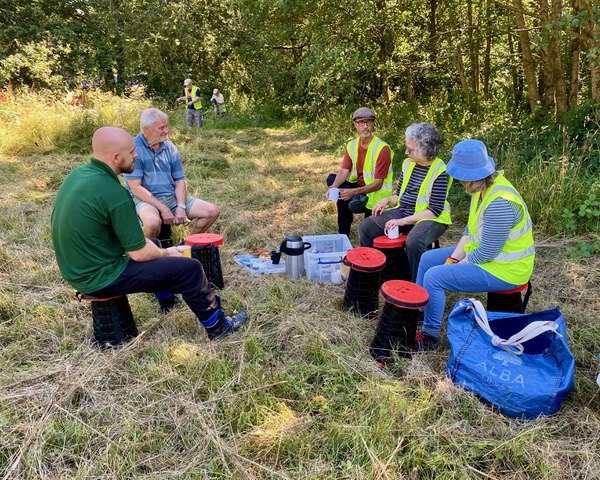
A pleasant and dry morning, and nine of us gathered by the cricket pavilion at 10 am for a morning of sprucing up the woods by picking up litter and clearing paths. Three of us chose to litterpick and the rest of us to clear paths.
Path clearing
The path clearers started with the “diagonal” path leading from Crag Lane into and westwards through the Plantation. This was fairly clear as we did some work on this path in February. Nevertheless we found a couple of branches to remove and plenty of holly to cut back.
The path alongside the disused rugby pitch
We then worked on the path from the plantation down to Crag Lane alongside the disused rugby field. We spent about an hour on this path cutting back holly and pulling up brambles in order to widen the path.
Due to other commitments, we finished work at 11.45 but we still achieved a lot this morning – as well as enjoying pleasant company and interesting conversation.
At the end of the morning
One of our litterpicking team joined us for the last half hour or so.
Five of our happy team
Litterpicking
Our litterpicking team walked up to Crag Lane and then turned right to go up the path alongside the disused rugby field. They then made their way to the Hospice Woodland, turned left down to the Stairfoot Lane carpark and returned to the cricket pavilion via Crag Lane. They picked up a bag of rubbish – a lot of it being full dog poo bags 🤢🤢.
One of our litterpicking team with some of our litterpicking equipment
About Friends of Adel Woods
We hope that you have enjoyed reading about our activities and would be delighted if you would like to join us.
Friends of Adel Woods were formed in 2009 to help maintain Adel Woods and encourage people to enjoy them. We meet one weekend morning a month to carry out various jobs or ”work parties”, and we also put on educational events such as bat walks, fungal forays and birdsong walks.
We are a very friendly group and welcome new members who want to help preserve our special woods, enjoy fresh air and exercise in the woods, and make new friends.
If you would like to take part in our activities, keep an eye on our Home Page.
You don’t need to book to come along to one of our work “parties”: just come along!
If you would like to join our email mailing list, please get in touch by leaving a comment on this website – you should be able to see a comment button at the bottom of this page.
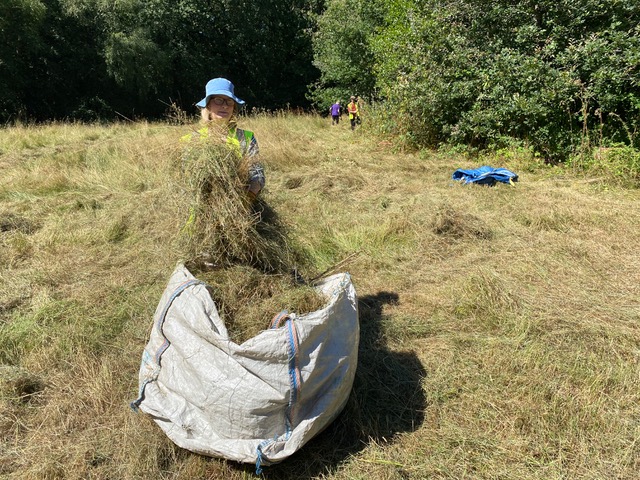
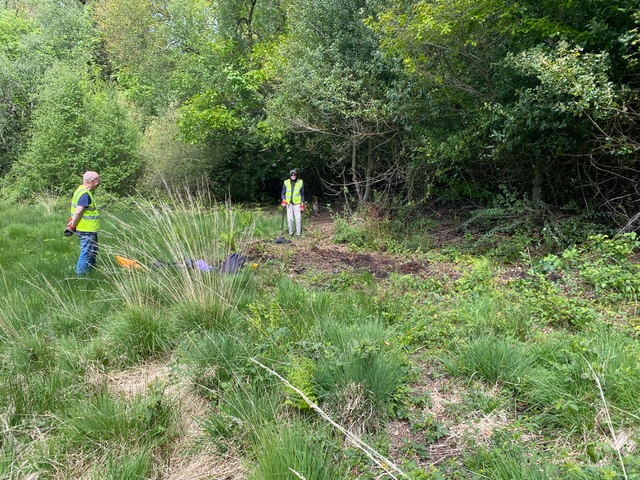
Today, despite an unpromising weather forecast, we had a magnificent turn out of fifteen volunteers, six to litterpick, and nine to help Joe Craig-Jackson, our local ranger, to work on Adel Bog.
Litterpicking
Our team of six litterpickers divided into a trio, a duo and a soloist who took separate routes covering the Village Green, the disused rugby field, Crag Lane, Adel Crag, the Stairfoot Lane carpark, the path along Adel Beck, and the path through the woods from the pond to Stairfoot Lane.
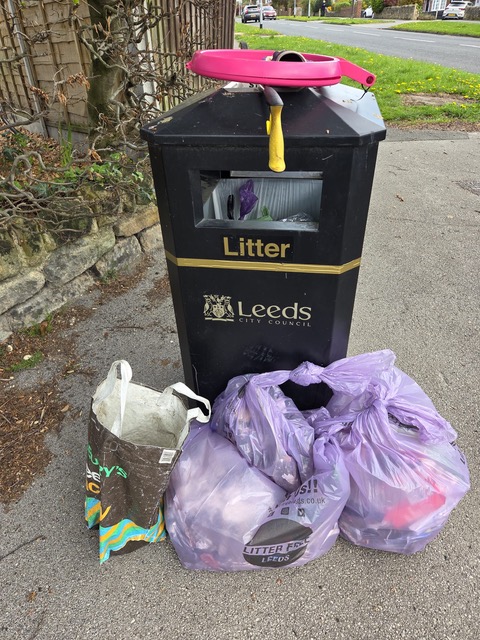
Between them they picked up four bags of litter including lots of wipes, a nitrous oxide cylinder, a large car carpet, a condom, poo bags, sweet and snack wrappers, bottles, cans, two items of clothing and an old Nokia phone.
Some of our litterpicking equipment after the event
Adel Bog
Adel Bog is a lovely secluded part of Adel Woods. In 2010 the Bog was in a poor state as it had been taken over almost in its entirety by Purple Moor Grass, though it still had populations of wild flowers such as heath spotted orchid and bog asphodel.
In 2011 the British Trust for Conservation Volunteers carried out improvement works on the bog, funded in part by a grant from Alwoodley Parish Council. Since then Friends of Adel Woods have worked to maintain the bog, removing bracken, saplings and brambles, and putting a dead hedge around its southern and western boundaries.
“I really enjoyed tackling those brambles, it was very satisfying.”
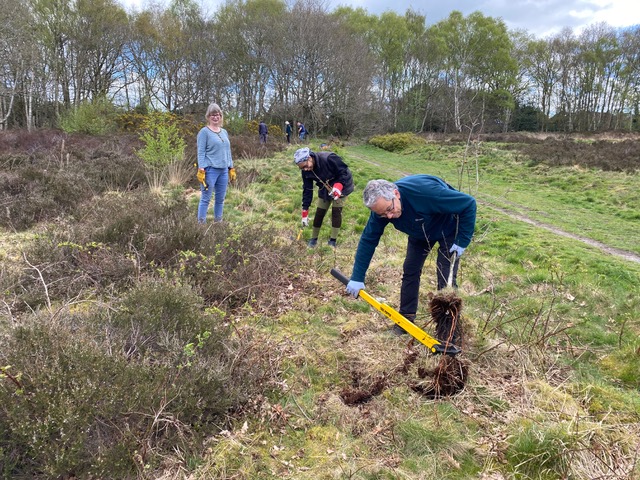
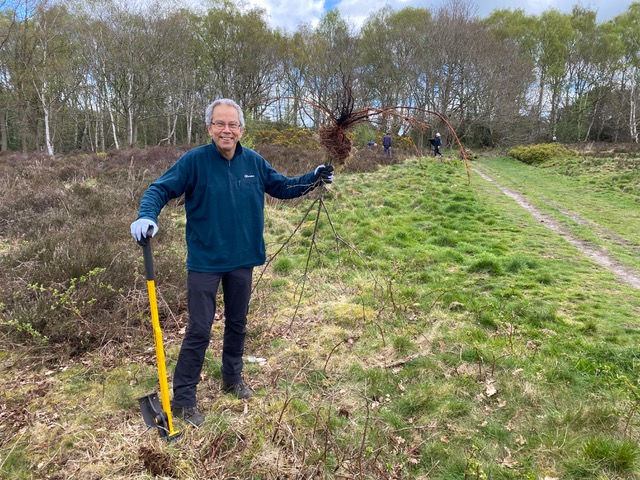
Today we continued our work under the guidance of our local ranger, Joe Craig-Jackson. We also put to good use three tree poppers purchased with the aid of grants from Alwoodley Parish Council. Tree poppers are wonderful tools which enable you to remove a sapling with a trunk size up to about 3 centimetres in a fraction of the time it would take with a mattock or a spade. Today we removed many saplings and lots and lots of brambles.
Joe with some of the Friends of Adel Woods
On the way back to our cars at lunchtime, we passed Adel Pond and were delighted that it is in much better condition than it was over the Summer – see our report on the 19th October – though it still needs work to repair a leak.
Adel Pond: water is leaking from under the bridge on the far side
Grant from Alwoodley Parish Council
Friends of Adel Woods are very grateful to Alwoodley Parish Council for a grant in October this year for the purchase of two tree poppers. The council had previously given us a grant for the purchase of our first tree popper in Autumn 2023.
A tree popper is basically a lever with a jaw at the bottom. You put the jaw around the sapling trunk and lever it out of the ground. The tree poppers enable us achieve far more in a morning’s work when removing saplings from Adel Bog, Adel Moor, the orchid meadow and anywhere else in the woods.
Join Friends of Adel Woods
We hope that you have enjoyed reading about our activities and would be delighted if you would like to join us.
Friends of Adel Woods were formed in 2009 to help maintain Adel Woods and encourage people to enjoy them. We meet one weekend morning a month to carry out various jobs or ”work parties”, and we also put on educational events such as bat walks, fungal forays and birdsong walks.
We are a very friendly group and welcome new members who want to help preserve our special woods, enjoy fresh air and exercise in the woods, and make new friends.
If you would like to take part in our activities, keep an eye on our Home Page.
You don’t need to book to come along to one of our work “parties”: just come along. Our next work party is on Sunday 14th December 2025 when we will be litterpicking and clearing paths.
If you would like to join our email mailing list, please get in touch by leaving a comment on this website – you should be able to see a comment button at the bottom of this page.
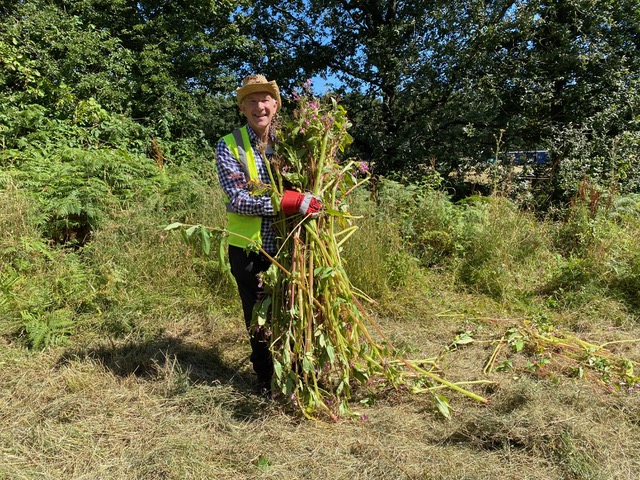
Steve shows a specimen to an enthusiastic audience
This was our second Fungal Foray with Steve Joul this October: our Foray on the 5th October was so overbooked that we hardly needed to advertise this one!
We met at 1.45 pm in the Village Green carpark where our Chair welcomed our participants, introduced Steve, and explained that this was not a foraging event for edible fungi, but an opportunity to learn about the many and varied fungi to be found in Adel Woods.
After the Chair’s introduction, Steve led us along Crag Lane into the woods and, after passing the bungalow, into Alwoodley Plantation.
Candlesnuff fungus (Xylaria hypoxylon)
Once in the plantation, Steve explained that what we think of as fungi and mushrooms are in fact the fruiting bodies of organisms whose main body is concealed in the soil or wood in which they are growing.
There are many thousands of different fungi and mushrooms in the UK which means that it is impossible to know the names of all of them. However, Steve has a list of the two hundred or so most common species which we are likely to find in Adel Woods.
He explained that Identifying fungi involves taking into account such factors as:
where the fungus is growing – for example on or nearby a particular species of tree;
its shape, colour, size, and smell;
how it scatters its spores, the reproductive cells: for example, some drop spores, and some shoot them out!
In some cases it is only possible to identify a fungus with the aid of a magnifying glass or a microscope and a text book. Correct identification is essential because most fungi are inedible and many are poisonous.
Amethyst deceivers (Laccaria amethystina)
The task of identifying fungi is made more difficult because there is often more than one common name for a species and their Latin names can change as species are re-classified as more is learned about them. Impressively, Steve knows the common names and the Latin names of most of the common species.
He explained that some fungi have a special relationship with particular species of trees whereby the fungus provides nutrients to the roots of the tree and the tree provides nutrients to the fungus.
After Steve’s introduction we made our way further into the Plantation searching for fungi on logs, trees, and in the leaf litter. Fortunately we had some very good fungi hunters in our group, especially among the future adults, and during the course of the afternoon, we found forty one species of fungus, many of which Steve collected in his basket. You can find a complete list of the species, giving common English and formal Latin names, at the end of this post.
A young person asks Steve a question
A selection of the fungi found during today’s foray
Here are photographs of some of the fungi we found this afternoon…
Steve’s basket at the end of the forayTripe fungus (Auricularia mesenterica)Ochre brittle gill (Russula ochroleuca)Blushing bracket (Daedaleopsis confragosa)Tawny grisette (Amanita fulva)Black bulgar (Neobulgaria pura)Butter cap (Collybia butyracea)Shaggy scalycap (Pholiota squarrosa)Milkcap – precise species uncertain. These owe their name to the latex they produce when cut or bruisedRufous milkcap (Lactarius rufus)Southern bracket (Ganoderma adspersum)Yellow stagshorn (Calocera viscosa)
A list of the forty one species found during this afternoon’s foray
Amethyst Deceiver Laccaria amethystina
Bay Bolete Imleria badia
Beech Woodwart Hypoxylon fragiforme
Beech Milkcap Lactarius blennius
Birch Milkcap Lactarius tabidus
Birch Polypore Fomitopsis betulina
Birch Woodwart Jackrogersella multiformis
Black Bulgar Neobulgaria pura
Blusher Amanita rubescens
Blushing Bracket Daedaleopsis confragosa
Branching Oyster Pleurotus cornucopiae
Brown Rollrim Paxillus involutus
Butter Cap Collybia butyracea
Candlesnuff Fungus Xylaria hypoxylon
Chicken Of The Woods Laetiporus sulphureus
Clustered Bonnet Mycena inclinata
Clustered Toughshank Gymnopus confluens
Common Bonnet Mycena galericulata
Deer Shield Pluteus cervinus
False Chanterelle Hygrophoropsis aurantiaca
Goldleaf Shield Pluteus romellii
Jelly Ear Auricularia auricula-judae
Leafy Brain Tremella foliacea
Mild Milkcap Lactarius subdulcis
Oakbug Milkcap Lactarius quietus
Ochre Brittlegill Russula ochroleuca
Peppery Milkcap Lactarius piperatus
Poisonpie Hebeloma crustuliniforme
Purple Brittlegill Russula atropurpurea
Red Cracking Bolete Xerocomellus chrysenteron
Rufous Milkcap Lactarius rufus
Shaggy scalycap Pholiota squarrosa
Smoky Bracket Bjerkandera adusta
Southern Bracket Ganoderma adspersum
Spectacular Rustgill Gymnopilus junonius
Sulphur Tuft Hypholoma fasciculare
Tawny Grisette Amanita fulva
Tripe Fungus Auricularia mesenterica
Turkeytail Trametes versicolor
Ugly Milkcap Lactarius turpis
Yellow Stagshorn Calocera viscosa
Join Friends of Adel Woods!
We hope that you have enjoyed reading about our activities and would be delighted if you would like to join us.
Friends of Adel Woods were formed in 2009 to help maintain Adel Woods and encourage people to enjoy them. We meet one weekend morning a month to carry out various jobs or ”work parties”, and we also put on educational events such as bat walks, fungal forays and birdsong walks.
We are a very friendly group and welcome new members who want to help preserve our special woods, enjoy fresh air and exercise in the woods, and make new friends.
If you would like to take part in our activities, keep an eye on our Home Page. You don’t need to book to come along to one of our work “parties”: just come along.
If you would like to join our email mailing list, please get in touch by leaving a comment on this website – you should be able to see a comment button at the bottom of this page.