 Steve Joul has been collecting data on the diversity of plants in the various areas of Adel Woods: see his explanation in a separate and earlier entry for 5 May.
Today, five of us – Sylvia and Geoff, Chris, Phil, Stephanie (a college student on a work placement with the council) and your correspondent) helped carry out a survey of seven further areas of the woodland.
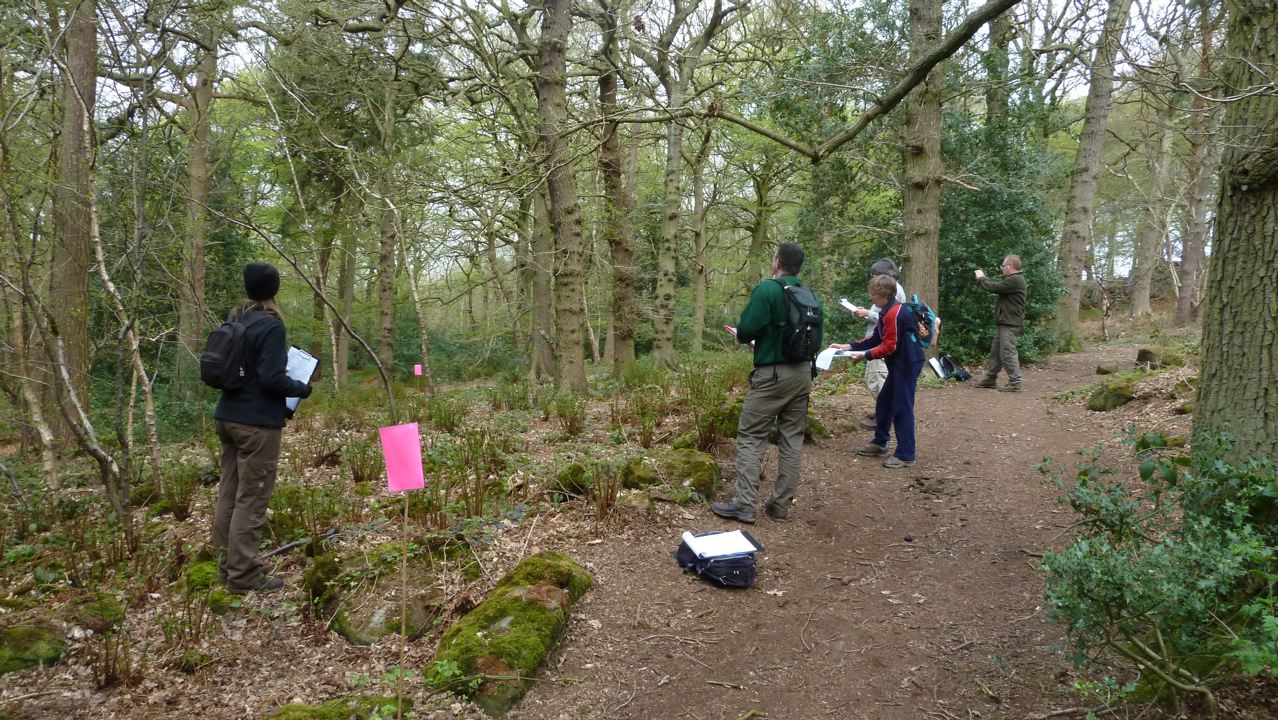
Quadrat no 1
The process is to mark out a quadrat – a square area 10m x 10m – with pink flags, and then to tick off what plants and trees can be found within the quadrat at three different levels – the canopy (over 5 metres above ground), the under storey (between 2 and 5 meters above the ground) and in the field layer (up to two metres above the ground.

Quadrat no 2
We surveyed 7 quadrats during the day – the first three in Adel Plantation, the fourth below the cricket ground, the fifth near the picnic area, and the sixth and seventh a few hundred yards below the Slabbering Baby (ie towards the Seven Arches).
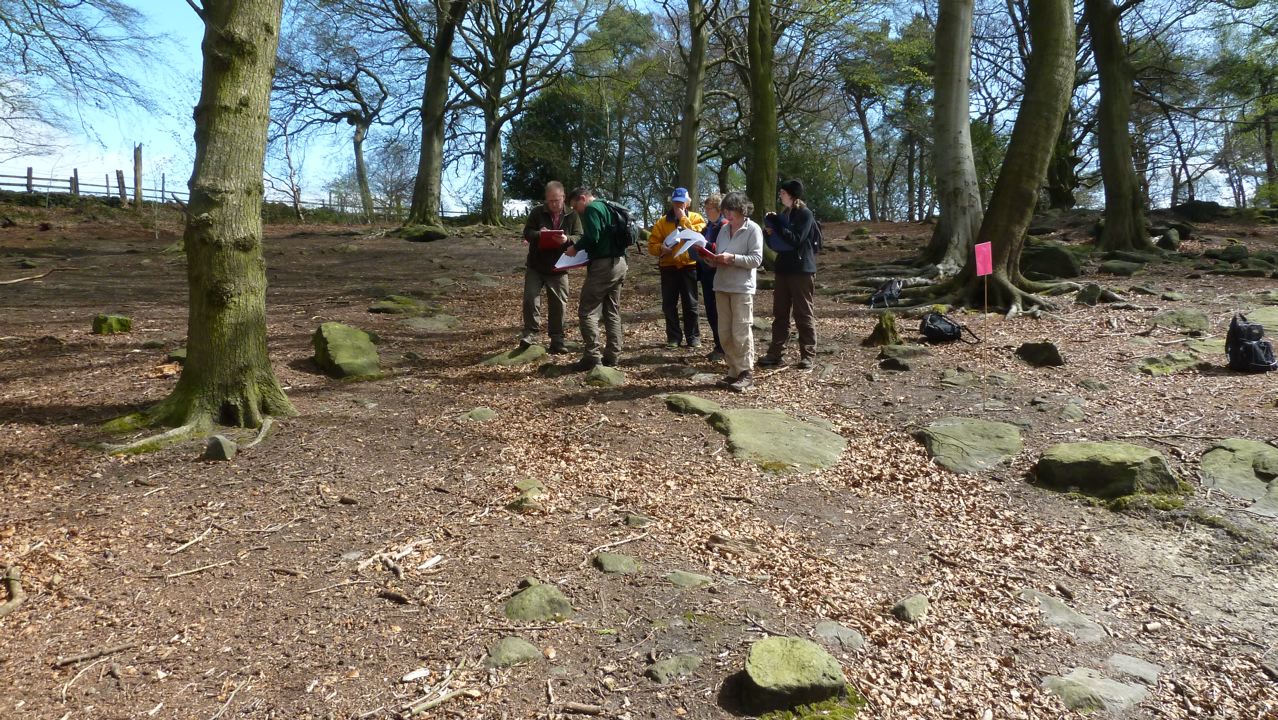
Quadrat 3
It was interesting to find seven very different habitats – perhaps governed by the dominant species of trees at canopy level. For example, in quadrat 1 we had mainly oak but some Scots Pine and birch. In quadrat 2 it was beech (90%) and oak; quadrat 3 mainly birch and oak; quadrat 4, birch (50%), oak,

Quadrat 4
rowan and holly; quadrat 5, holly and oak (100%); quadrat 6, birch, holly, oak (90%) and rowan; and in quadrat 7, birch (90%) and oak.
En route, we had a look at Adel Bog and were pleased to see that despite the recent spell of dry weather it is still very wet. Interestingly, there were the recent tracks of roe deer in the mud.

Quadrat 5
Other sightings during the day included a clear view of a sparrowhawk, a tree creeper, a pair of jays, and a Western Skunk Cabbage (a kind of plant!). We were surrounded by bird song all day – and your correspondent can now distinguish the sound of the chiff chaff with ease!
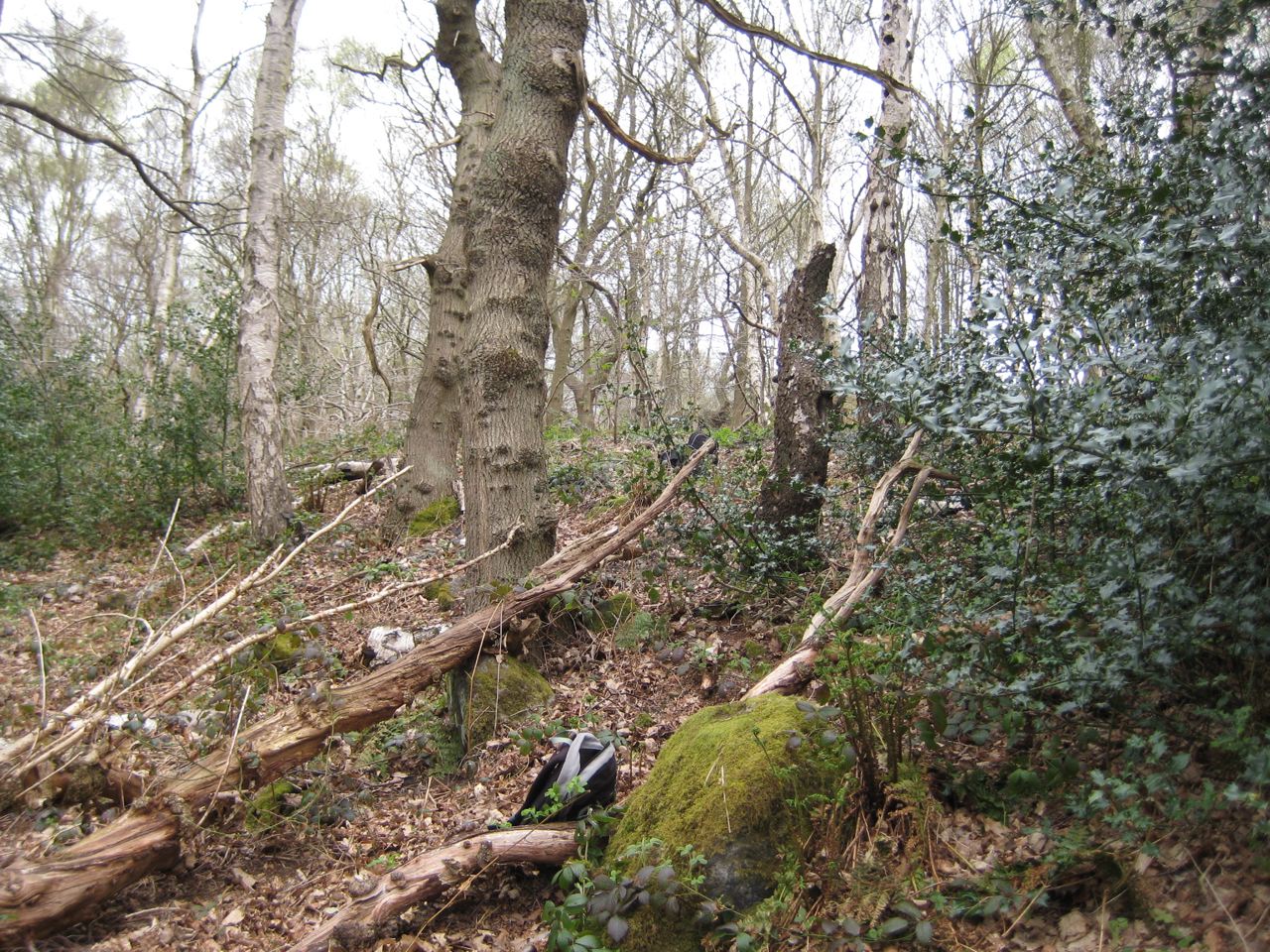
Quadrat 6
Thank you to Steve for a wonderfully enjoyable, informative, educational and fun day!

Quadrat 7
Please click on any of the photographs to see a bigger version.

Steve examines the flower of a Western Skunk Cabbage

