
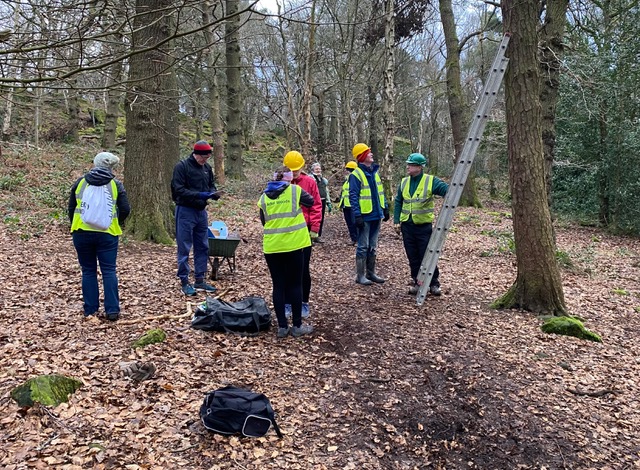
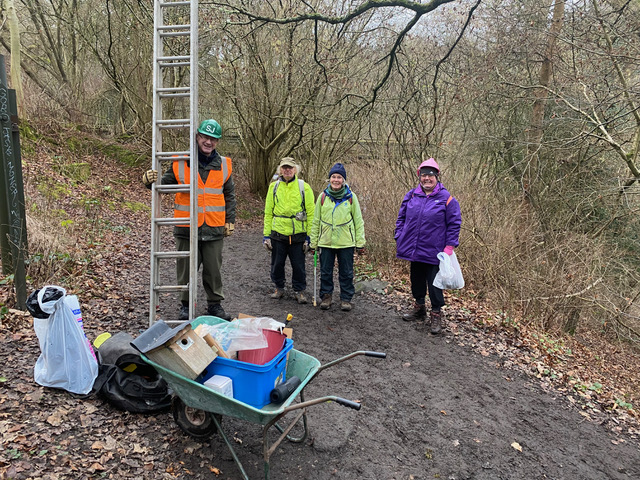
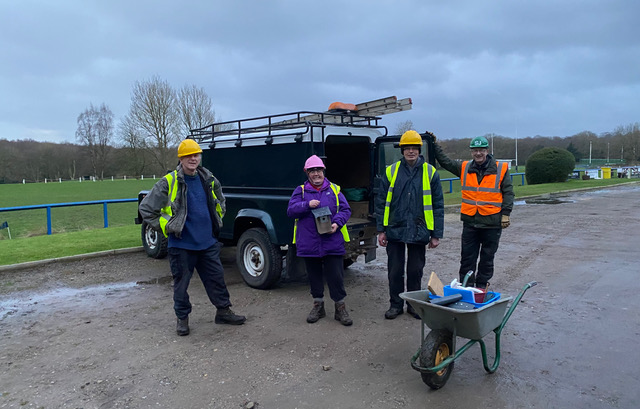
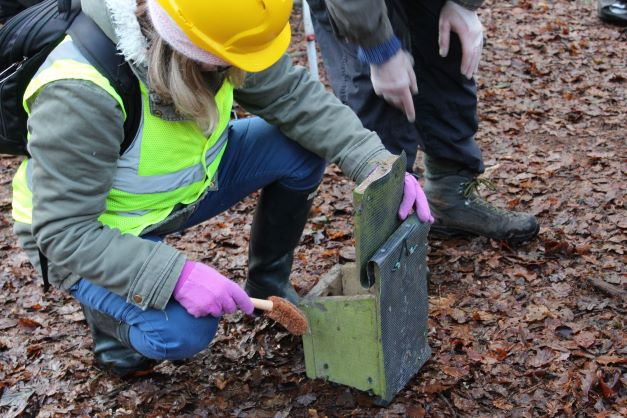
A very, very chilly morning, but ten of us gathered at 9.45 am for the first morning of our annual nest box survey and cleaning session.
The morning
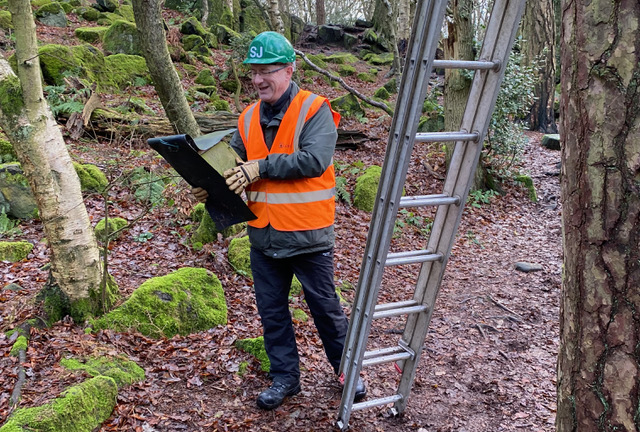
We took our usual route – along Crag Lane, taking the diagonal path into the plantation, cleaning all the nest boxes around the plantation and then heading south back to Crag Lane, and finishing at lunch time with box 53.

As in every previous survey, we found that most of the tit boxes had been used for nesting. The robin boxes had not been used by robins but one had been used by a family of great tits or blue tits – we can tell by the nesting material.
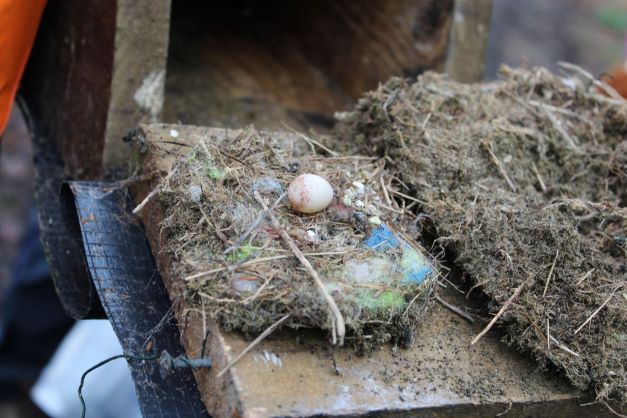
Blue tits and great tits both build their nests out of moss, grass, fur, feathers and man made materials – it is common to find in their nests orange, green or white material which seems to come from tennis balls!
As usual we found that the nest boxes were homes not only to tits but also to assorted insects – clothes moth larvae, and woodlice – and spiders.

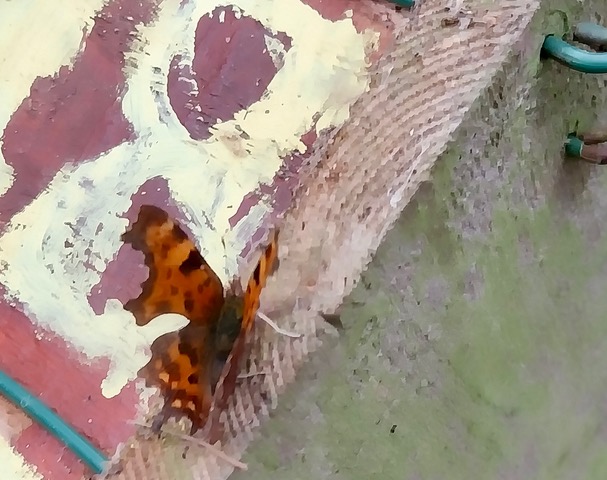
We also had a new discovery. As your correspondent lifted one of the nest boxes down from the tree, he saw a leaf stuck to the bottom of it. Fortunately, he did not brush the leaf off the box because the leaf opened up to show a flash of orange and turned out to be a hibernating comma butterfly! The photograph above shows how well the butterfly was camouflaged as a leaf, and the photograph below shows its open wings. Fortunately, the butterfly returned to its state of hibernation and we were able to clean the nest box and replace it on the tree with the butterfly still in place.
The comma butterfly gets its name from the white “comma” shape on the underwing – which can be clearly seen in the photograph above.
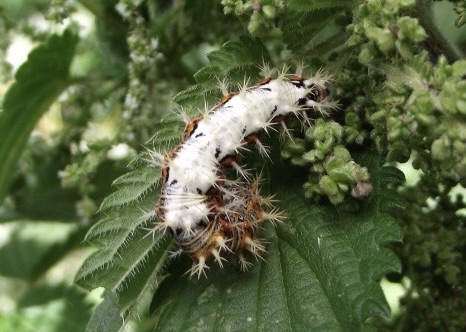
The caterpillar stage of the comma is spectacular as can be seen in the photograph below. We came across this one back in August 2013 during a FOAW task. The white stripe along its back makes it look like a bird dropping.
After surveying and cleaning box 53, we took a lunch break from about 1.30 to 2.30 pm.
The afternoon session

Refreshed after lunch, we continued cleaning and surveying the nest boxes along Crag Lane to the picnic area and Adel Crag, and then made our way down the Meanwood Valley Trail, finishing at about 4.45 pm.

Blue tits lay typically eight to twelve eggs, but sometimes as many as sixteen, one per day! Great tits are larger than blue tits, but lay a clutch of seven to nine eggs. The eggs of both species are similar – creamy white with brown spots – but the great tit eggs are larger.
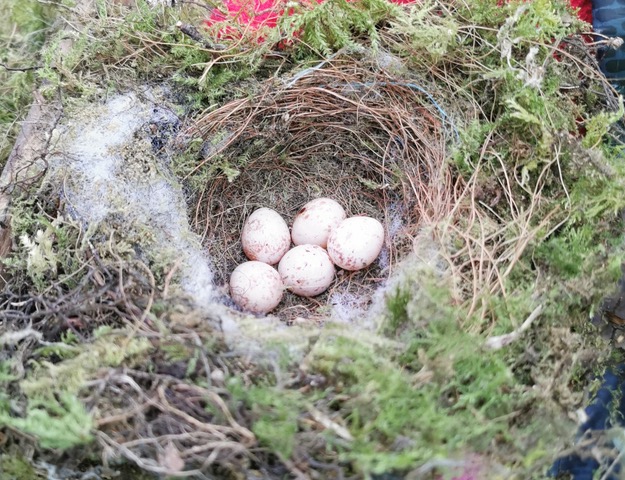
It is common to find one or two unhatched eggs in the nesting material which probably indicates that most of the eggs hatched and the chicks successfully fledged. Sometimes though, as in the photo above, we may find more, which may indicate that the female was predated before laying all her eggs. Sometimes we find skeletons in the nest, indicating that the parents were predated whilst raising their young.
Having made our way down the Meanwood Valley Trail almost as far as the pond, we decided to call it a day in the fading light.

About Friends of Adel Woods
We hope that you have enjoyed reading about our activities and would be delighted if you would like to join us.
Friends of Adel Woods were formed in 2009 to help maintain Adel Woods and encourage people to enjoy them. We meet one weekend morning a month to carry out various jobs or ”work parties”, and we also put on educational events such as bat walks, fungal forays and birdsong walks.
We are a very friendly group and welcome new members who want to help preserve our special woods, enjoy fresh air and exercise in the woods, and make new friends. If you would like to take part in our activities, keep an eye on our Home Page and just come along to one of our work parties.
If you would like to join our email mailing list, please get in touch by leaving a comment on this website – you should be able to see a comment button at the bottom of this page.






 Friends of Adel Woods