
Our second Fungal Foray with Steve Joul this Autumn.
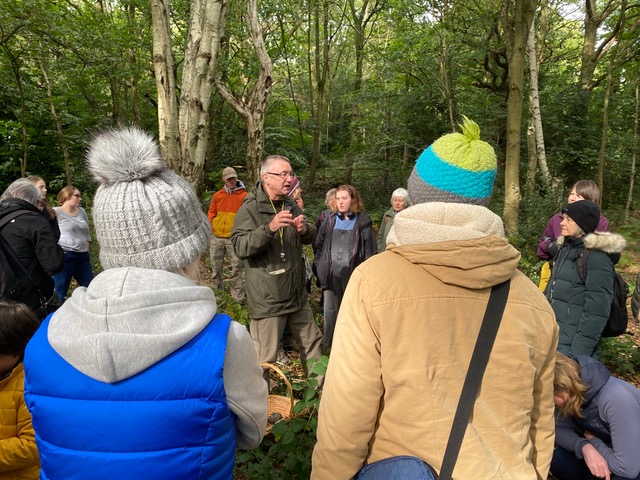
We met in Alwoodley Village Green carpark at 2 pm and Steve gave an introductory talk about Adel Woods and fungi before we moved on to the area just behind the cottage adjacent to the car park.

Having pointed out a sparrow hawk perched in a nearby tree, Steve explained that there are about 13,000 different species of fungi in the UK and new species are arriving in the UK through travel and trade.
Whilst there are many thousands of species in the UK, there are about two hundred common species which we are likely to find in Adel Woods. These days we identify or categorise species of fungi by their DNA rather than by their morphology (ie their shape and structure).They often have more than one name and so it is best to identify them by their Latin name, or by their recommended English names.
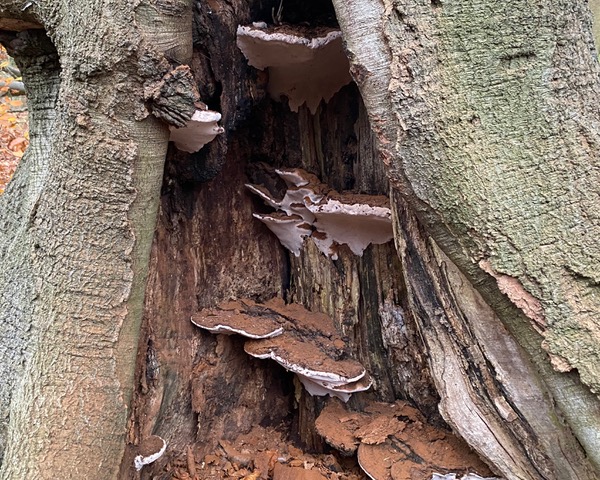
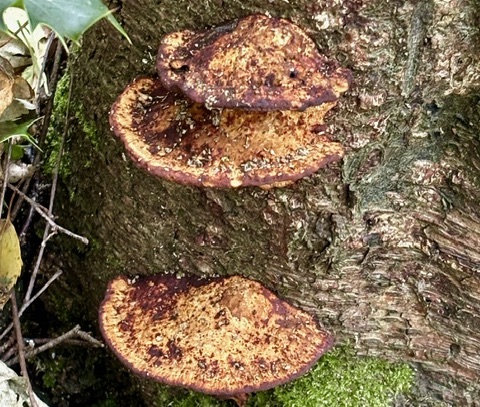
Many species are associated with particular species of trees – for example, you will see on many birch trees in Adel Woods, the birch polypore (fomitopsis betulina).

The part of the fungus that we see is the fruiting body, while most of the organism is underground or within the dead wood of the tree. The part of the fungus within the soil or wood is called the mycelium, an interconnected network of thin threads called hyphae.
The fruiting body produces millions of spores which, when spread, will grow into new individuals. Some species allow their spores to drop from the fruiting body into the air below: others (like the puff balls) forcibly eject spores allowing the spores to travel long distances.

Fungi may reproduce asexually or sexually. Sexual reproduction is complex: there may be more than six different sexes!

During the afternoon, we made our way from the cottage, through the Plantation on the north side of Crag Lane, and eventually reached the Stairfoot Lane car park. From there we made our way back along Crag Lane to King Lane.
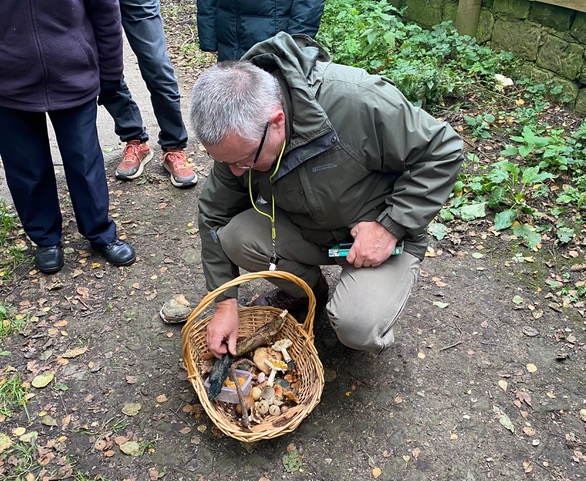
As we made our way, adults and children enthusiastically searched for specimens which they brought to Steve to identify.

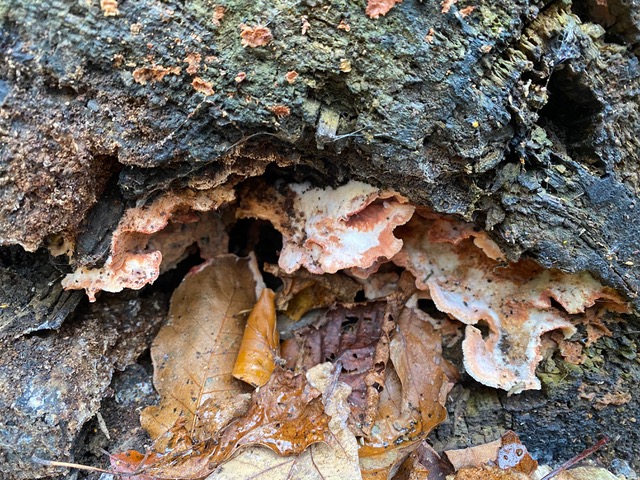
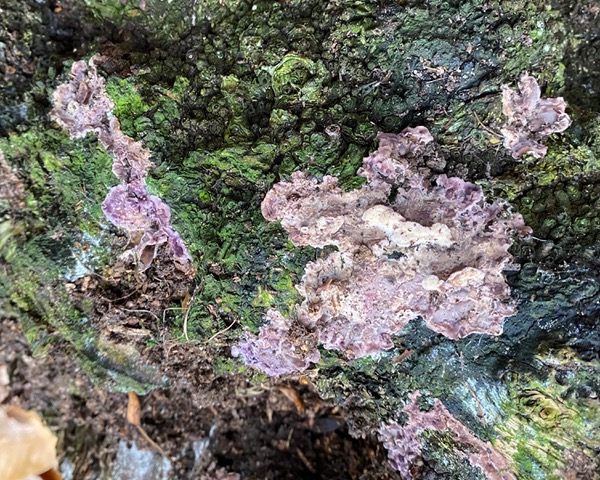
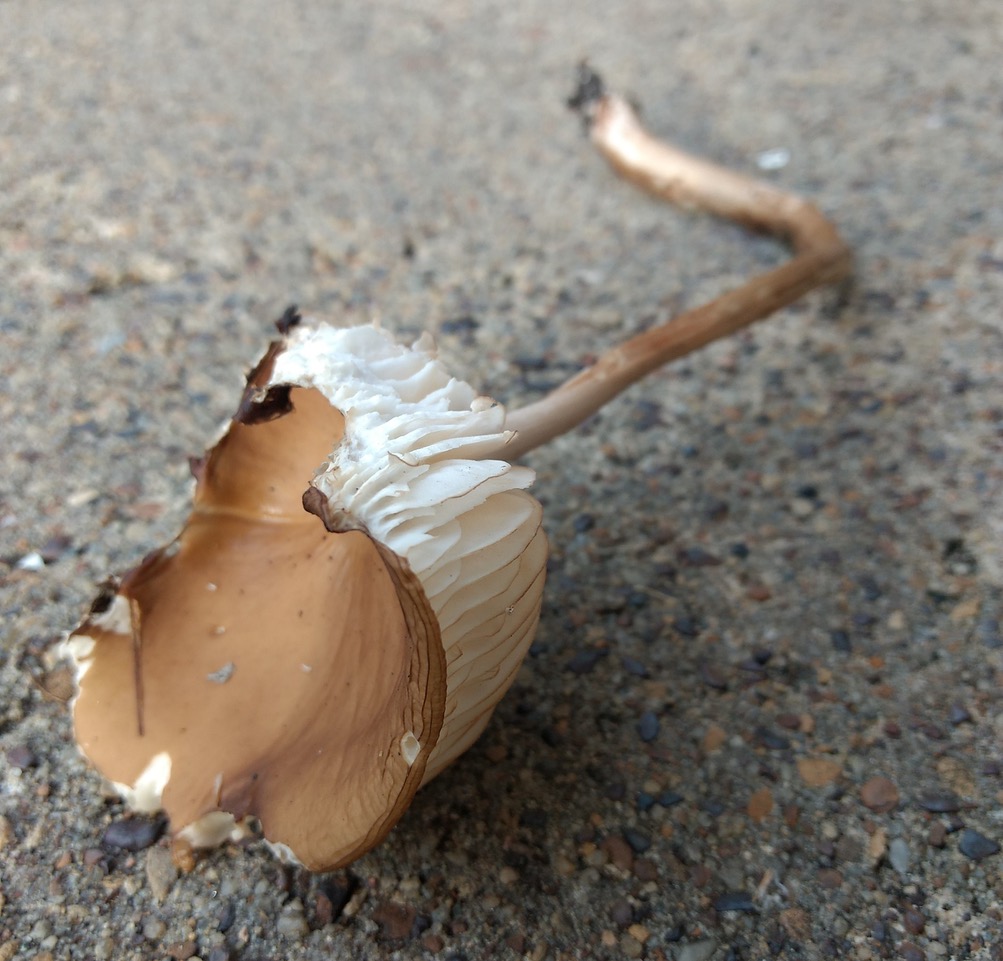
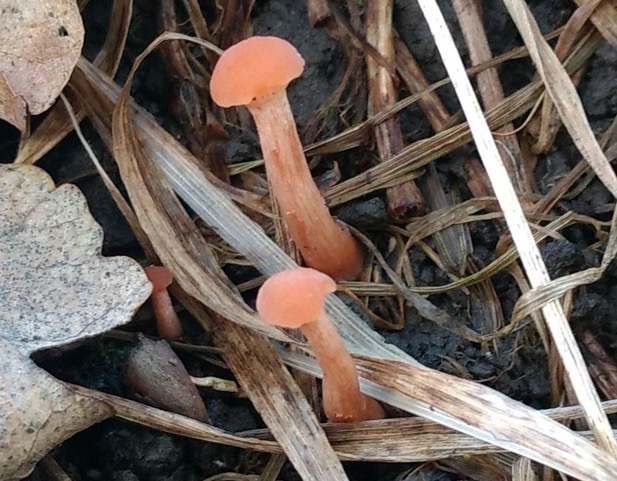
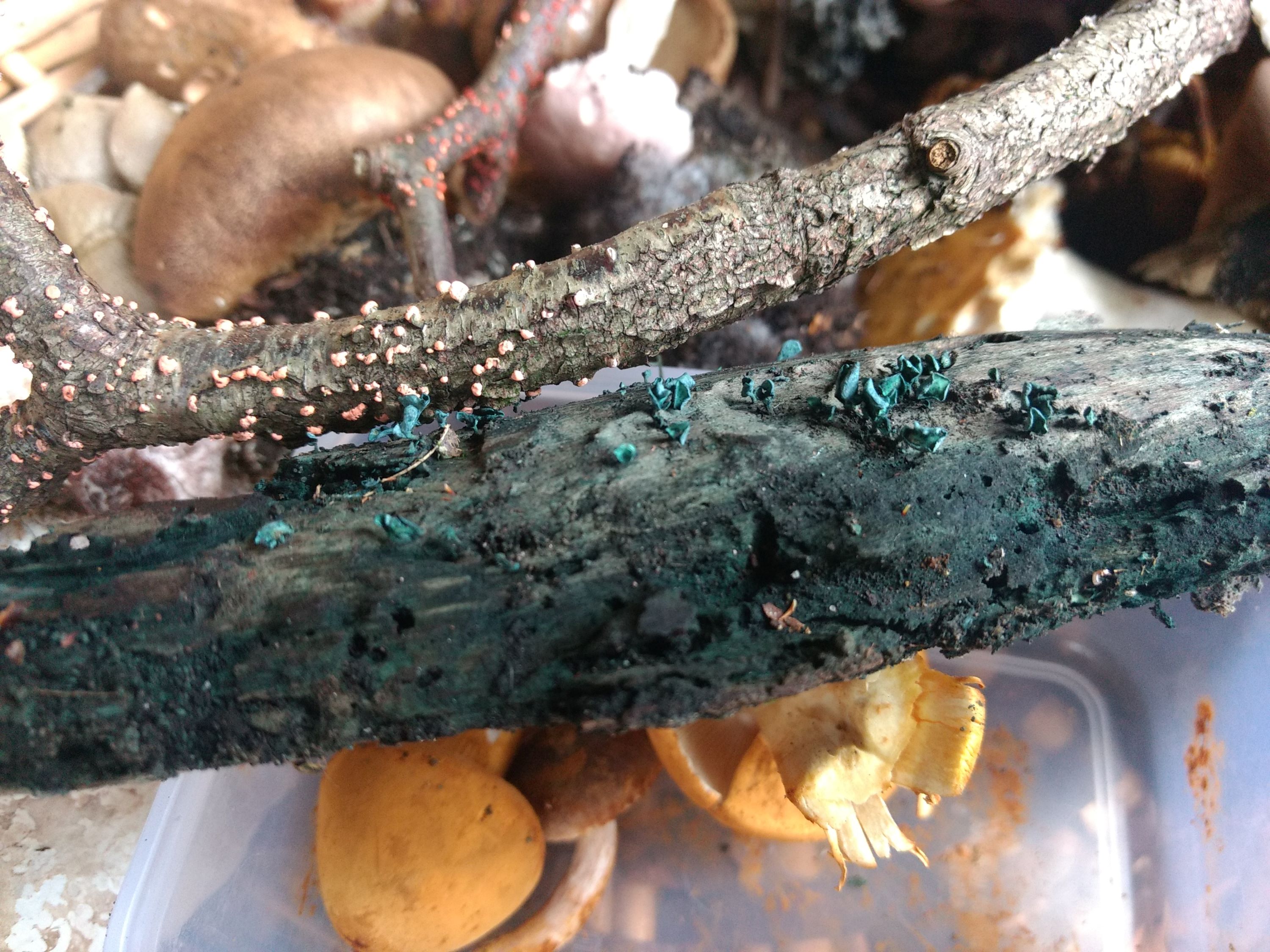
In the course of the afternoon we found eighteen species of fungi, some of which appear in photographs below. Here is a complete list – the species in red being a new one for Adel Woods:
- Birch Polypore (Fomitopsis betulina)
- Birch Woodwart (Jackrogersella multiformis)
- Blushing Rosette (Abortiporus biennis)
- Brown Rollrim (Paxillus involutus)
- Common Earthball (Scleroderma citrinum)
- Common Tarcrust (Diatrype stigma)
- Coral Spot (Nectria cinnabarina)
- Ganoderma Bracket (Ganoderma sp.)
- Glistening Inkcap (Coprinellus micaceus)
- Hairy Curtain Crust (Stereum hirsutum)
- Hoof Fungus (Fomes fomentarius)
- Jelly Ear (Auricularia auricula-judae)
- Rooting Shank (Hymenopellis radicata)
- Silverleaf Fungus (Chondrostereum purpureum)
- Smoky Bracket (Bjerkandera adusta)
- Sulphur Tuft (Hypholoma fasciculare)
- Sycamore Tar Spot (Rhytisma acerinum)
- Turkeytail (Trametes versicolor)




JOIN FRIENDS OF ADEL WOODS!
We hope that you have enjoyed reading about our activities and would be delighted if you would like to join us.
Friends of Adel Woods were formed in 2009 to help maintain Adel Woods and encourage people to enjoy them. We meet one weekend morning a month to carry out various jobs or ”work parties”, and we also put on educational events such as bat walks, fungal forays and birdsong walks.
We are a very friendly group and welcome new members who want to help preserve our special woods, enjoy fresh air and exercise in the woods, and make new friends. If you would like to take part in our activities, keep an eye on our Home Page and just come along to one of our work parties.
If you would like to join our email mailing list, please get in touch by leaving a comment on this website – you should be able to see a comment button at the bottom of this page.
Our next event is on Saturday the 14th December, when we will be litterpicking and working with David Preston, our local ranger, on Adel Pond.









 Friends of Adel Woods