This evening we had our 5th Annual General Meeting at Old Leo’s Rugby Club. We had a good turn out and and a good meeting before adjourning for refreshments. Thank you to Old Leo’s for letting us use their bar for the meeting.
The minutes of last year’s AGM were approved; the Chair presented his annual report (see below); the treasurer presented the accounts and the accounts were approved. The officers and committee were chosen.
The new officers and committee are:
Chair: Roger Gilbert
Treasurer: Judith White
Secretary: Stephanie Clarke
Auditor: David Hall
Committee (in addition to the above):
Rob Hall
Tom Swire
Brian Joyce
Jen Potts
David Smith
Thanks are due to Phil McAteer and Wyn Barney who retired from the committee.
Chair’s annual report
We have had about 24 events since our last AGM. It has been another varied, interesting and enjoyable year. If you have not had a look at the blog, I think that it is well worth doing so. I find it amazing how much we have done together, and I get very happy feelings looking at the pictures and reading the reports of our achievements.
Events
We have two kinds of events: the tasks (the playing out in the woods events) and the educational events (also playing out in the woods events!).
Tasks
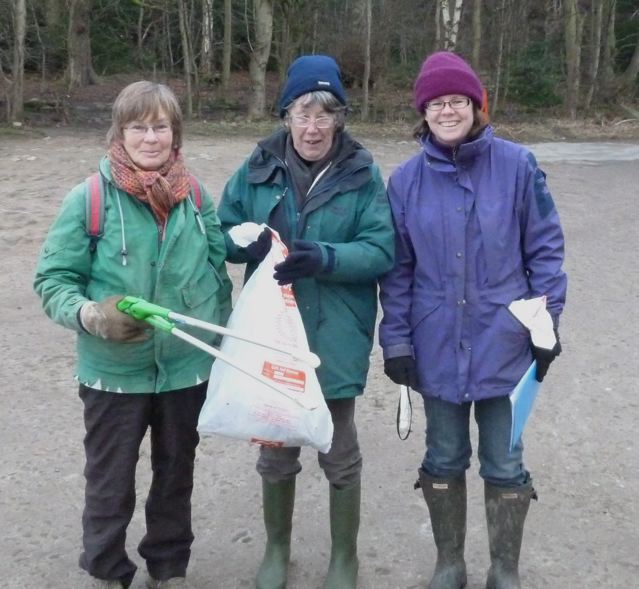
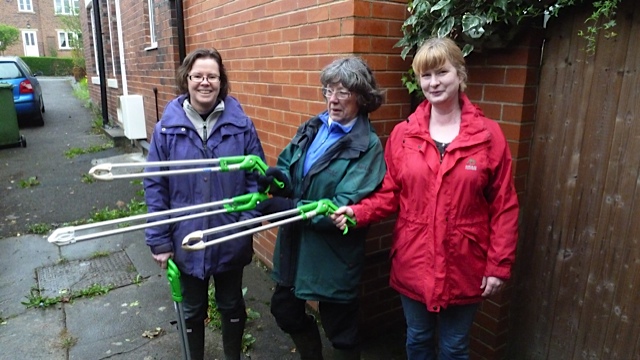
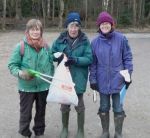 If I start with our monthly tasks. Firstly, there has been our regular litterpicking whose importance cannot be overstated. Litterpicking makes a huge difference to the woods – for example, a fortnight ago a handful of us collected 7 bags of litter in an hour! So thank you to everyone who has contributed by picking up litter!
Adel Moor
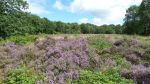
Adel Moor: 18 August 2013
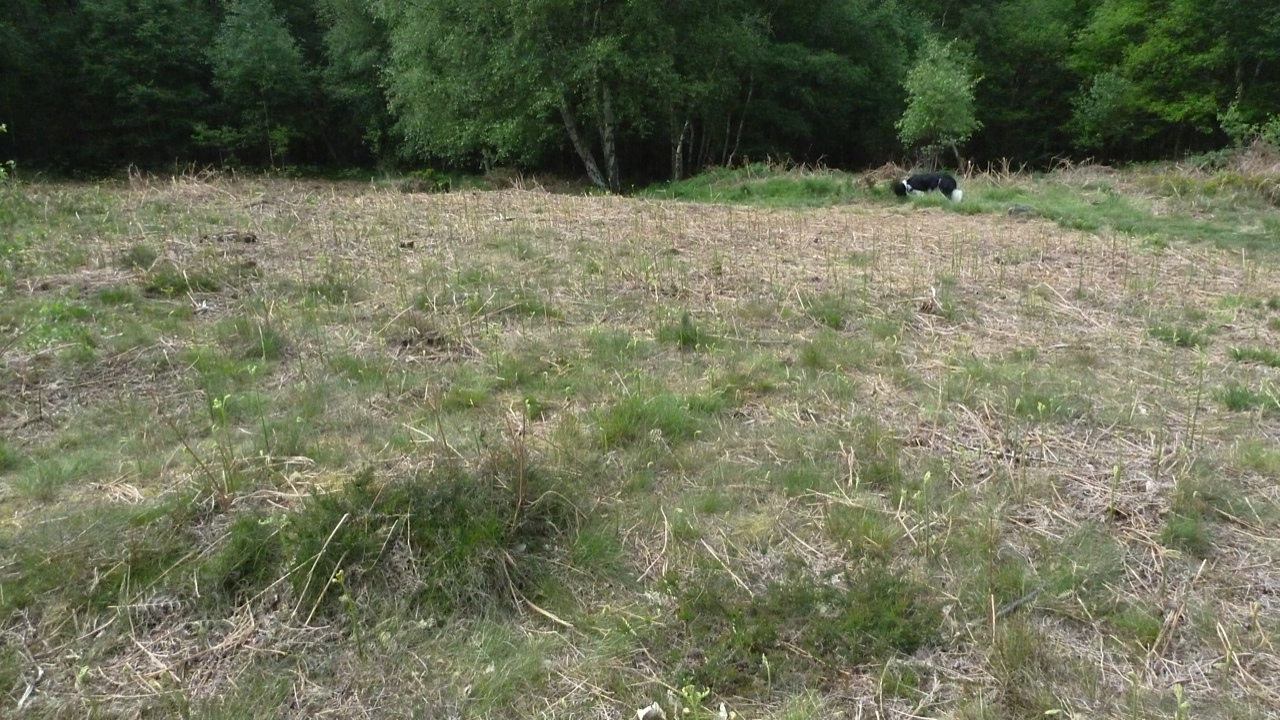
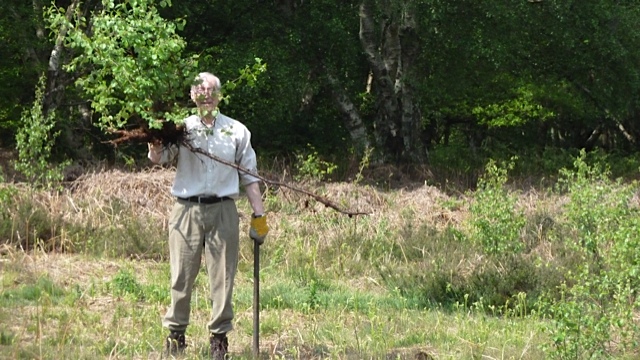
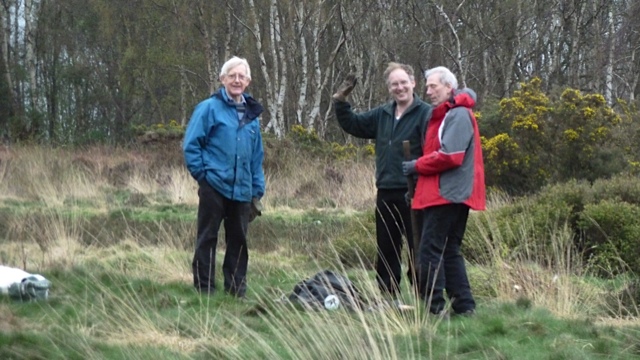
Over the last year we have had two mornings working on Adel Moor (May last year and April this year) and – in conjunction with the other groups who work on the moor – we are now seeing a huge improvement – a lot of the young saplings have gone and there is lots of new heather coming up. I know that Steve Joul is very pleased indeed with the progress that is being made.
The moor has a population of common lizards and when we worked on the moor this April, Andrew found a lizard, pictures of which can be found on the blog.
Path improvements
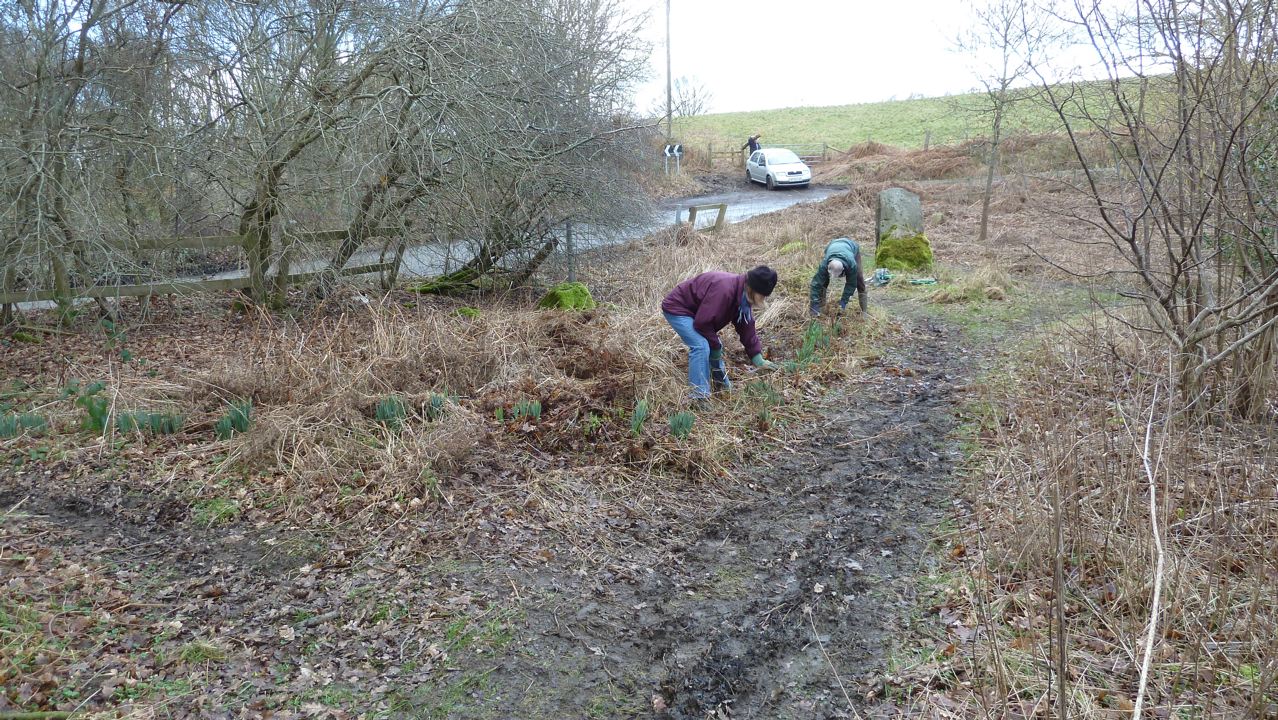
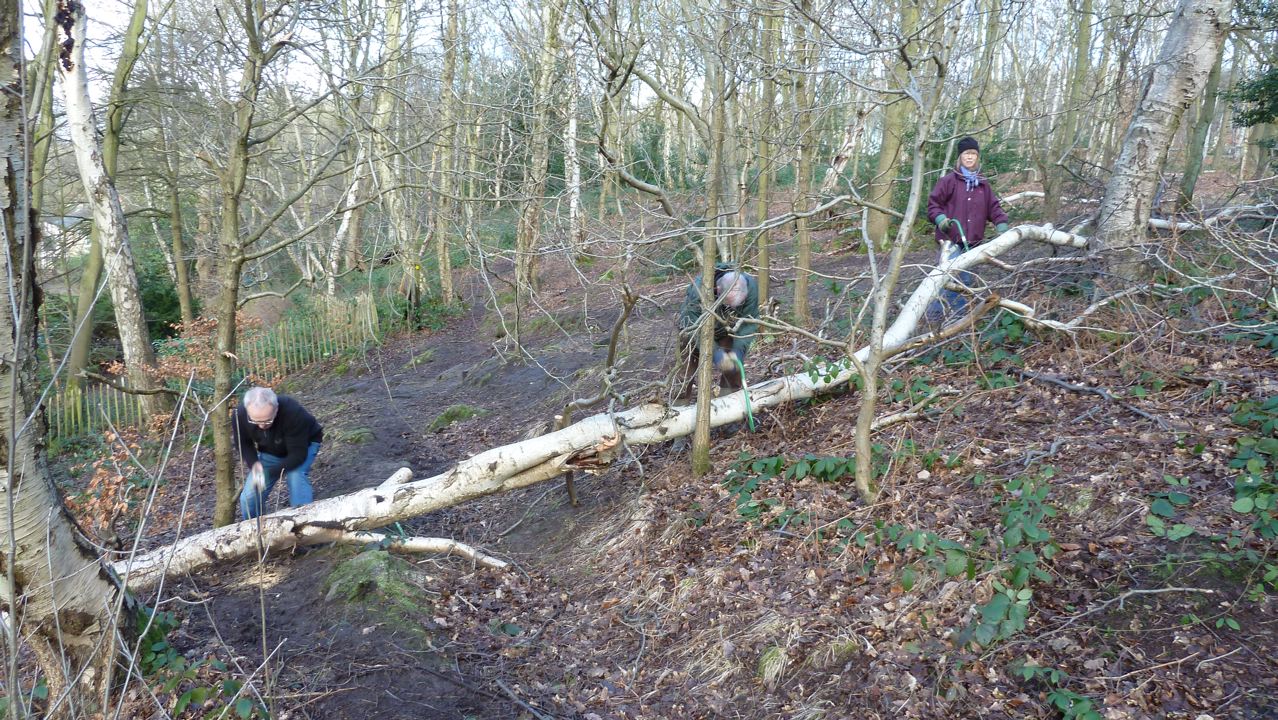
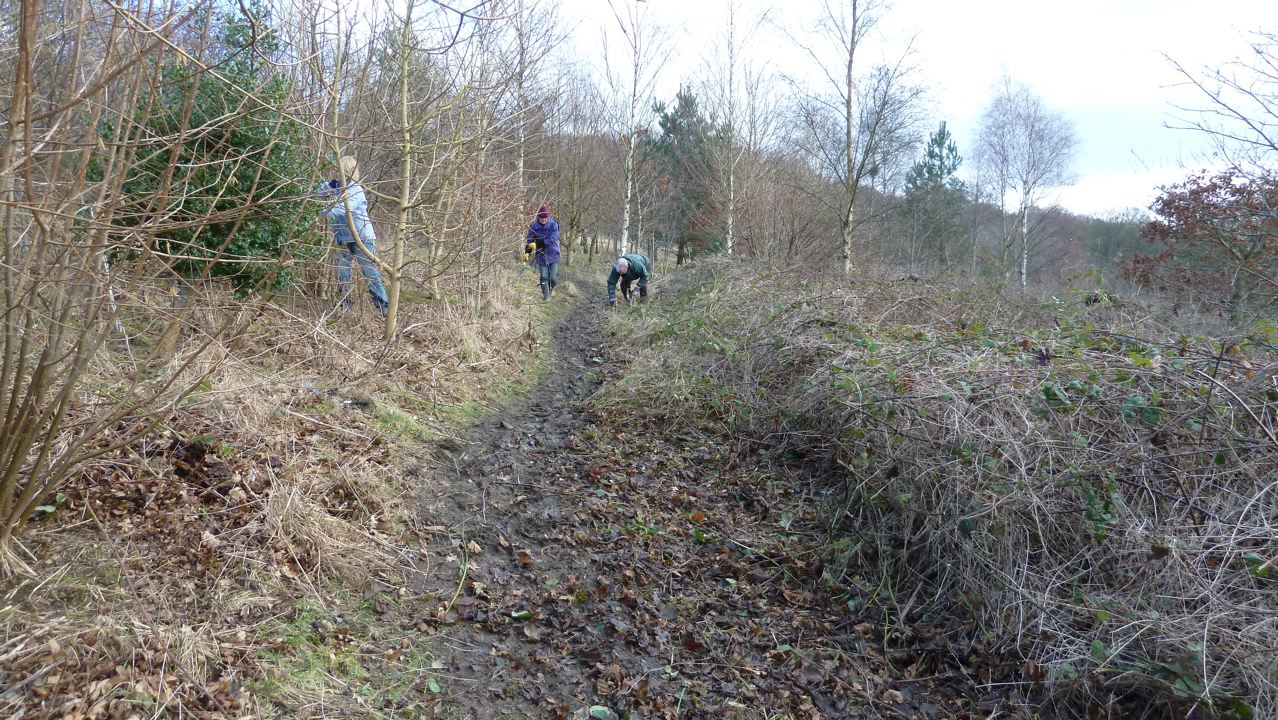
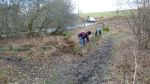 Path clearance has been another regular task. Over the last year we have not devoted as much time to this task but we have removed a number of trees which have fallen over paths, and we have cleared the path through the hospice woodland, as well as generally cutting back holly and branches encroaching onto paths.
Adel Bog
 Over the last few years we have instigated or done a lot of work on Adel Bog, starting with clearing a lot of the purple moor grass which was carried out by BTCV in 2011. We have continued with that work over the last year – removing a number of large birch trees around the perimeter and clearing a lot of encroaching vegetation such as brambles which were slowly turning the bog into dry land.
 Last June, a number of us helped Steve Joul carry out a survey of the bog as a prelude to spending two mornings – in July and August – working on the bog. When we arrived for the July event, some of us were rewarded with a sighting of a roe deer.
The bog had a nice showing of bog plants like the bog asphodel, potentilla and heath spotted orchids of which we counted about 80 specimens, much higher than last year.
Nest boxes
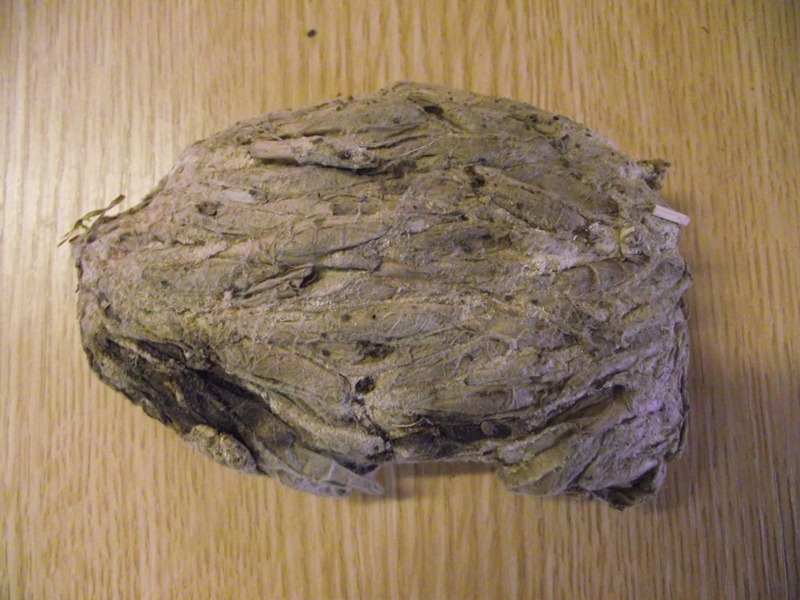
 We had three days out surveying the nest boxes and the good news is that they were almost all used. We were also able to find a couple of nest boxes which we had not been able to find in previous years!
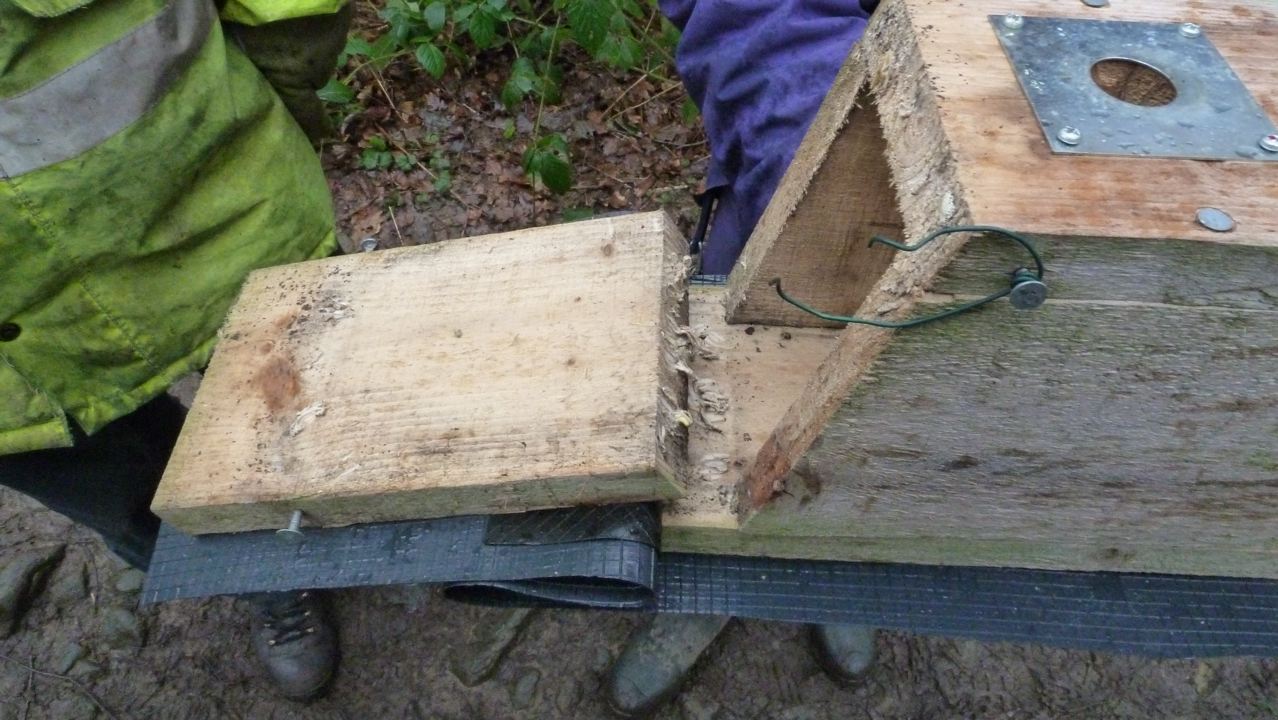
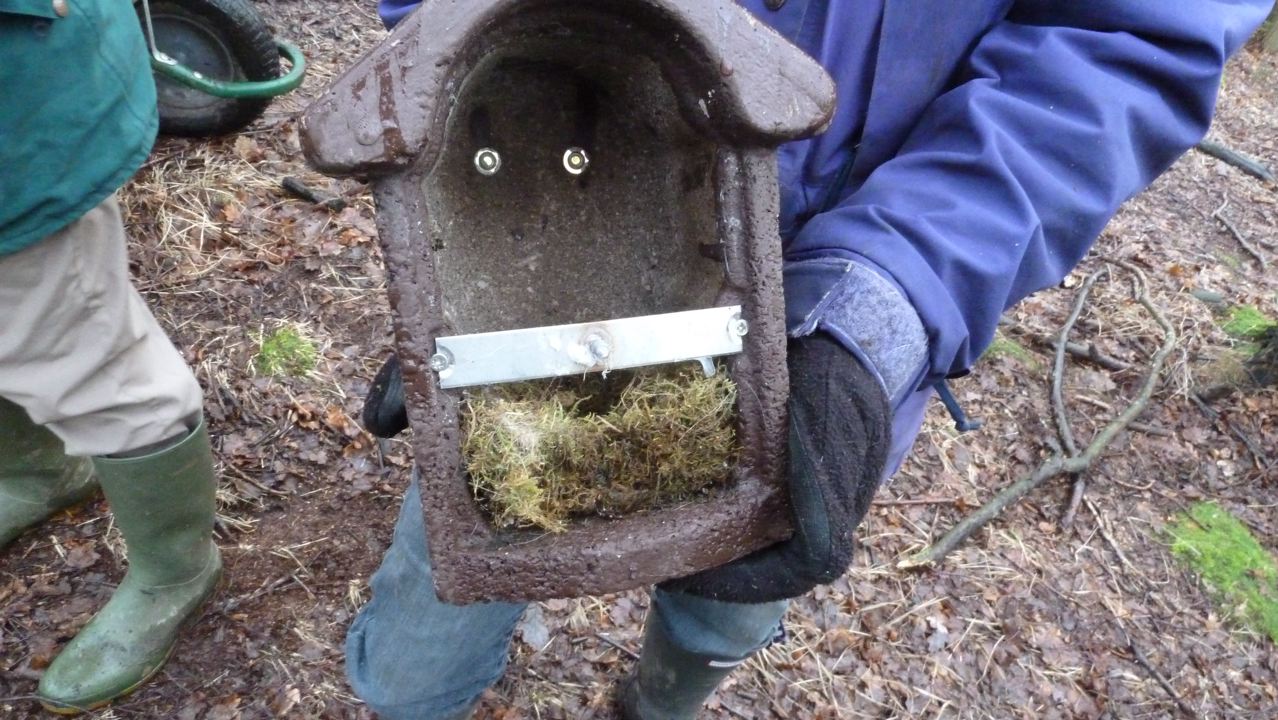
Last year Councillor Buckley gave us a grant to purchase 8 woodcrete nest boxes which are easier to take down and clean and we have had a rolling program over the last two surveys to make the wooden nestboxes much easier to take down and clean. Both of these things have assisted in speeding up the job.
There were no nuthatch nests this year but you can feel pleased that there is a good chance that the great tits and blue tits in the woods were reared in a FOAW nestbox!
The Japanese Knotweed
Over the last two years we have helped Steve Joul with a lot of work on the Japanese Knotweed by the picnic area and we seem to have got it licked!
The Buck Stone
Two years ago we did two days work on this and made it accessible to the public again. Over the last year we have done some bracken bashing and clearing to keep it open but it will probably need some more work.
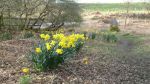 The hospice woodland
We have had three sessions tidying up the hospice wood.
Christmas Garlands
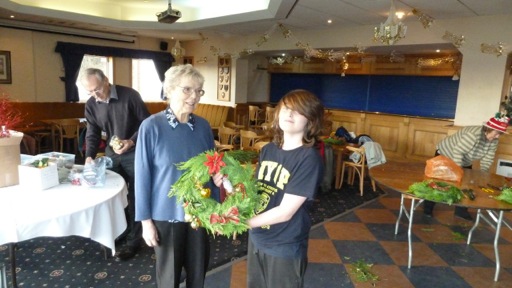
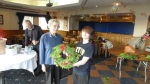 We had another session making Christmas garlands for sale to raise funds and we raised about £100. More importantly, everyone who had one seems to have been delighted with it.
Adel Pond
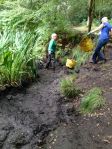 Adel Pond is one of our regular jobs now. In September about 12 of us got down and dirty clearing silt out of the pond and we made a big difference. It is looking great at the moment.
Educational/social events
Birdsong walks

Listening to birdsong in Alwoodley Plantation
Steve Joul led a birdsong walk last May when 15 people were up with the lark. Last Sunday he led another and 31 adults and 3 children attended and it was a great success.
Newt survey
Last May, Steve also led a newtfari – ie a safari in pursuit of the newts in Adel Pond and we caught 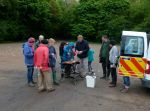 (and returned to the wild) 18 newts. Again this was very well attended, and one of the things I like about this sort of event is that we get children along who hopefully will find their imaginations captured and will care about Adel Woods or other woods in the future.
Adel Bog survey

Q7 western end of Bog
I mentioned earlier that last June a team of us helped Steve Joul carry out a survey of Adel Bog as part of our program of restoring the bog. Not surprisingly, in view of the amount of clearance of unwanted species, we found a great improvement in the number of bog plants. Steve has done a number of the surveys now and I recommend that if he does any more, you have a go. It is a really enjoyable experience where you will learn a lot about how to do a survey and the woods.
Fungal Foray
 Steve led a fungal foray. This was amazingly successful – approximately 30 adults and 10 children.. It was a thoroughly enjoyable event with everyone having a great time looking to see what secrets the woods had to disclose.
ACA Gala
Last June we had a stand at the ACA gala. The weather was kind to us and we had a great afternoon.
Meanwood Heritage Walk
In September, Kerry Fieldhouse, a conservation officer with Leeds City Council, led a heritage walk around Adel Woods. Whilst not strictly a FOAW event, there were a few FOAW friends there and it was interesting to learn more about the woods.
Waitrose
FOAW were put forward to Waitrose to go in their community funding scheme which resulted in us receiving a cheque for £394 from Waitrose in November. This money and the money we have raised from various events means that we are in a very strong financial position at the moment.
The future
We will be publishing our calendar of events for the next six months shortly. Our next event is on Sunday the 18th May when we will be litterpicking and working on Adel Moor! On Sunday 22 June Steve Joul will be leading a wildflower walk in the woods. This is a first for FOAW and it promises to be a great event. Please can you publicise this event to friends, family, neighbours and work colleagues.
It is now almost five years since we set up Friends of Adel Woods. Times are changing. Leeds CC are limiting us to having Steve Joul working with us for four times a year. If we want him to work more than that, we have to pay for him. Similarly, whereas Steve’s time was free for educational events, we now have to pay for him now – which is why there is a charge for the events he leads.
Thanks
I would just like to end by thanking all the people we need to thank for supporting us over the last year.
 First of all, I would like to thank Steve Joul for all the support – and tuition – he has given us over the year – in particular with the newt survey, birdsong walks, the fungal foray, the nest box survey, and the work on Adel Bog.
I would like to thank Alwoodley Parish Council and our local city councillors for their financial support and encouragement.
I would like to thank Tina and Stephanie for putting us forward to Waitrose and everyone who voted for us – and of course Waitrose for setting up the scheme in the first place!
I really must thank Tony and Old Leo’s for letting us use their facilities for making the Christmas garlands and have our AGM here.
 I would like to thank Old Leo’s Cricket Club for putting up and giving us the use of a notice board on their pavilion.
I would like to thank our committee and officers for all their support and hard work over the year.
And finally, I would like to thank all our wonderful Friends – whether here or absent – for the hard work you have all put in over the year. I hope that tonight’s summary has reminded you of some happy mornings or evenings and shown you that you have all made a fantastic improvement to the state of Adel Woods and to our local community. Thank you!
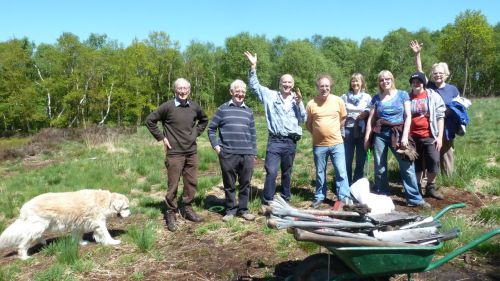
Hi-de-hi!
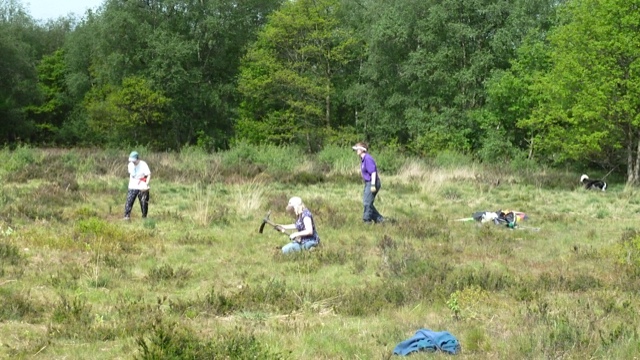 A glorious day and six of us (ultimately seven of us) met to work on Adel Moor, pulling up saplings and digging up coppiced birch trees.