Category Archives: Uncategorized

Saturday, 18 January 2014: Litterpicking

14-01-18-P1050059

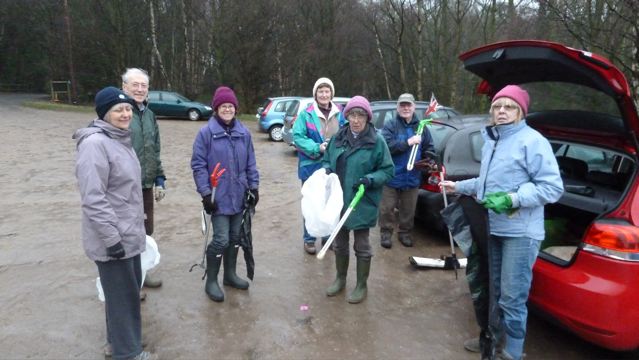
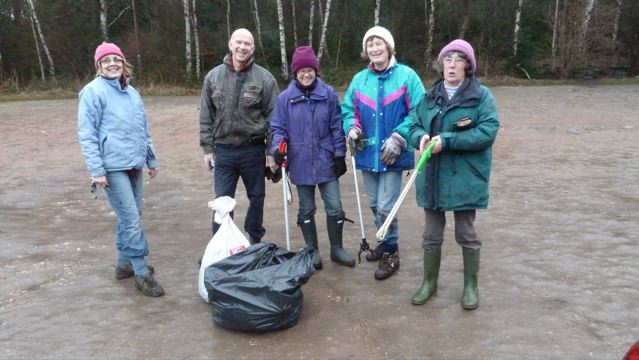
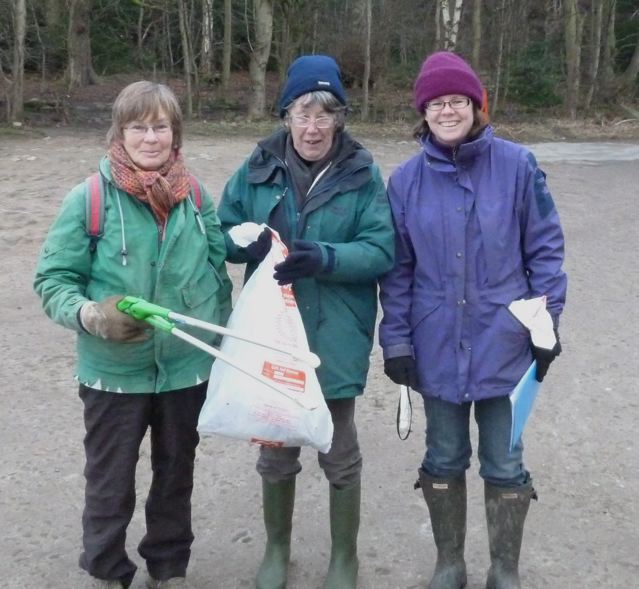
This morning an enthusiastic team of litter pickers met up to spend an hour or so picking up the litter which had accumulated over the Christmas break.


14-01-18-P1050064One public spirited individual had kindly dumped nine empty chemical drums in the woods – marked as toxic to aquatic life.  We arranged for Steve Joul to collect these so that they could be disposed of properly.

There was a huge amount of litter and between us we picked up about ten bags of rubbish plus assorted objects which were too large to go in bags.  Clearly, there had been many parties in the woods over the last few weeks because there were bottles and cans everywhere.  A satisfying morning’s work improving the woods for humans and wildlife – but why do our fellow humans make it necessary?

14-01-18-P1050066

Sunday, 12 January 2014: Nest Box survey (Part 1)

14-01-12-P1050041_2Four of us met in Old Leo’s car park to join Steve Joul in surveying and cleaning the FOAW nest boxes.

Unfortunately, Steve’s new land rover had a flat battery which meant he could not bring the necessary ladders.  Undeterred, we decided to clean the robin boxes which are all at low level – two or three feet from the ground – 14-01-12-P1050042and concealed in the middle of holly bushes.

Midway round we were joined by David.

Robin nest boxes are different from tit boxes in that robin boxes have an open front while tit boxes have a round hole for the entrance.

14-01-12-P1050045We have put up five robin boxes and, for the first time ever, we were able to find all five of them!  One particular nest has eluded us ever since we put it up and we found it entirely by chance this year when picking up a piece of litter:  there, five feet away in the middle of a holly bush was the elusive box.  The fault was that of your correspondent whose map making skills clearly need to be improved.  However, the map has now been updated to show the correct position of the nest box.

The results were as follows (the boxes having numbers which follow no particular order):

Box 6: nest and two unhatched eggs  ——    Box 9: nest

Box 15:  not used  —— Box 19:  strange contents – see below

Box 31: not used, but something had chewed the lip of the entrance.

The nests were tit nests rather than robin nests.

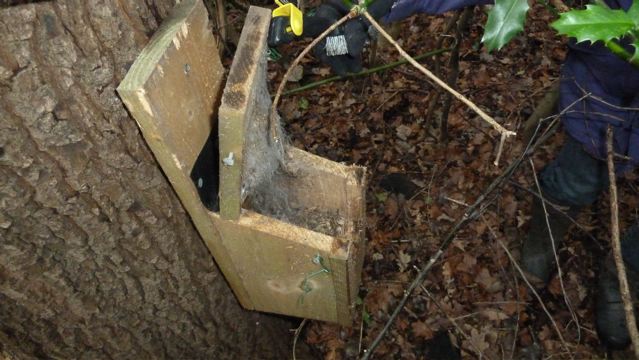
14-01-12-P1050049The contents of box 19 were very unusual:  a kind of fibrous mass was attached to the inside of the lid and the inside of the box, covered in cobwebs, and lots of leaves and dead bees in the bottom of the box.  It was so unusual that we decided not to clean that box but leave it for Steve to have a look at when we surveyed the rest of the boxes later in the month.

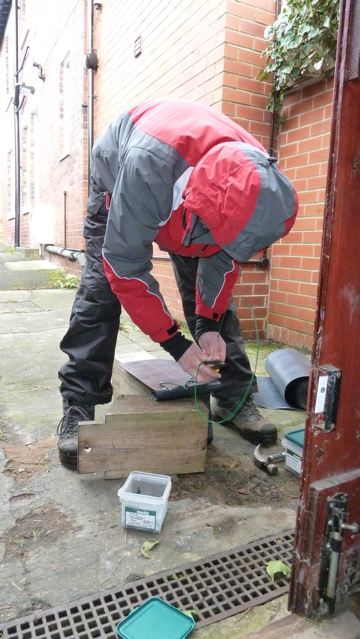
14-01-12-P1050057_2At the end of the morning, David joined your correspondent to help refurbish a couple more nest boxes.

Saturday, 4 January 2014: nest box repairs

Happy New Year!

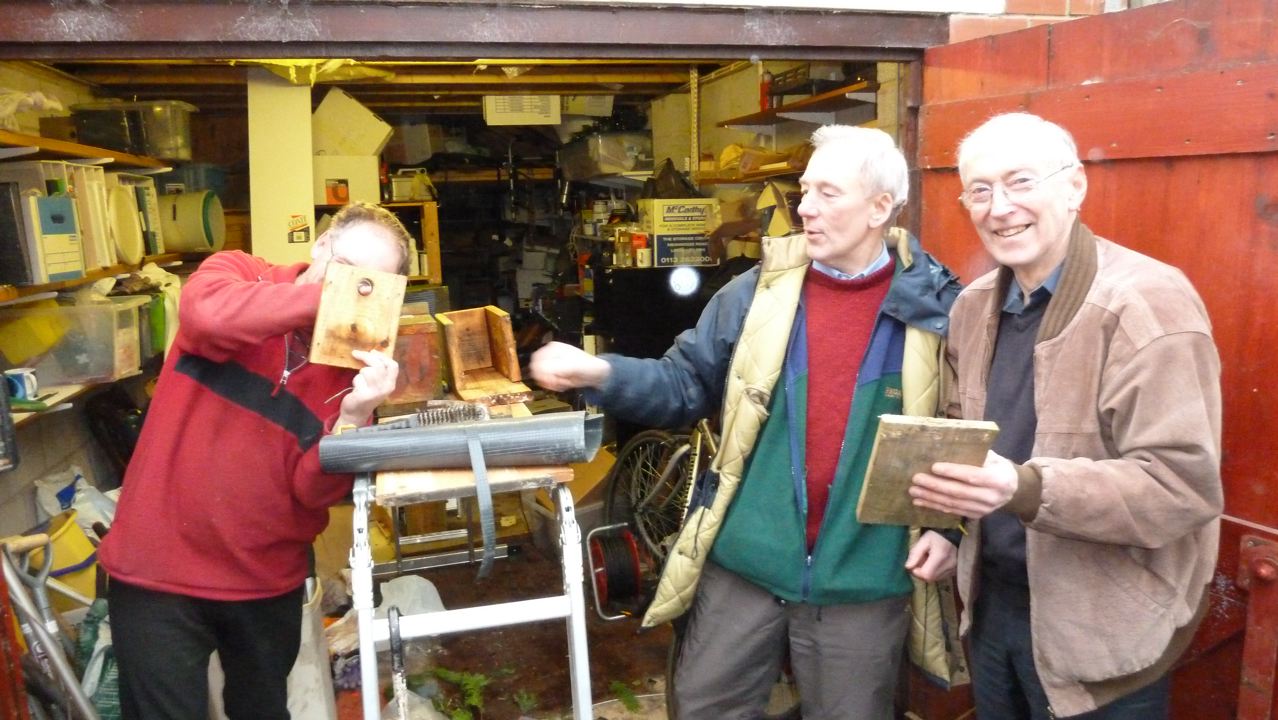
Four of us met for an hour or two to work off the Christmas excesses and refurbish half a dozen nest boxes which have been mouldering in a garage for the last year.

We cleaned them out and fitted each of them with a plastic covering for the roof and back so that they were all as good as new, if not better.

14-01-04-P1050031Any similarities to fictional characters like those in The Last of the Summer Wine are entirely coincidental.


Saturday 14 December 2013: Christmas Wreaths

I know that I have been calling them Christmas Garlands – ‘cos Steve Joul thought that sounds more upbeat – but I now accept that you are right and they are properly called Christmas Wreaths.

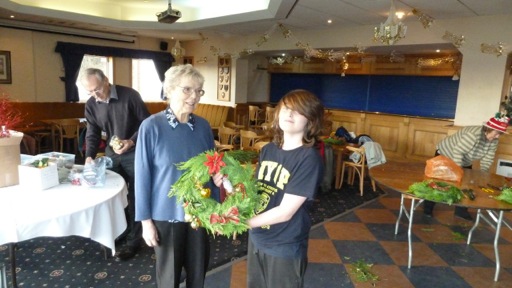
13-12-14-P1040977Last week a team of us did the preparatory work for today’s event and today a team of elves, fairies, imps, pixies and dryads (posh word for tree nymphs) met at Old Leo’s Rugby Club to express their artistic selves and create Christmas Wreaths for themselves and for the people who had requested that we make them one.

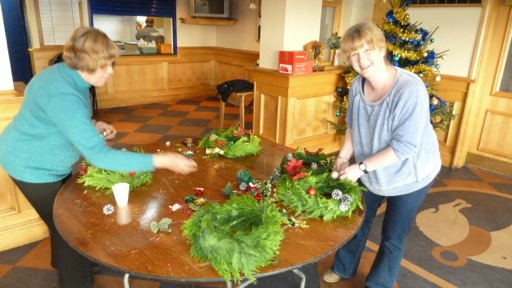
13-12-14-P1040979We had a production line of people creating the leylandii bases, and decorating them with baubles, pine cones, ribbons and artificial poinsettia.

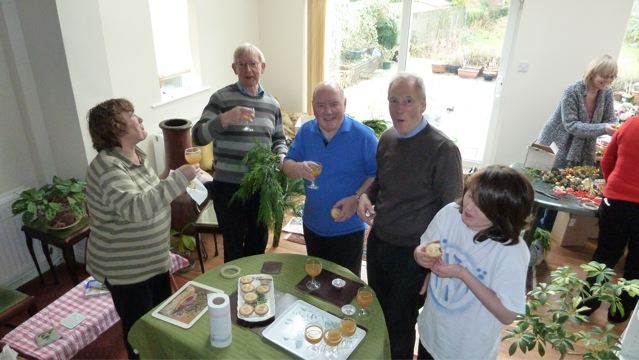
A very happy enjoyable morning – and early afternoon because we didn’t finish till nearly 2 pm.  However, the team was kept energised with Christmas music, mince pies and refreshments, and then easy listening music (sorry Louden).

P1040982A big thank you to everyone who took part and to Old Leo’s for letting us use their bar.  Your support is much appreciated.

We have had many messages of appreciation from the people who ordered a wreath.

13-12-14-P1040984

Saturday 7 December 2013: Christmas Garlands

It’s that time of year again, and a crack team met up this morning to prepare for next week’s Christmas Garland event.

13-12-07-P1040970We completed about 20 bases and through creative discussions and tensions managed to design a template for next week.

The team were rewarded with mince pies and non-alcoholic punch made by Barbara.

13-12-07-P1040976_2_2

Saturday 16 November 2013: The Hospice Woodland

Another great turn out.

13-11-16-P1040950While some of us litterpicked and your correspondent cleared leaves from the Stairfoot Lane steps, a team carried out further work on the Hospice Woodland.

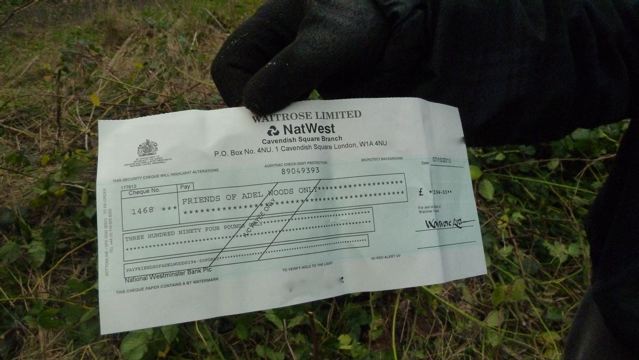
We took time to celebrate our cheque from Waitrose.  Thank you Waitrose!

13-11-16-P1040948_2

Sunday 10 November 2013: Thank you Waitrose

Thanks to the generosity of Waitrose and their customers, Friends of Adel Woods have received a grant of £394 to continue our work!

13-11-16-P1040948_2Waitrose invites customers to nominate a good cause which might benefit from a share of a £1,000 pot each month. Three good causes are selected and customers then receive tokens at the check out which they can use to vote for the good cause they would like to support.  The £1,000 pot is divided between the good causes according to the number of votes each receives.  We are very grateful to Waitrose and to everyone who has voted for us.

The committee have ideas for tools and equipment which the money could be used to buy.  Watch this space!

Sunday 27 October 2013: Fungi Walk: Steve Joul’s report

FOAW note:  If you want to eat fungi, buy them from the supermarket or learn from an expert.  The information on this website will not enable you to identify any edible fungi.

Foray Leader: Steve Joul

Foray Attendance: estimated 40 (30 adults and 10 children).

Number of species recorded: 29.

Recording of Fungi: Mary Page and Steve Joul.

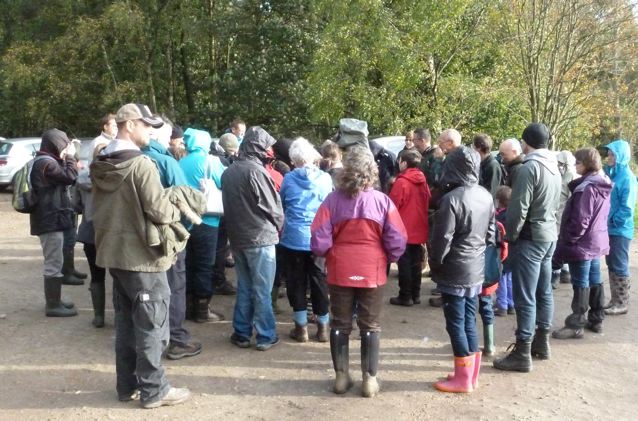
An enthusiastic crowd of mycologists!

An enthusiastic crowd of mycologists!

Foray Report: This fungal foray event was run for the Friends of Adel Woods and was open to the public, in the hope of attracting new members to the group. It was a dull and breezy afternoon but nevertheless a large crowd of around 40 people gathered. A small charge was made for adults but not children. 

Following an introduction in the rugby club car park we walked back along Cragg Lane towards King Lane to see a large Artist’s Bracket on a mature Beech tree. We then explored Alwoodley Craggs Plantation to see what other fungi we could find.

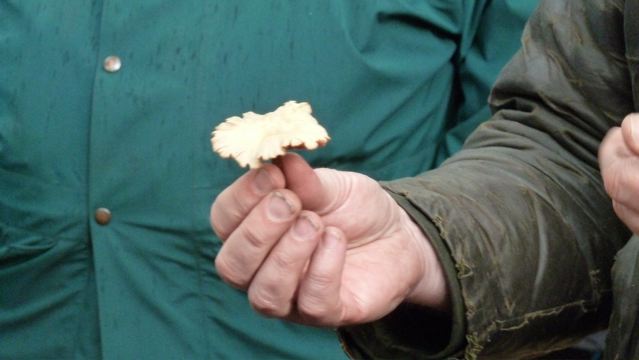
An unusual specimen of The Deceiver

An unusual specimen of The Deceiver

The presence of enthusiastic families with children ensured a continuous supply of fungi to be identified with Ochre Brittlegill and Butter Cap being particularly abundant. The Deceiver lived up to its name particularly well, with a large and frilly-edged pale tan example contrasting with a smaller, rounder, reddish brown specimen.

A Dead Man’s Finger had people recoiling in horror whilst the white milk from a Birch Milkcap turned yellow on a white handkerchief as it was supposed to. An apparently munchable-mushroom proved to be the toxic-toadstool Poisonpie whilst the alarmingly-coloured Amethyst Deceiver was in fact an example of an edible species.

The Brown Rollrim was one with an accumulative toxin that can take many years to take effect whilst the Matt Bolete had pores under the cap instead of the usual gills. There were superb examples of Wood Woolyfoot which lived up to its name and the Common Yellow Earthball included well-coloured specimens.

On returning to the car park the heavens opened and so we said our goodbyes quickly as we ran to the cover of the cars.

Sunday 27 October 2013: Fungi Walk with Steve Joul

On Thursday 24 October, your correspondent was panicking!  The weather forecast was for hurricane force winds and torrential rain on Sunday afternoon.  Would anyone turn up  for our fungal foray with Steve Joul?

In the event, the winds never reached Leeds, and Sunday afternoon was a beautiful afternoon, and the rain arrived only at five to four – though admittedly it was torrential.  There was an excellent turn out of adults and children.

13-10-27-P1040928Steve Joul began the afternoon in Old Leo’s carpark with a brief talk about mushrooms and fungi, handing round photographs and specimens to examine.  We then set off along Crag Lane and climbed up into Alwoodley Plantation, wondering along to the field adjacent to the Hospice Woodland, and then returning to Old Leo’s carpark.

13-10-27-P1040931_2Once in the plantation, search parties set off  enthusiastically to hunt for fungi, showing Steve specimens of all kinds of fungi or bringing them to him for identification.  Steve showed us interesting features of the specimens and impressed us with his knowledge not only of their common English names but also with their latin names!  Modestly, he told us that if you can learn to recognise the 24 most common fungi, you will be able to identify most of the fungi you find on a walk in the woods:  it is the other 12,500 species which are the difficult ones!  Your correspondent managed to learn to identify three more species of fungi – candlesnuff,  turkeytails and the deceiver.  Only 12,520 more to learn!

Steve identifying a toadstool

Steve identifying a toadstool

At the bottom of this page you will find a list of the fungi we found.  Thank you to Mary for this.  I have also put in a link to a website with a beginner guide to the common types of fungi.  I have put Steve’s report in the next entry on this blog.  Unfortunately, I cannot include Steve’s table with all the latin names.

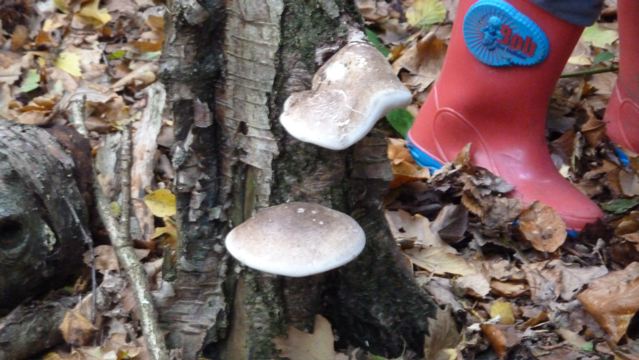
Birch Poly Pore and red wellington boot.

Birch Poly Pore and red wellington boot.

It was a great afternoon and it was really pleasing to see the many children really enjoying running around in the woods.  Who knows, a future expert might have been inspired this afternoon!

We managed to raise £92 towards FOAW funds.

A very big thank you to Steve for a very interesting and enjoyable talk.  And thanks to everyone who joined in.

LIST OF FUNGI WE FOUND (to find out more, see http://amanita-photolibrary.co.uk/HTML_BG_Fungi/x/x/ )

Tar Spot

Artist’s Bracket

Candle Snuff (aka Stag’s Horn)

Hairy Curtain Crust

Common Bonnet (Mycelium)

Ocre Brittlestem

The Deceiver

Beech Woodwort

Milkcap

Buttercap

Turkey Tails

Blackening Brittlestem

Wood Woollyfoot

Brown Roll Rim

Ugly Milkcap

Purple Jelly Disc

Boletus

Birch Polypore

Dead Man’s Fingers

Sulphur Tuft

Earthball

Yellow Earthball

Amethyst Deceiver

Fibre Cap

Oyster Fungus

Spangle Gall

Silk Button

Shaggy Scaly Cap (to be confirmed!)

Mottle Gill

White Hellvella

Poison Pie

Sunday, 20 October 2013: litterpicking, path clearing and the Hospice Wood

A great morning of litter picking, path clearing and tidying up the Hospice Woodland.

13-10-20-P1040904About a dozen of us met up and split into three teams:  the litter pickers, the path clearers and the Hospice Woodland tidiers.

The Hospice Wood

The Hospice Wood

The path clearers concentrated on removing branches intruding into Crag Lane –particularly at the height which would be a nuisance to horse riders.  This was particularly enjoyable as it gave us the chance to use our extendable loppers – seen here in Brian’s expert hands!

The Hospice Wood team did a great job clearing brambles and other plants which were growing over the trees.

Some of the Hospice Wood team

Some of the Hospice Wood team