Category Archives: fungal foray

Sunday, 26th October 2025: exploring fungi – a second Fungal Foray in Adel Woods with expert naturalist Steve Joul.

Friends of Adel Woods and a fungal foray in Adel Woods on 26th October 2025
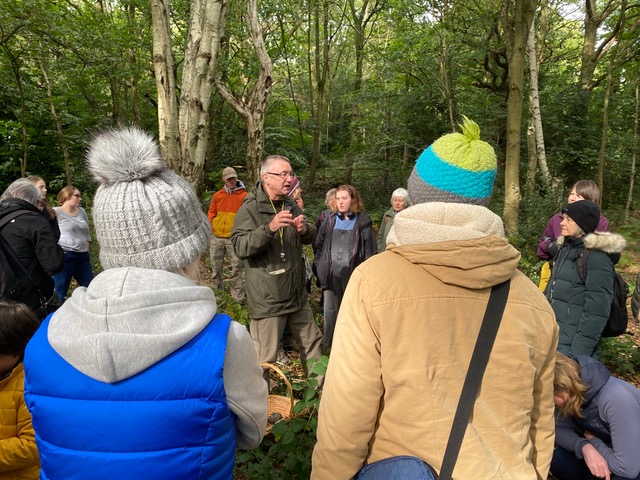
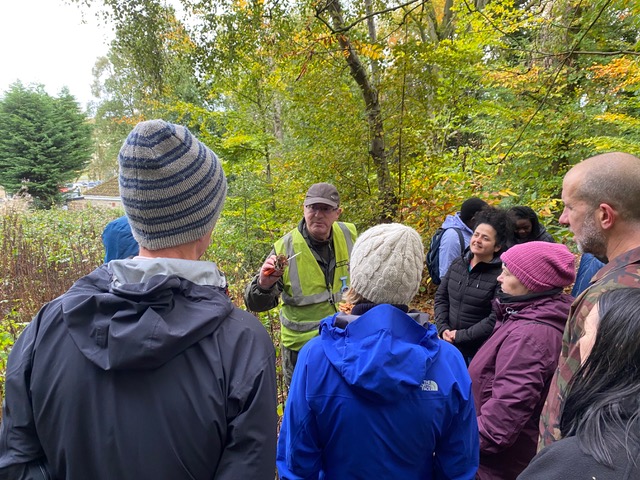
Steve shows a specimen to an enthusiastic audience

This was our second Fungal Foray with Steve Joul this October: our Foray on the 5th October was so overbooked that we hardly needed to advertise this one!

We met at 1.45 pm in the Village Green carpark where our Chair welcomed our participants, introduced Steve, and explained that this was not a foraging event for edible fungi, but an opportunity to learn about the many and varied fungi to be found in Adel Woods.

After the Chair’s introduction, Steve led us along Crag Lane into the woods and, after passing the bungalow, into Alwoodley Plantation.

Candle snuff fungus in Adel Woods on a fungal foray with Steve Joul and Friends of Adel Woods on 26th October 2025
Candlesnuff fungus (Xylaria hypoxylon)

Once in the plantation, Steve explained that what we think of as fungi and mushrooms are in fact the fruiting bodies of organisms whose main body is concealed in the soil or wood in which they are growing. 

There are many thousands of different fungi and mushrooms in the UK which means that it is impossible to know the names of all of them. However, Steve has a list of the two hundred or so most common species which we are likely to find in Adel Woods. 

He explained that Identifying fungi involves taking into account such factors as:

  • where the fungus is growing – for example on or nearby a particular species of tree;
  • its shape, colour, size, and smell;
  • how it scatters its spores, the reproductive cells: for example, some drop spores, and some shoot them out!

In some cases it is only possible to identify a fungus with the aid of a magnifying glass or a microscope and a text book. Correct identification is essential because most fungi are inedible and many are poisonous.
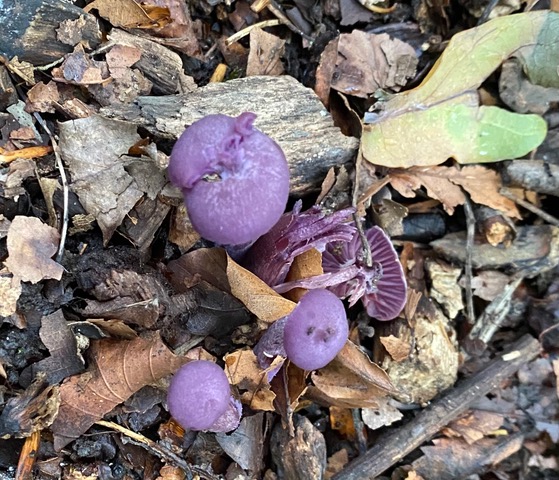
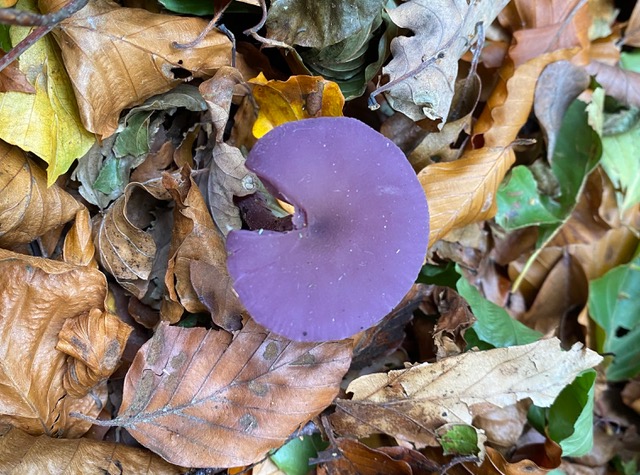
Amethyst Deceiver  in Adel Woods on a fungal foray with Steve Joul and Friends of Adel Woods on 26th October 2025
Amethyst deceivers (Laccaria amethystina)

The task of identifying fungi is made more difficult because there is often more than one common name for a species and their Latin names can change as species are re-classified as more is learned about them. Impressively, Steve knows the common names and the Latin names of most of the common species.

He explained that some fungi have a special relationship with particular species of trees whereby the fungus provides nutrients to the roots of the tree and the tree provides nutrients to the fungus.

After Steve’s introduction we made our way further into the Plantation searching for fungi on logs, trees, and in the leaf litter. Fortunately we had some very good fungi hunters in our group, especially among the future adults, and during the course of the afternoon, we found forty one species of fungus, many of which Steve collected in his basket. You can find a complete list of the species, giving common English and formal Latin names, at the end of this post.
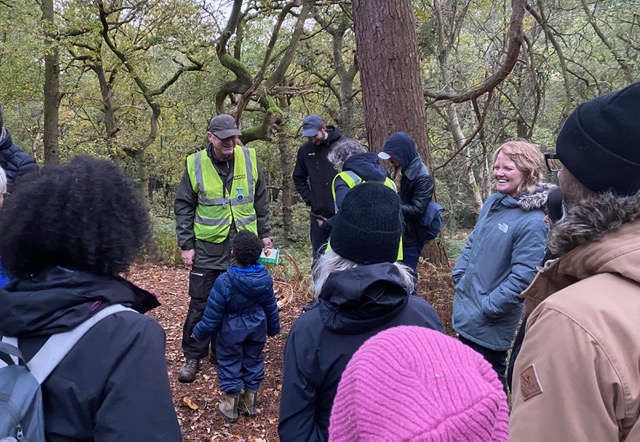
A fungal foray with Steve Joul and Friends of Adel Woods on Sunday 26th October 2025
A young person asks Steve a question

A selection of the fungi found during today’s foray

Here are photographs of some of the fungi we found this afternoon…
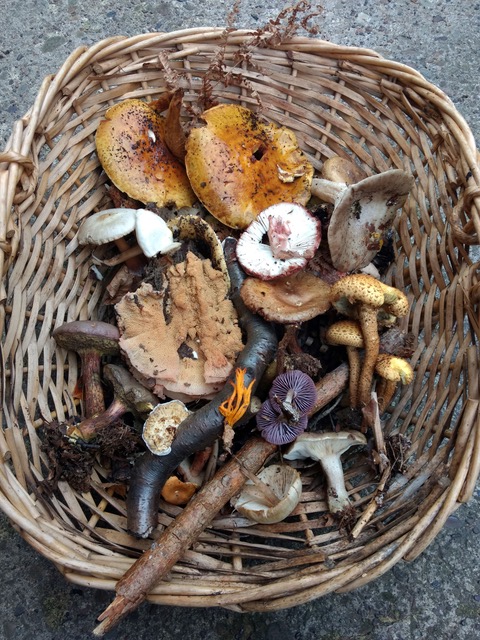
A collection of fungi in Adel Woods on a fungal foray with Steve Joul and Friends of Adel Woods on 26th October 2025
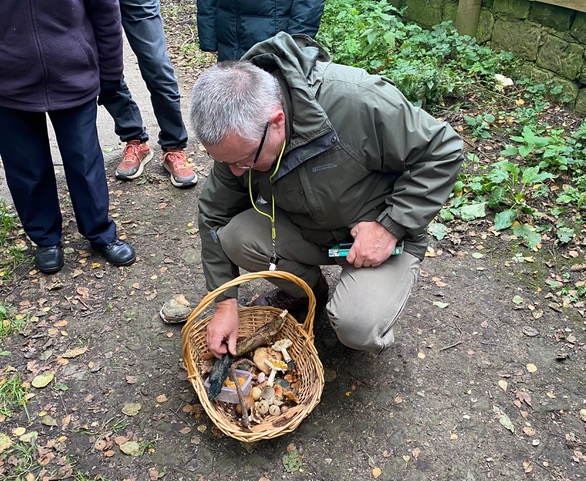
Steve’s basket at the end of the foray
Tripe fungus in Adel Woods on a fungal foray with Steve Joul and Friends of Adel Woods on 26th October 2025
Tripe fungus (Auricularia mesenterica)
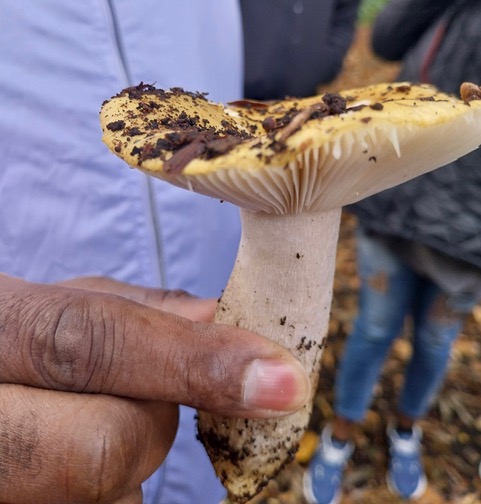
Ochre brittle gill  in Adel Woods on a fungal foray with Steve Joul and Friends of Adel Woods on 26th October 2025
Ochre brittle gill (Russula ochroleuca)
Blushing bracket in Adel Woods on a fungal foray with Steve Joul and Friends of Adel Woods on 26th October 2025
Blushing bracket (Daedaleopsis confragosa)
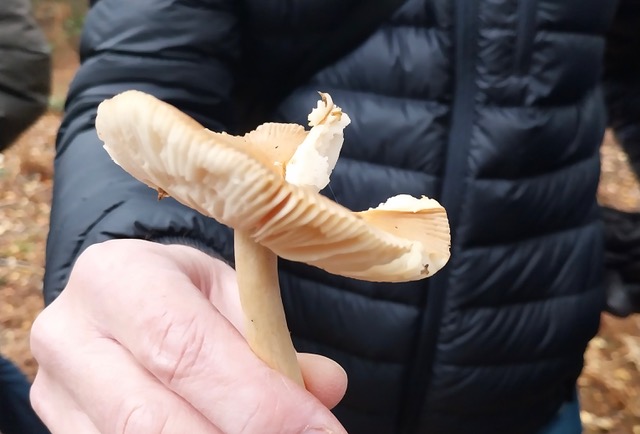
Tawny grisette in Adel Woods on a fungal foray with Steve Joul and Friends of Adel Woods on 26th October 2025
Tawny grisette (Amanita fulva)
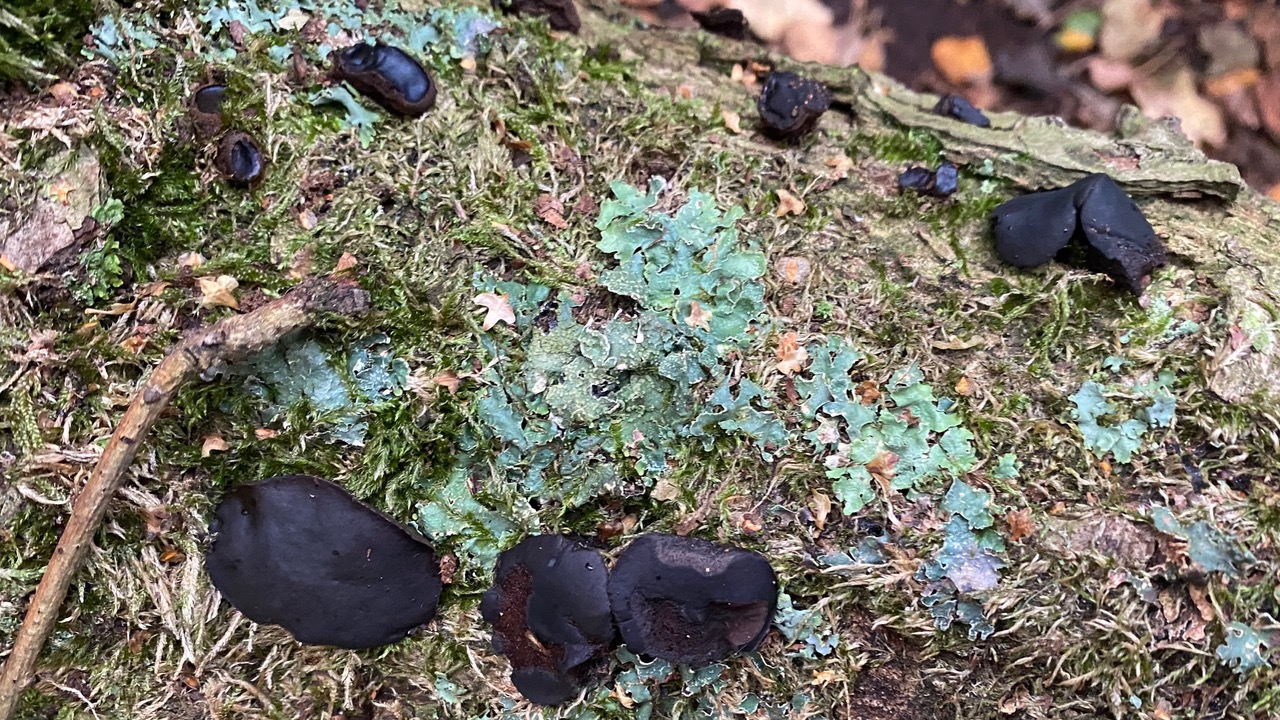
Black bulgar fungus in Adel Woods on a fungal foray with Steve Joul and Friends of Adel Woods on 26th October 2025
Black bulgar (Neobulgaria pura)
Butter cap fungus in Adel Woods on a fungal foray with Steve Joul and Friends of Adel Woods on 26th October 2025
Butter cap (Collybia butyracea)
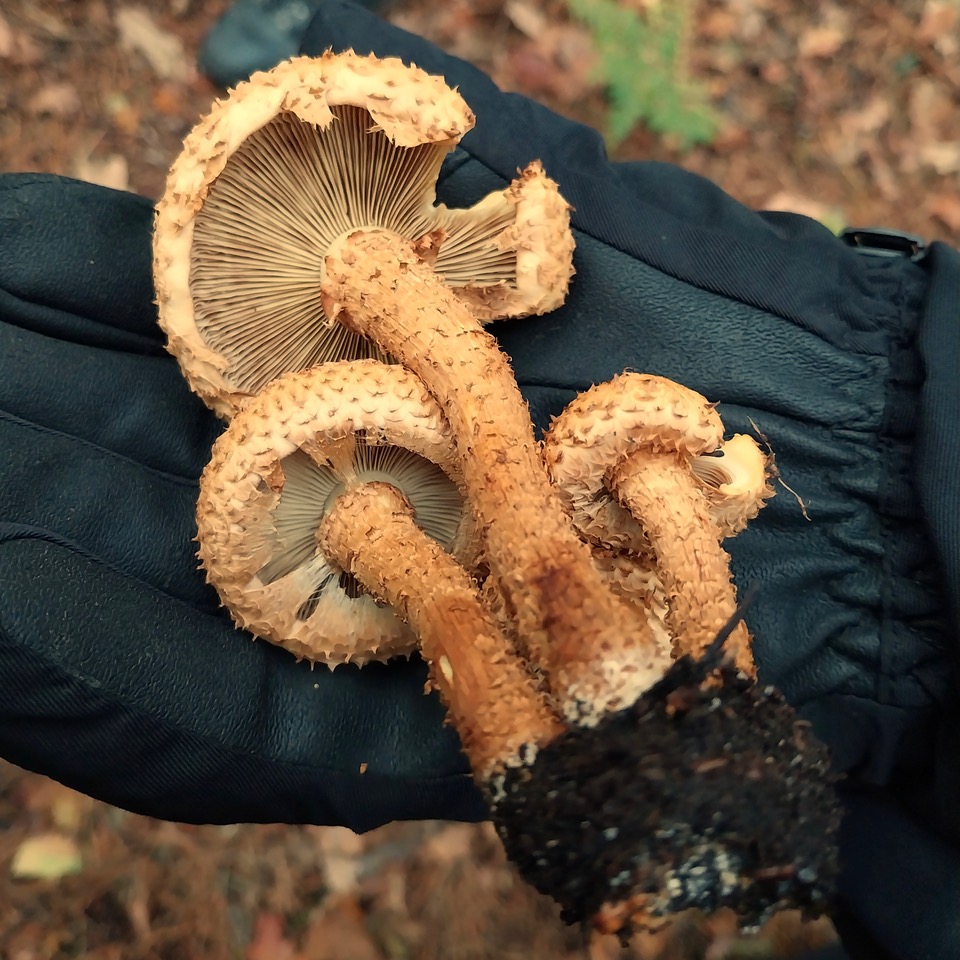
Shaggy scalycap fungus in Adel Woods on a fungal foray with Steve Joul and Friends of Adel Woods on 26th October 2025
Shaggy scalycap (Pholiota squarrosa)
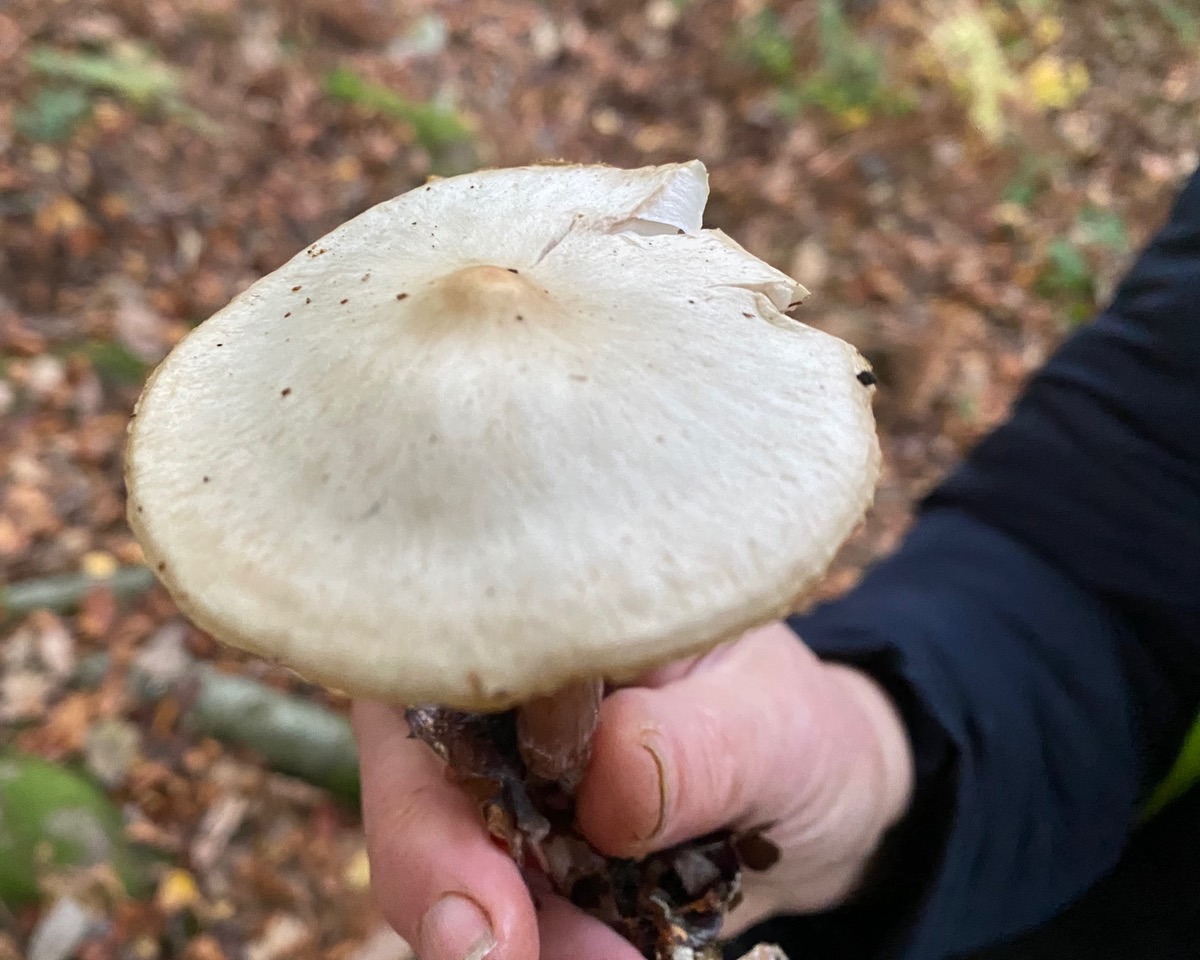
Milk cap fungus in Adel Woods on a fungal foray with Steve Joul and Friends of Adel Woods on 26th October 2025
Milkcap – precise species uncertain. These owe their name to the latex they produce when cut or bruised
Rufous milkcap fungus in Adel Woods on a fungal foray with Steve Joul and Friends of Adel Woods on 26th October 2025
Rufous milkcap (Lactarius rufus)
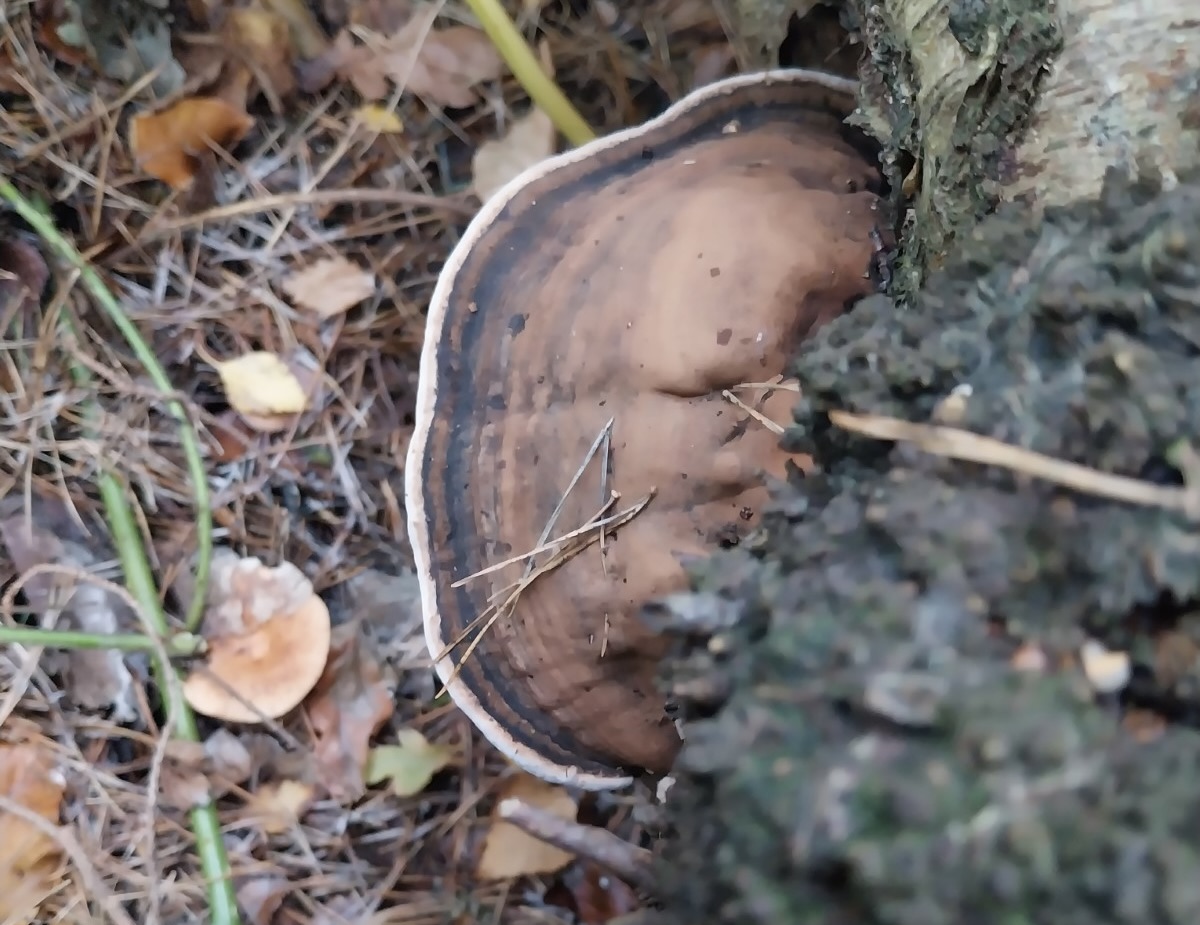
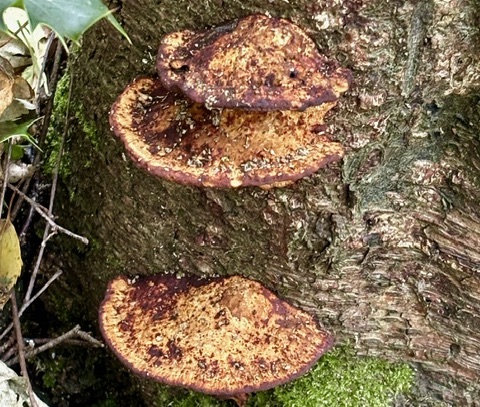
Southern bracket fungus in Adel Woods on a fungal foray with Steve Joul and Friends of Adel Woods on 26th October 2025
Southern bracket (Ganoderma adspersum)
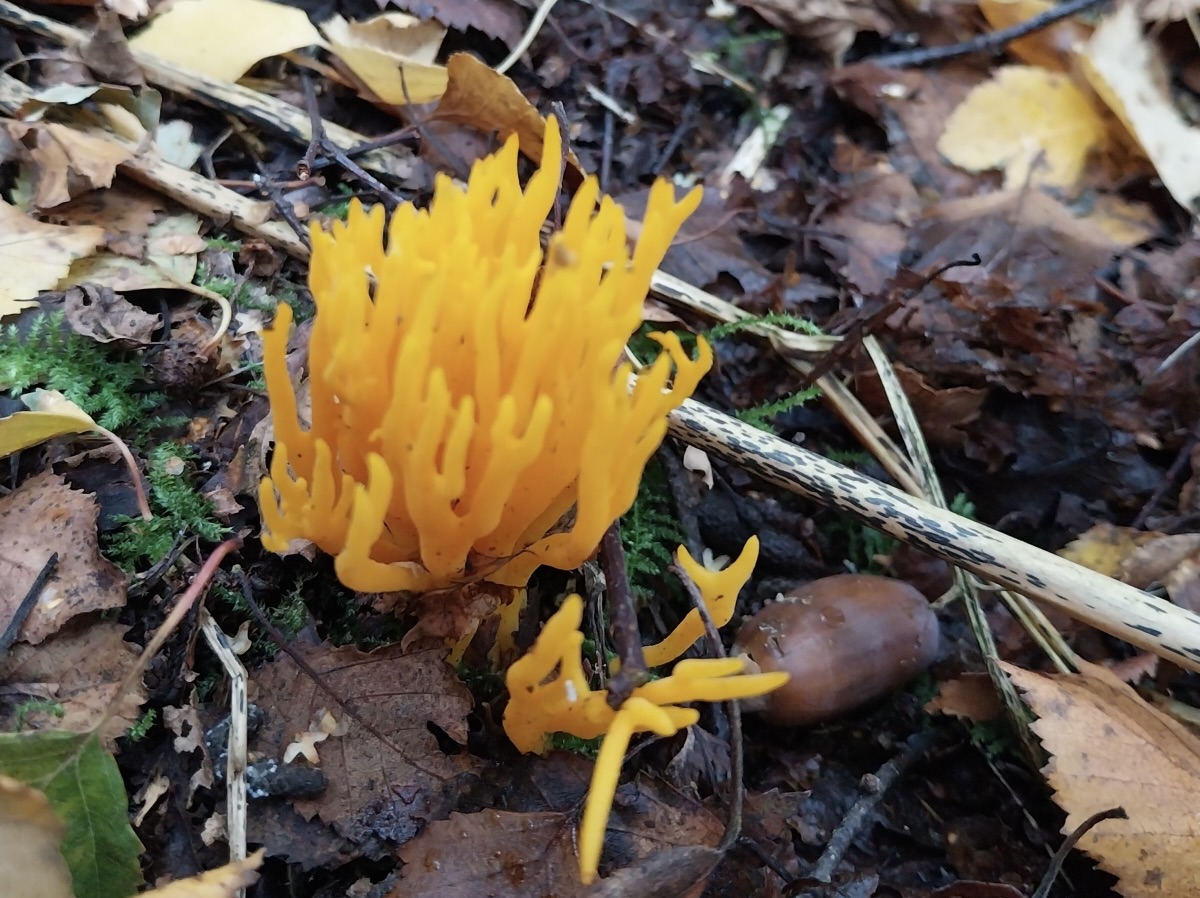
Yellow stagshorn fungus in Adel Woods on a fungal foray with Steve Joul and Friends of Adel Woods on 26th October 2025
Yellow stagshorn (Calocera viscosa)

A list of the forty one species found during this afternoon’s foray

  • Amethyst Deceiver Laccaria amethystina
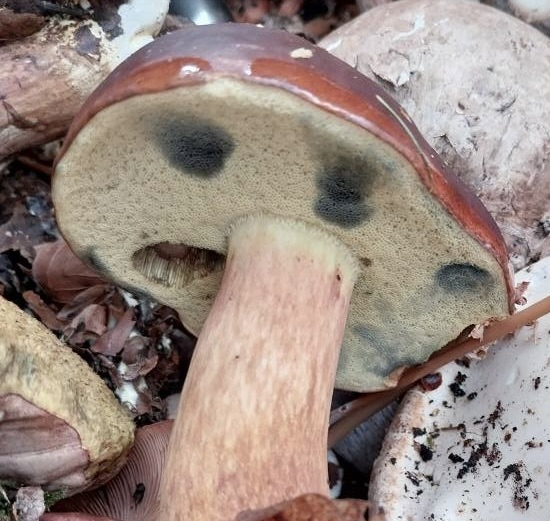
  • Bay Bolete Imleria badia
  • Beech Woodwart Hypoxylon fragiforme
  • Beech Milkcap Lactarius blennius
  • Birch Milkcap Lactarius tabidus
  • Birch Polypore Fomitopsis betulina
  • Birch Woodwart Jackrogersella multiformis
  • Black Bulgar Neobulgaria pura
  • Blusher Amanita rubescens
  • Blushing Bracket Daedaleopsis confragosa
  • Branching Oyster Pleurotus cornucopiae
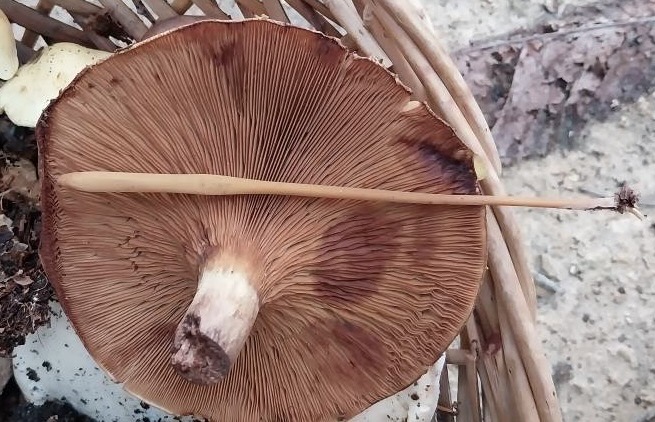
  • Brown Rollrim Paxillus involutus
  • Butter Cap Collybia butyracea
  • Candlesnuff Fungus Xylaria hypoxylon
  • Chicken Of The Woods Laetiporus sulphureus
  • Clustered Bonnet Mycena inclinata
  • Clustered Toughshank Gymnopus confluens
  • Common Bonnet Mycena galericulata
  • Deer Shield Pluteus cervinus
  • False Chanterelle Hygrophoropsis aurantiaca
  • Goldleaf Shield Pluteus romellii
  • Jelly Ear Auricularia auricula-judae
  • Leafy Brain Tremella foliacea
  • Mild Milkcap Lactarius subdulcis
  • Oakbug Milkcap Lactarius quietus
  • Ochre Brittlegill Russula ochroleuca
  • Peppery Milkcap Lactarius piperatus
  • Poisonpie Hebeloma crustuliniforme
  • Purple Brittlegill Russula atropurpurea
  • Red Cracking Bolete Xerocomellus chrysenteron
  • Rufous Milkcap Lactarius rufus
  • Shaggy scalycap Pholiota squarrosa
  • Smoky Bracket Bjerkandera adusta
  • Southern Bracket Ganoderma adspersum
  • Spectacular Rustgill Gymnopilus junonius
  • Sulphur Tuft Hypholoma fasciculare
  • Tawny Grisette Amanita fulva
  • Tripe Fungus Auricularia mesenterica
  • Turkeytail Trametes versicolor
  • Ugly Milkcap Lactarius turpis
  • Yellow Stagshorn Calocera viscosa

Join Friends of Adel Woods!

We hope that you have enjoyed reading about our activities and would be delighted if you would like to join us.

Friends of Adel Woods were formed in 2009 to help maintain Adel Woods and encourage people to enjoy them. We meet one weekend morning a month to carry out various jobs or ”work parties”, and we also put on educational events such as bat walks, fungal forays and birdsong walks.

We are a very friendly group and welcome new members who want to help preserve our special woods, enjoy fresh air and exercise in the woods, and make new friends. 

If you would like to take part in our activities, keep an eye on our Home Page. You don’t need to book to come along to one of our work “parties”: just come along.

If you would like to join our email mailing list, please get in touch by leaving a comment on this website – you should be able to see a comment button at the bottom of this page.
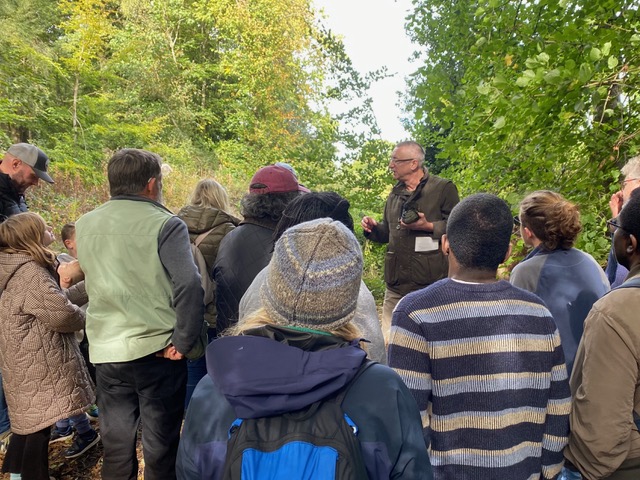
Sunday, 5th October 2025: a Fungal Foray with expert naturalist Steve Joul

This afternoon nineteen adults and eight children gathered in Alwoodley Village Green carpark for a Fungal Foray led by Steve Joul. This was not a foraging event for edible fungi, but an opportunity to learn about the many and varied fungi to be found in Adel Woods.

After a brief introduction to Friends of Adel Woods by our Chair, Steve led us along Crag Lane into the woods and, after passing the bungalow, into Alwoodley Plantation.

Friends of Adel Woods: a fungal foray on 5th October 2025

Once in the plantation, Steve explained that what we think of as fungi and mushrooms are in fact the fruiting bodies of organisms whose main body is concealed in the soil or wood in which they are growing.

There are many thousands of different fungi and mushrooms in the UK which means that it is impossible to know the names of all of them. However, Steve has a list of the two hundred or so most common species which we are likely to find in Adel Woods.

He explained that Identifying fungi involves taking into account such factors as:

  • where the fungus is growing – for example on or nearby a particular species of tree
  • its shape, colour, size, and smell
  • how it scatters its spores, the reproductive cells: for example, some drop spores, and some shoot them out!

In some cases it is only possible to identify a fungus with the aid of a magnifying glass or a microscope and a text book. Correct identification is essential because most fungi are inedible and many are poisonous.

Friends of Adel Woods: a fungal foray on 5th October 2025
Sulfur tuft mushroom

The task of identifying fungi is made more difficult because there is often more than one common name for a species and their Latin names can change as species are re-classified as more is learned about them. Impressively, Steve knows the common names and the Latin names of most of the common species.

Amethyst Deceiver: Friends of Adel Woods: a fungal foray on 5th October 2025
Amethyst Deceiver (laccaria amethystina)

He explained that some fungi have a special relationship with particular species of trees whereby the fungus provides nutrients to the roots of the tree and the tree provides nutrients to the fungus.

Friends of Adel Woods: a fungal foray on 5th October 2025

After Steve’s introduction we made our way further into the Plantation searching for fungi on logs, trees, and in the leaf litter. Fortunately we had some very good fungi hunters in our group, especially among the future adults, and during the course of the afternoon, we found fifty species of mushroom, many of which Steve collected in his basket. You can find a complete list of the species, giving common English and formal Latin names, at the end of this post.

Friends of Adel Woods: a fungal foray on 5th October 2025
That’s an interesting find!

Some of the fungi have very strange common names: “turkey tail”; “hairy curtain crust”; “leafy brain”; “earpick fungus” and “ugly milkcap”. During the afternoon one of our number was heard to exclaim to Steve: “You’re making these names up: you could tell us anything and we’d believe it!”

The foray finished at 4 pm by which time we had gathered a wonderful diversity of fungi species.

Friends of Adel Woods: a fungal foray on 5th October 2025
Steve’s basket at the end of the walk

Once again it was a fantastic afternoon of discovery, learning and fun. Thank you to Steve and everyone who took part.

————————–

A selection of the fungi found during today’s foray

Here are photographs of some of the fungi we found this afternoon – more or less in the order we found them…

Clustered Bonnet, and Deceiver (probably – not all features visible)
Angel Bonnet
Amethyst Deceiver viewed directly from above
A variety of milkcap – so called because it produces a white milky substance when handled
Earpick Fungus (auriscalpium vulgare) – typically found on decaying pine cones
Earpick fungus (auriscalpium vulgare) viewed from below
Bay Bolete (imleria badia) – a fungus which develops blue bruises when handled
Two for the price of one: a pipe club fungus lying on top of what is probably a brown rollrim
Aniseed Funnel (clitocybe odora), so named because it smells of aniseed
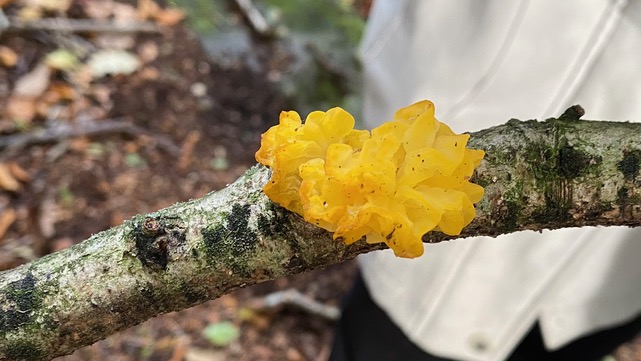
Yellow Brain Fungus (tremella mesenterica)
Fly Agaric (amanita muscaria)

A list of all the fungi found during today’s foray

  • Alder Scalycap (Pholiota alnicola)
  • Amethyst Deceiver (Laccaria amethystina)
  • Aniseed Funnel (Clitocybe odora)
  • Bay Bolete (Imleria badia)
  • Beech Barkspot (Diatrype disciformis)
  • Beech Milkcap (Lactarius blennius)
  • Beech Woodwart (Hypoxylon fragiforme)
  • Birch Milkcap (Lactarius tabidus)
  • Birch Polypore (Fomitopsis betulina)
  • Black Bulgar (neabulgaria pura)
  • Blusher (amanita rubescens)
  • Branching Oyster (pleurotus cornucopiae)
  • Brown Mottlegill (panaeolina foenisecii)
  • Brown Rollrim (paxillus involutus)
  • Buttercap (collybia butyracea)
  • Candlesnuff Fungus (xylaria hypoxylon)
  • Common Bonnet (mycena galericulata)
  • Common Earthball (scleroderma citrinum)
  • Common Funnel (infundibulicybe gibba)
  • Common Puffball (lycoperdon perlatum)
  • Deceiver (laccaria laccata)
  • Deer Shield (pluteus cervinus)
  • Earpick Fungus (auriscalpium vulgare)
  • Fly Agaric (amanita muscaria)
  • Ganoderma Bracket (ganoderma sp.)
  • Glistening Inkcap (coprinellus micaceus)
  • Grisette (amanita vaginata)
  • Hairy Curtain Crust (stereum hirsutum)
  • Honey Fungus (armillaria mellea)
  • Hoof Fungus (fomes fomentarius)
  • Jelly Ear (auricularia auricula-judae)
  • Leafy Brain (tremella foliacea)
  • Oakbug Milkcap (lactarius quietus)
  • Ochre Brittlegill (russula ochroleuca)
  • Penny Bun (boletus edulis)
  • Pipe Club (macrotyphula fistulosa)
  • Purple Brittlegill (russula atropurpurea)
  • Red Cracking Bolete (xerocomellus chrysenteron)
  • Rufous Milkcap (lactarius rufus)
  • Russet Toughshank (gymnopus dryophilus)
  • Shaggy Parasol (chlorophylum rhacodes)
  • Shaggy Scalycap (pholiota squarrosa)
  • Silky Rosegill (vovariella bombycina)
  • Smoky Bracket (bjerkandera adusta)
  • Sulphur Tuft (hypholoma fasciculare)
  • Turkeytail (trametes versicolor)
  • Ugly Milkcap (lactarius turpis)
  • White Brain (exidia thuretiana)
  • Yellow Brain (tremella mesenterica)
  • Yellow Stagshorn (calocera viscosa)

JOIN FRIENDS OF ADEL WOODS!

We hope that you have enjoyed reading about our activities and would be delighted if you would like to join us.

Friends of Adel Woods were formed in 2009 to help maintain Adel Woods and encourage people to enjoy them. We meet one weekend morning a month to carry out various jobs or ”work parties”, and we also put on educational events such as bat walks, fungal forays and birdsong walks.

We are a very friendly group and welcome new members who want to help preserve our special woods, enjoy fresh air and exercise in the woods, and make new friends. 

If you would like to take part in our activities, keep an eye on our Home Page.

You don’t need to book to come along to one of our work “parties”: just come along. Our next work party is on Saturday 22nd November 2025 when we will be working with our local ranger, Joe Craig-Jackson.

If you would like to join our email mailing list, please get in touch by leaving a comment on this website – you should be able to see a comment button at the bottom of this page.
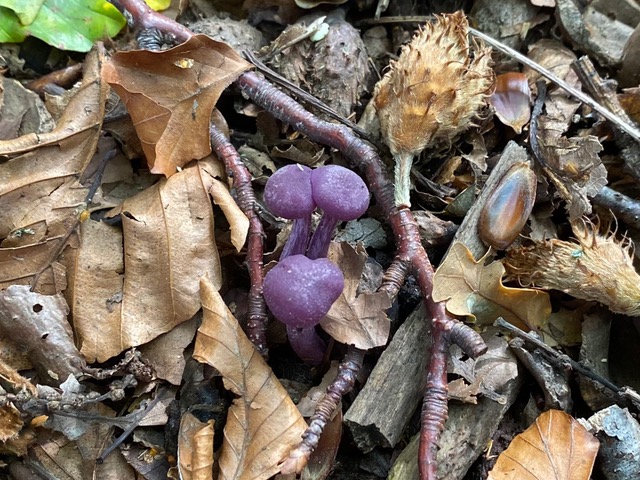
Thursday, 22nd May 2025: Chair’s report to the Annual General Meeting

Preparing for a litterpick

We are just about to complete our sixteenth year since Friends of Adel Woods came into being, and the last twelve months have been successful with many work parties and educational walks and talks.

Work parties

Usually, our work parties comprises a team of litterpickers and another team carrying out a task such as path clearing.

In the last year we have had twelve mornings of litterpicking and picked up about fifty bags of rubbish – so hats off to our dedicated band of litterpickers! We haven’t kept a tally, but it seems likely that since Friends of Adel Woods was formed, we have picked up over eight hundred bags of rubbish – in addition to disposing of larger items such as tyres and beer barrels!

Some of the rubbish we have collected over the last year

As well as litterpicking we have completed fifteen and a half mornings on the following tasks:

  • one morning working on Adel Moor with David Preston removing bracken, brambles and saplings. 
  • one morning clearing bracken from around the Buck Stone
  • three mornings mowing the orchid meadow
  • four mornings clearing paths and fallen trees
  • three mornings working on Adel Bog (1 with David Preston)
  • one morning dredging Adel Pond with David Preston 
  • one and a half days of nest box cleaning and surveying with Steve Joul
  • one morning putting tree guards on the orchard in the practice rugby field
Working on the orchid meadow with David Preston

Educational events

Since the last AGM we have had six educational walks – five with Steve Joul, and one with Leeds City Council ranger, David Preston.  They were all a great success.

A fungal foray with Steve Joul on 17th November 2024

Steve led a variety of walks:

  • 30th June: exploring biodiversity – a joint event with Alwoodley 2030
  • 20th July: a stream and pond safari
  • 29 September: a fungal foray
  • 17th November: a fungal foray
  • 4th May this year, a birdsong walk

On 28th August David led a guided batwalk attended by twenty six adults and nine children.

A bat walk with David Preston on 28th August 2024

I know from speaking to people who attend, and the messages I get from participants after these events, that people really enjoy them.

The Friends of Adel Woods Blog

If you would like to know more about our activities, please have a look at our blog entries. 

Grants

Putting tree guards on the orchard in bitterly cold driving rain

We have received two grants in the last year. 

In February we received a grant from Alwoodley 2030 to purchase tree guards for the orchard in the practice rugby field as the trees were suffering damage from deer and rabbits.

This month the Leeds Together Fund awarded Friends of Adel Woods a grant to purchase three litterpickers and six bin bag hoops.  The purpose of the grant was to put on a community event during May and on the 31st May we are having a community litterpick.

Improvements to the Stairfoot Lane Carpark and Crag Lane

The Stairfoot Lane carpark after improvements

In December Leeds City Council resurfaced the Stairfoot Lane carpark and created a separate fenced off path through the carpark for the route of the Meanwood Valley Trail to keep pedestrians away from vehicles.  This was clearly a big improvement.

In February the council resurfaced Crag Lane from the Stairfoot Lane carpark to Old Leo’s rugby club. This involved scraping off the mud from the surface, laying hardcore and then creating the new surface.  This end result is a great improvement to Crag Lane.  

Crag Lane after resurfacing work

However, my particular reason to mention this is that one of our regular volunteers, Matthew, contacted me on the 9th February, before the work was completed. He was very concerned because he had noticed that the hardcore used was of poor quality  – containing crushed bricks, concrete, white ceramics and plastic piping –  which was completely unacceptable in a woodland area.  I contacted our local councillors and David Preston and passed on Matthew’s concerns and  the result was that the worst hardcore was scraped off, and replaced with better quality hardcore.

So thank you very much to Matthew.

Water Quality in our Local Streams

Possible pollution in Adel Beck

Pollution of our rivers is a hot topic at the moment and in the past it has been raised with me by members of Friends of Adel Woods.  One of the problems about looking into this is having accurate information about whether the streams are polluted or not.

In October last year I met up with a PhD student at Leeds who is active in promoting citizen science projects relating to water quality of our local streams.  On 10th October, I walked with her along Nanny Beck and Meanwood Beck to look for signs of pollution and in February I organised a meeting of members of Friends of Adel Woods who would like to get involved in a water sampling project.  About fourteen people attended the meeting. I am organising a meeting to form two or three groups who will take responsibility for the sampling. While it makes sense for Friends of Adel Woods to help steer this project, I am hoping that this will become a separate self-sustaining project.

Yorkshire Wildlife Trust event

On the 19th November, three of our committee – Steve, Sue and myself – went to an event organised by Alwoodley 2030 when Yorkshire Wildlife Trust gave a talk on the state of nature in Yorkshire.

Thank yous

Working on Adel Bog

So as usual, I would like to thank our committee and volunteers for all the work they have done over the last year.  FOAW would not exist without the committee and volunteers.  And I am looking forward to another year of fun, laughter and friendship. New members are always welcome!

I would particularly like to thank Judith for all the work she has done as treasurer over the last 16 years, and Stephanie who was our secretary from 2009 until July of last year.

Steve Joul on a stream and pond safari

Thank you to Steve Joul for leading five educational events this year – and helping to raise funds for Friends of Adel Woods.

Thank you to David Preston for the work he has done with us the last year. David is changing jobs to join the Public Rights of Way team imminently, and so we may not work with him again.

Looking to the future

As I and the rest of the committee get older, I get more concerned about how to ensure that Friends of Adel Woods continues for years to come.  This is something which we need to consider over the coming year. New volunteers are always welcome!

Roger Gilbert

Chair of Friends of Adel Woods

COME ALONG TO FRIENDS OF ADEL WOODS EVENTS!

We hope that you have enjoyed reading about our activities and would be delighted if you would like to join us.

Friends of Adel Woods were formed in 2009 to help maintain Adel Woods and encourage people to enjoy them. We meet one weekend morning a month to carry out various jobs or ”work parties”, and we also put on educational events such as bat walks, fungal forays and birdsong walks.

We are a very friendly group and welcome new members who want to help preserve our special woods, enjoy fresh air and exercise in the woods, and make new friends. If you would like to take part in our activities, keep an eye on our Home Page and come along to one of our work parties.

If you would like to join our email mailing list, please get in touch by leaving a comment on this website – you should be able to see a comment button at the bottom of this page.

Sunday 17th November 2024: a further Fungal Foray in Adel Woods with Steve Joul

Our second Fungal Foray with Steve Joul this Autumn.

We met in Alwoodley Village Green carpark at 2 pm and Steve gave an introductory talk about Adel Woods and fungi before we moved on to the area just behind the cottage adjacent to the car park.

Steve Joul giving a talk on fungi in Adel Woods, Leeds

Having pointed out a sparrow hawk perched in a nearby tree, Steve explained that there are about 13,000 different species of fungi in the UK and new species are arriving in the UK through travel and trade.

Blushing Rosette (Abortiporus biennis) in Adel Woods on 17th November 2024
Blushing Rosette (Abortiporus biennis)

Whilst there are many thousands of species in the UK, there are about two hundred common species which we are likely to find in Adel Woods. These days we identify or categorise species of fungi by their DNA rather than by their morphology (ie their shape and structure).They often have more than one name and so it is best to identify them by their Latin name, or by their recommended English names.

Many species are associated with particular species of trees – for example, you will see on many birch trees in Adel Woods, the birch polypore (fomitopsis betulina).

A small specimen of the common earth ball (Scleroderma citrinum)

The part of the fungus that we see is the fruiting body, while most of the organism is underground or within the dead wood of the tree. The part of the fungus within the soil or wood is called the mycelium, an interconnected network of thin threads called hyphae.

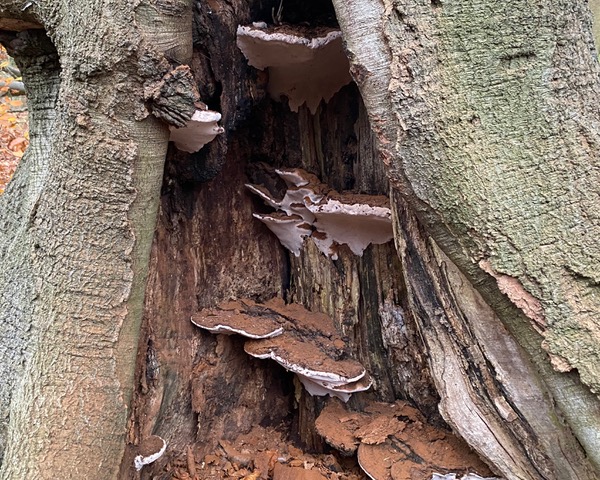
Ganoderma bracket (ganoderma sp.): the brown powder that looks like cocoa is made up of spores dropped from the brackets above.

The fruiting body produces millions of spores which, when spread, will grow into new individuals. Some species allow their spores to drop from the fruiting body into the air below: others (like the puff balls) forcibly eject spores allowing the spores to travel long distances.

Fungi may reproduce asexually or sexually. Sexual reproduction is complex: there may be more than six different sexes!

During the afternoon, we made our way from the cottage, through the Plantation on the north side of Crag Lane, and eventually reached the Stairfoot Lane car park. From there we made our way back along Crag Lane to King Lane.

As we made our way, adults and children enthusiastically searched for specimens which they brought to Steve to identify.

Friends of Adel Woods: a fungal foray led by Steve Joul in Adel Woods on the 17th November 2024
Steve examines a specimen of rooting shank found on Crag Lane near Old Leo’s clubhouse

In the course of the afternoon we found eighteen species of fungi, some of which appear in photographs below. Here is a complete list – the species in red being a new one for Adel Woods:

  • Birch Polypore (Fomitopsis betulina)
  • Birch Woodwart (Jackrogersella multiformis)
  • Blushing Rosette (Abortiporus biennis)
  • Brown Rollrim (Paxillus involutus)
  • Common Earthball (Scleroderma citrinum)
  • Coral Spot (Nectria cinnabarina)
  • Ganoderma Bracket (Ganoderma sp.)
  • Glistening Inkcap (Coprinellus micaceus)
  • Hairy Curtain Crust (Stereum hirsutum)
  • Hoof Fungus (Fomes fomentarius)
  • Jelly Ear (Auricularia auricula-judae)
  • Rooting Shank (Hymenopellis radicata)
  • Silverleaf Fungus (Chondrostereum purpureum)
  • Smoky Bracket (Bjerkandera adusta)
  • Sulphur Tuft (Hypholoma fasciculare)
  • Sycamore Tar Spot (Rhytisma acerinum)
  • Turkeytail (Trametes versicolor)
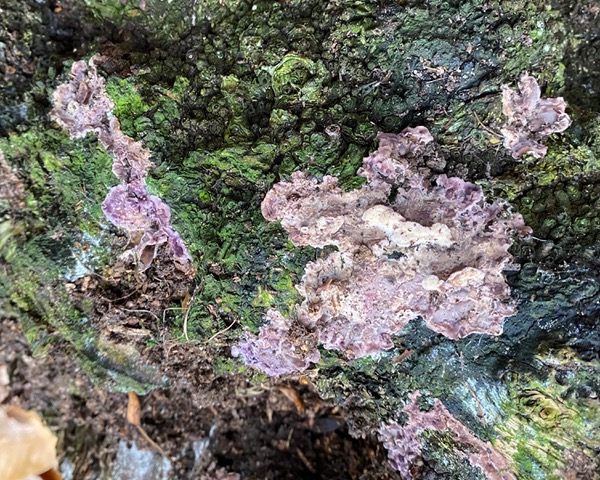
Friends of Adel Woods: Hairy curtain crust, stereum hirsutum found in Adel Wood.
Hairy Curtain Crust (Stereum hirsutum)
Blushing Rosette (Abortiporus biennis)
Ganoderma Bracket (Ganoderma sp.)
Glistening Inkcap (Coprinellus micaceus)
Silverleaf Fungus (Chondrostereum purpureum)
Ganoderma Bracket (Ganoderma sp.)
Sulphur Tuft (Hypholoma fasciculare)
Jelly Ear (Auricularia auricula-judae)
Brown Rollrim (Paxillus involutus)
Rooting Shank (Hymenopellis radicata)

JOIN FRIENDS OF ADEL WOODS!

We hope that you have enjoyed reading about our activities and would be delighted if you would like to join us.

Friends of Adel Woods were formed in 2009 to help maintain Adel Woods and encourage people to enjoy them. We meet one weekend morning a month to carry out various jobs or ”work parties”, and we also put on educational events such as bat walks, fungal forays and birdsong walks.  

We are a very friendly group and welcome new members who want to help preserve our special woods, enjoy fresh air and exercise in the woods, and make new friends. If you would like to take part in our activities, keep an eye on our Home Page and just come along to one of our work parties.

If you would like to join our email mailing list, please get in touch by leaving a comment on this website – you should be able to see a comment button at the bottom of this page.

Our next event is on Saturday the 14th December, when we will be litterpicking and working with David Preston, our local ranger, on Adel Pond.

Sunday, 29th September 2024: a fungal foray with Steve Joul

Friends of Adel woods on a fungal foray in Adel woods
Introducing the fungal foray

This afternoon we had our third annual Autumnal “Fungal Foray” with our local expert naturalist, Steve Joul. This was not a foraging event, but a chance to discover and learn about the amazing world of mushrooms and fungi.

We met in Alwoodley Village Green car park at 1.50 pm and Steve gave an introduction to Adel woods and fungi in general and showed us a spectacular golden bootleg fungus found on a fungal foray in Roundhay yesterday.

A golden bootleg fungus, found in Roundhay Park on 28th September 2024

Having introduced the talk, Steve led us into the area of woodland between the play area and Crag Lane to see what we could find.

Friends of Adel woods on a fungal foray in Adel Woods, Leeds

There are over fifteen thousand species of fungi in the UK, which means that it is impossible to know the names of all of them. Some can only be identified with the help of a magnifying glass or microscope and text book. The task of identifying mushrooms and fungi is made more difficult because there is often more than one common name for a species, and the Latin names can change as species are re-classified.

Friends of Adel woods on a fungal foray in Adel woods Leeds
“This looks interesting!”

Steve has made a list of the two hundred or so most common mushrooms and fungi which we are likely to encounter in Adel woods, giving their recommended English names and their Latin names. Impressively, Steve knows the Latin names for many of these species. If you would like a copy of the list, please email us or send us a comment via the comment button on this page.

From the woodland, we made our way to the track leading down to the cricket pavilion and from there to the woodland below Adel Moor. As we walked we searched for interesting looking fungi which Steve examined, identified and told us about.

Friends of Adel woods on a fungal foray in Adel woods Leeds
A branch infected by Green Elfcup

The find of the day was a piece of timber hosting Green Elfcup (chlorociboria aeruginascens). The mycelium (or root structure) of this fungus turns its host into a vivid blue green colour. The wood that this fungus infects, known as ‘green oak’ was highly prized by fine woodworkers in the 18th and 19th centuries, who used it in their intricate inlays for decorative wooden boxes known as “Tunbridge Ware”.

Friends of Adel woods: a fungal foray in Leeds
“So this is what we have found…”

At quarter to four, Steve reviewed all the finds of the day. There is a list of all the fungi and mushrooms, and photographs of some of them, below.

Mushrooms and fungi found on a fungal foray in Adel woods, Leeds.
The afternoon’s harvest
Common earth ball (scleroderma citrinum)
Birch polypore (Fomitopsis betulina)
Blushing bracket (daedaleopsis confragosa) photo taken by C Zanker
Common rustgill (gymnopilus penetrans)
Deceiver (laccaria laccata)
Hoof fungus (fomes fomentarius)
Green Elfcup (chlorociboria aeruginascens)
Coral Spot (nectria cinnabarina) sexual stage orange and asexual stage red

The fungi and mushrooms we found

We found twenty six species, including two new ones (for Friends of Adel Woods) shown in red type:

  • Beech Woodwart (hypoxylon fragiforme)
  • Birch polypore (formitopsis betulina)
  • Birch woodwort (jackrogersella multiformis)
  • Blistered cup (peziza vesiculosa)
  • Blushing bracket (daedaleopsis confragosa)
  • Brown rollrim (paxillus involutus)
  • Butter cap (collybia butyracea)
  • Candlesnuff fungus (xyaria hypoxylon)
  • Common bonnet (mycena galericulata)
  • Common earthball (scleroderma citrinum)
  • Common rustgill (gymnoplius penetrans)
  • Coral spot (nectria cinnaberina)
  • Deceiver (Zaccaria laccata)
  • Ganoderma bracket (ganoderma sp.)
  • Hairy curtain crust (stereum hirsute)
  • Hoof fungus (fomes fomentarius)
  • Horsehair parachute (marasmius androsaceus)
  • Jelly ear (auricularia auricula-judae)
  • Ochre brittlegill (russula ochroleuca)
  • Poisonpie (hebeloma crustuliniforme)
  • Rufous milkcap (lactarius rufus)
  • Stump puffball (apioperdon pyriforme)
  • Sulphur tuft (hypholoma fasciculate)
  • Sycamore tar spot (rhytisma cerium)

JOIN FRIENDS OF ADEL WOODS!

We hope that you have enjoyed reading about our activities and would be delighted if you would like to join us.

Friends of Adel Woods were formed in 2009 to help maintain Adel Woods and encourage people to enjoy them. We meet one weekend morning a month to carry out various jobs or ”work parties”, and we also put on educational events such as bat walks, fungal forays and birdsong walks.  

We are a very friendly group and welcome new members who want to help preserve our special woods, enjoy fresh air and exercise in the woods, and make new friends. If you would like to take part in our activities, just come along to one of our work parties or get in touch by leaving a comment on this website – you should be able to see a comment button at the bottom of this page.

Our next events

Our next educational event is a Fungal Foray with our expert naturalist, Steve Joul, on Sunday 17th November 2024.
Our next work party is on Sunday the 24th November 2024 when we will be litterpicking and working with David Preston, our local countryside ranger, to dredge Adel Pond and clear the ditches feeding it.

For further information, please have a look at our home page.