
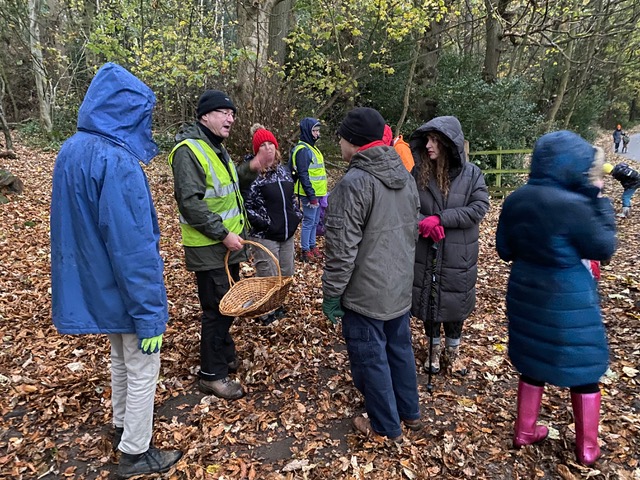
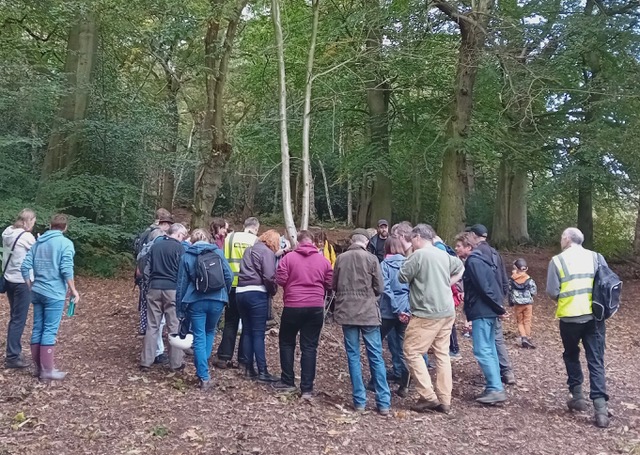
This afternoon nineteen adults and eight children gathered in Alwoodley Village Green carpark for a Fungal Foray led by Steve Joul. This was not a foraging event for edible fungi, but an opportunity to learn about the many and varied fungi to be found in Adel Woods.
After a brief introduction to Friends of Adel Woods by our Chair, Steve led us along Crag Lane into the woods and, after passing the bungalow, into Alwoodley Plantation.
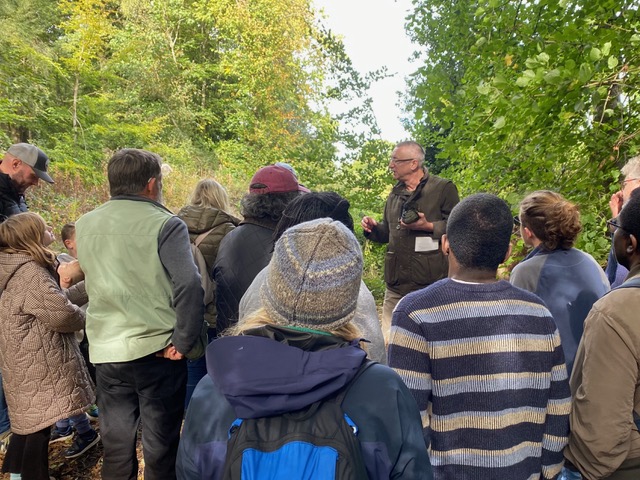
Once in the plantation, Steve explained that what we think of as fungi and mushrooms are in fact the fruiting bodies of organisms whose main body is concealed in the soil or wood in which they are growing.
There are many thousands of different fungi and mushrooms in the UK which means that it is impossible to know the names of all of them. However, Steve has a list of the two hundred or so most common species which we are likely to find in Adel Woods.
He explained that Identifying fungi involves taking into account such factors as:
- where the fungus is growing – for example on or nearby a particular species of tree
- its shape, colour, size, and smell
- how it scatters its spores, the reproductive cells: for example, some drop spores, and some shoot them out!
In some cases it is only possible to identify a fungus with the aid of a magnifying glass or a microscope and a text book. Correct identification is essential because most fungi are inedible and many are poisonous.

The task of identifying fungi is made more difficult because there is often more than one common name for a species and their Latin names can change as species are re-classified as more is learned about them. Impressively, Steve knows the common names and the Latin names of most of the common species.
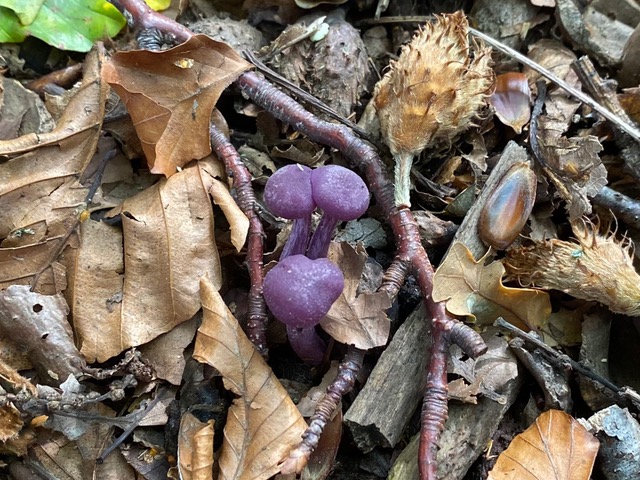
He explained that some fungi have a special relationship with particular species of trees whereby the fungus provides nutrients to the roots of the tree and the tree provides nutrients to the fungus.

After Steve’s introduction we made our way further into the Plantation searching for fungi on logs, trees, and in the leaf litter. Fortunately we had some very good fungi hunters in our group, especially among the future adults, and during the course of the afternoon, we found fifty species of mushroom, many of which Steve collected in his basket. You can find a complete list of the species, giving common English and formal Latin names, at the end of this post.

Some of the fungi have very strange common names: “turkey tail”; “hairy curtain crust”; “leafy brain”; “earpick fungus” and “ugly milkcap”. During the afternoon one of our number was heard to exclaim to Steve: “You’re making these names up: you could tell us anything and we’d believe it!”
The foray finished at 4 pm by which time we had gathered a wonderful diversity of fungi species.

Once again it was a fantastic afternoon of discovery, learning and fun. Thank you to Steve and everyone who took part.
“I just wanted to thank you for a thoroughly enjoyable afternoon. We were indeed blessed with the weather. I learnt a great deal about the wonderful world of fungi and hope to continue expanding my knowledge.”
————————–
“Thank you for organising today’s excursion. We thoroughly enjoyed it and look forward to future ones. Please convey our thanks to Steve as well.”
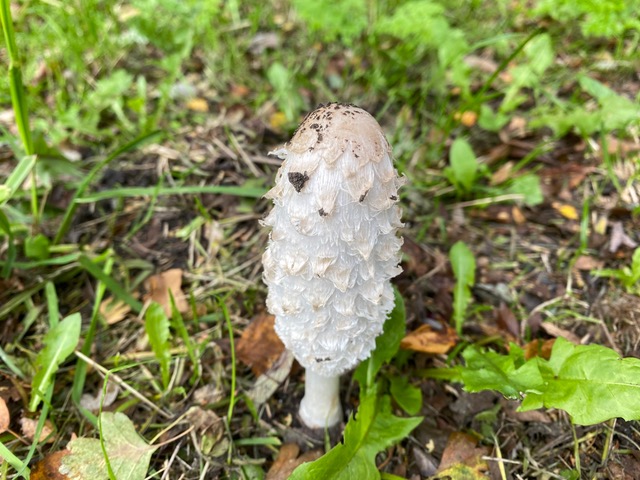
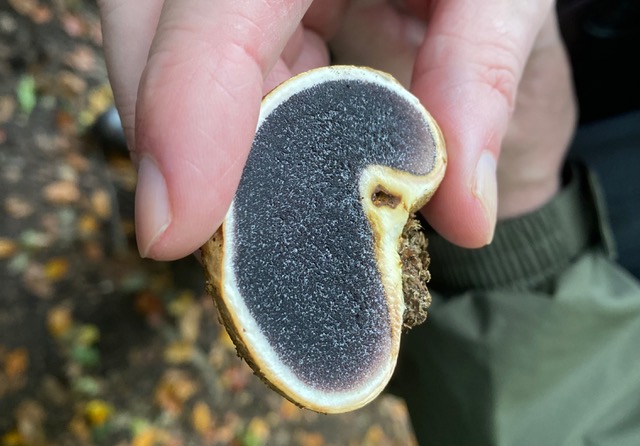
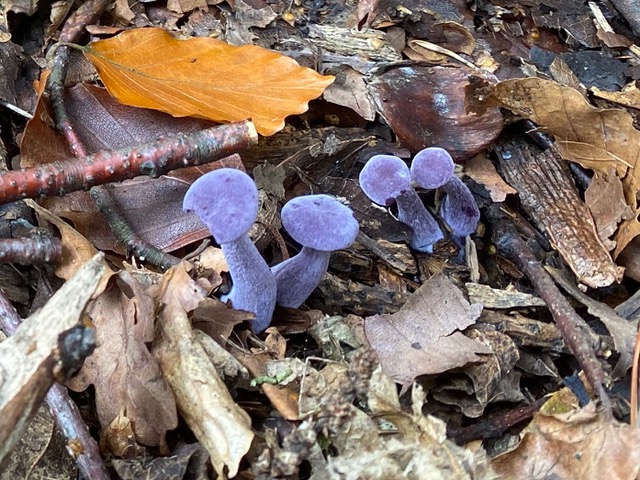
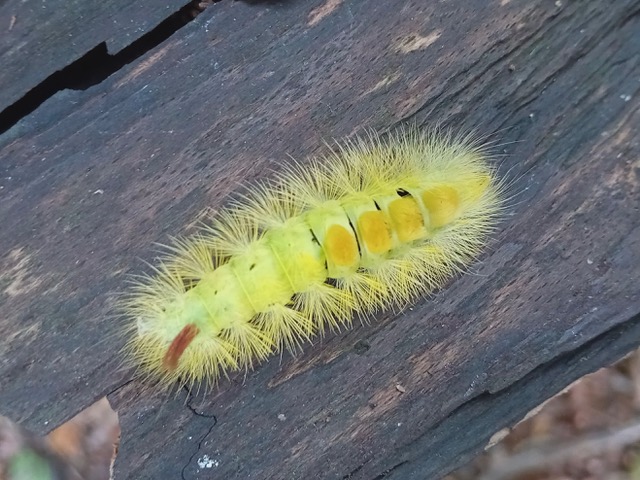
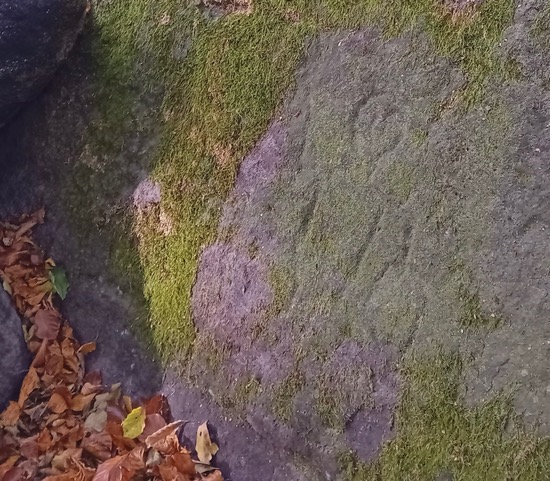
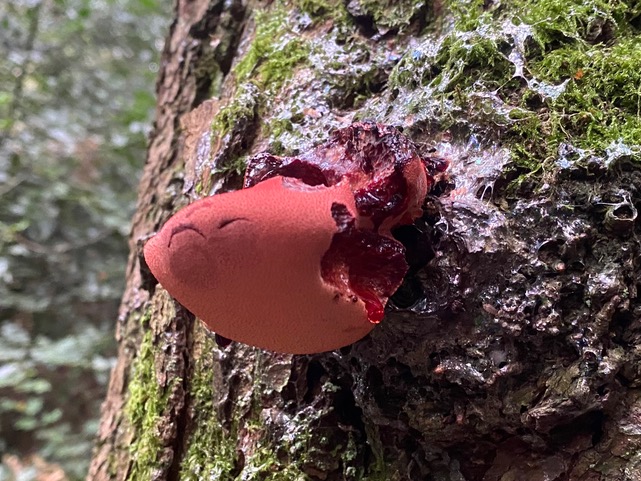
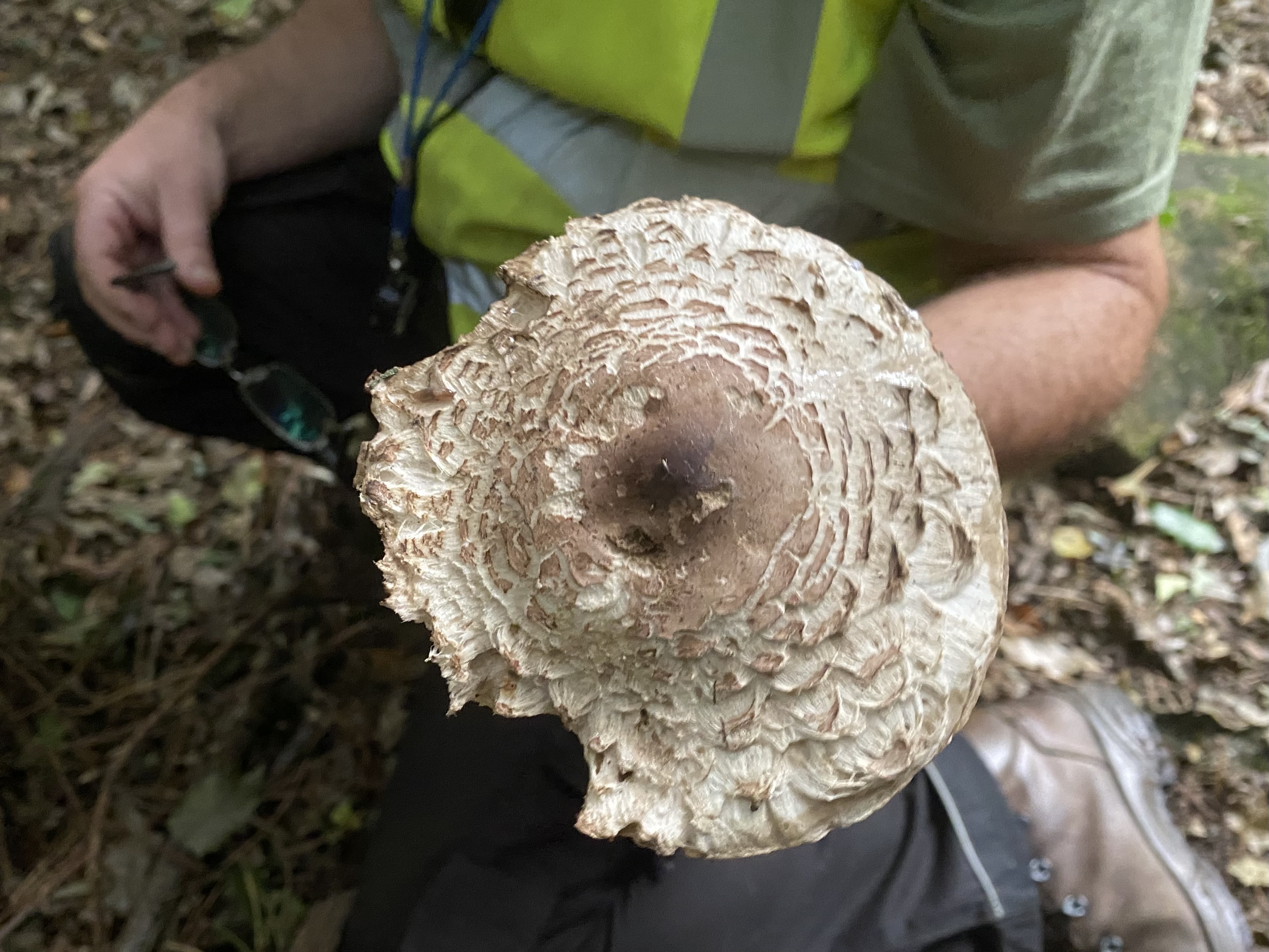
A selection of the fungi found during today’s foray
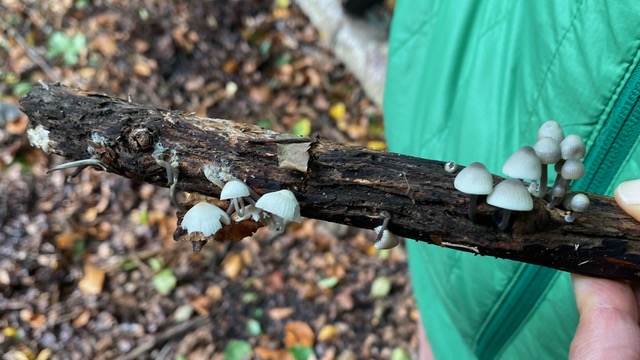
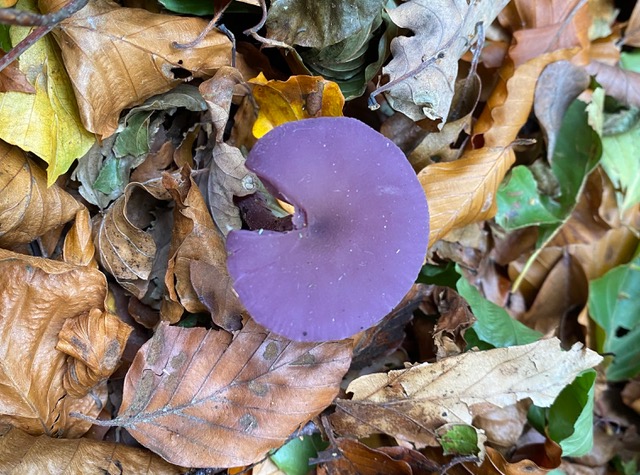
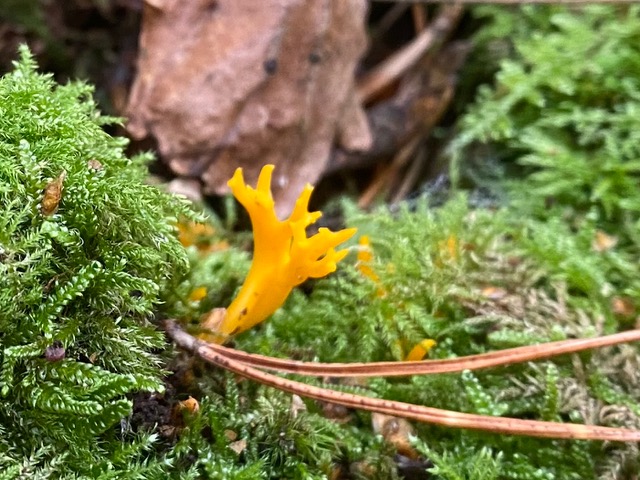
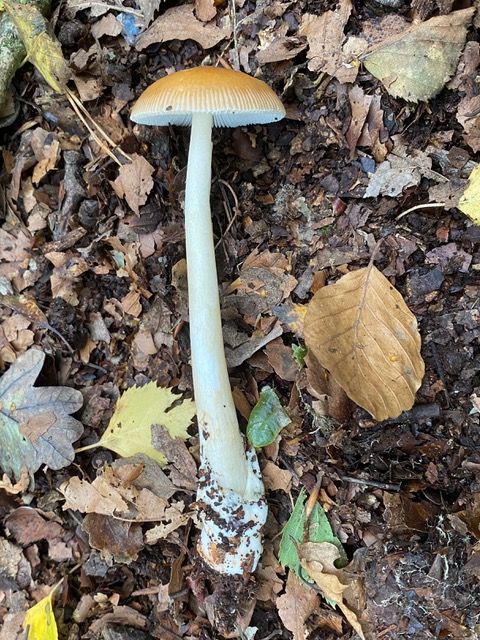
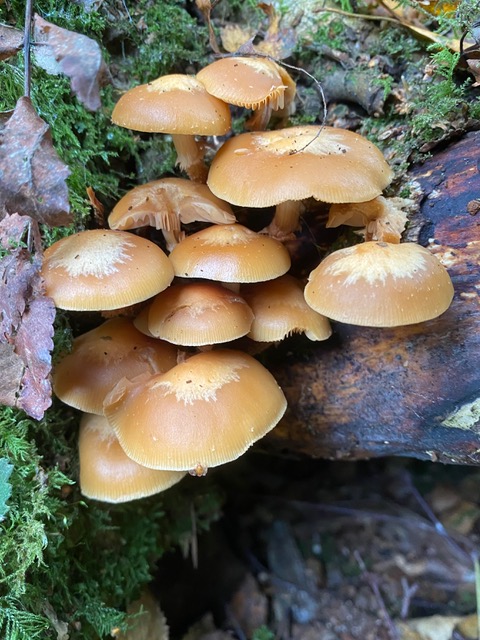
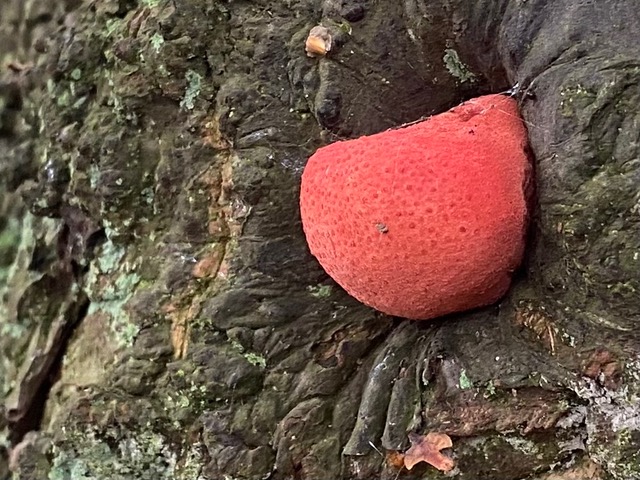
Here are photographs of some of the fungi we found this afternoon – more or less in the order we found them…



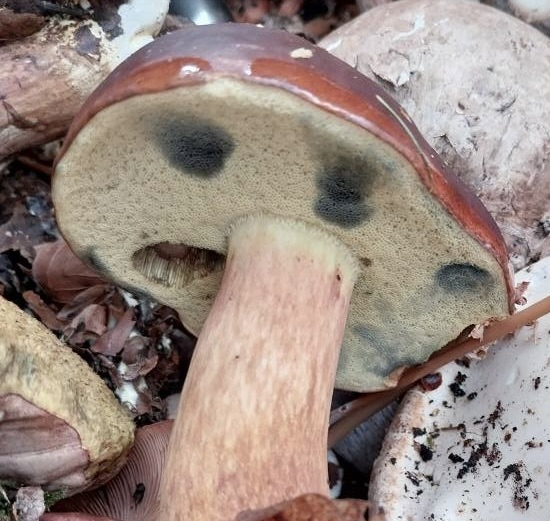
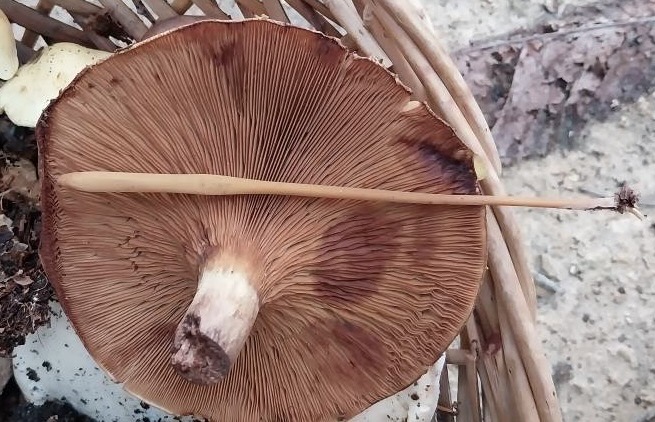
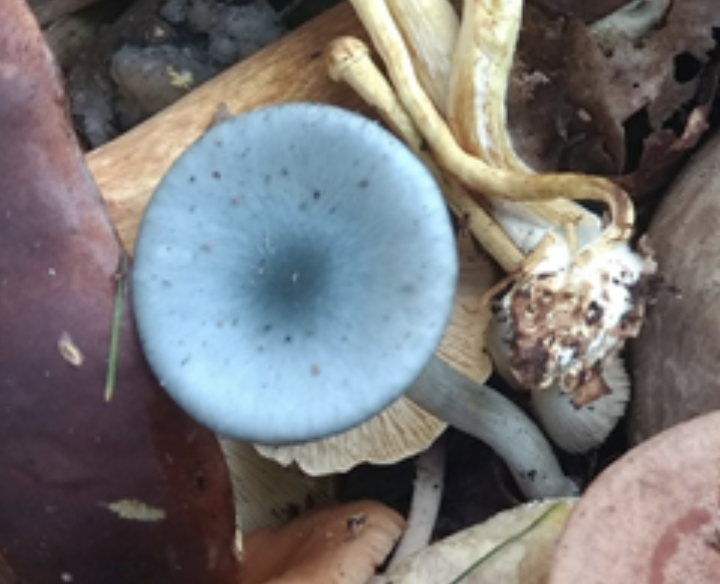
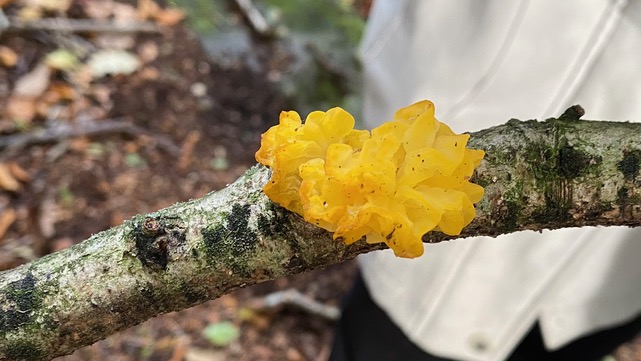

A list of all the fungi found during today’s foray
- Alder Scalycap (Pholiota alnicola)
- Amethyst Deceiver (Laccaria amethystina)
- Aniseed Funnel (Clitocybe odora)
- Bay Bolete (Imleria badia)
- Beech Barkspot (Diatrype disciformis)
- Beech Milkcap (Lactarius blennius)
- Beech Woodwart (Hypoxylon fragiforme)
- Birch Milkcap (Lactarius tabidus)
- Birch Polypore (Fomitopsis betulina)
- Black Bulgar (neabulgaria pura)
- Blusher (amanita rubescens)
- Branching Oyster (pleurotus cornucopiae)
- Brown Mottlegill (panaeolina foenisecii)
- Brown Rollrim (paxillus involutus)
- Buttercap (collybia butyracea)
- Candlesnuff Fungus (xylaria hypoxylon)
- Common Bonnet (mycena galericulata)
- Common Earthball (scleroderma citrinum)
- Common Funnel (infundibulicybe gibba)
- Common Puffball (lycoperdon perlatum)
- Deceiver (laccaria laccata)
- Deer Shield (pluteus cervinus)
- Earpick Fungus (auriscalpium vulgare)
- Fly Agaric (amanita muscaria)
- Ganoderma Bracket (ganoderma sp.)
- Glistening Inkcap (coprinellus micaceus)
- Grisette (amanita vaginata)
- Hairy Curtain Crust (stereum hirsutum)
- Honey Fungus (armillaria mellea)
- Hoof Fungus (fomes fomentarius)
- Jelly Ear (auricularia auricula-judae)
- Leafy Brain (tremella foliacea)
- Oakbug Milkcap (lactarius quietus)
- Ochre Brittlegill (russula ochroleuca)
- Penny Bun (boletus edulis)
- Pipe Club (macrotyphula fistulosa)
- Purple Brittlegill (russula atropurpurea)
- Red Cracking Bolete (xerocomellus chrysenteron)
- Rufous Milkcap (lactarius rufus)
- Russet Toughshank (gymnopus dryophilus)
- Shaggy Parasol (chlorophylum rhacodes)
- Shaggy Scalycap (pholiota squarrosa)
- Silky Rosegill (vovariella bombycina)
- Smoky Bracket (bjerkandera adusta)
- Sulphur Tuft (hypholoma fasciculare)
- Turkeytail (trametes versicolor)
- Ugly Milkcap (lactarius turpis)
- White Brain (exidia thuretiana)
- Yellow Brain (tremella mesenterica)
- Yellow Stagshorn (calocera viscosa)
JOIN FRIENDS OF ADEL WOODS!
We hope that you have enjoyed reading about our activities and would be delighted if you would like to join us.
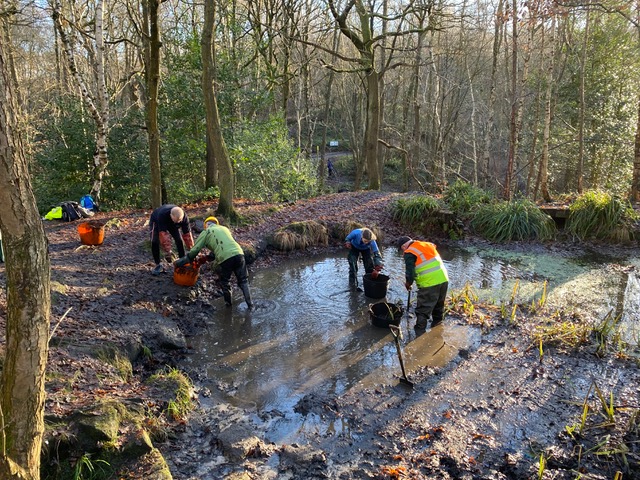
Friends of Adel Woods were formed in 2009 to help maintain Adel Woods and encourage people to enjoy them. We meet one weekend morning a month to carry out various jobs or ”work parties”, and we also put on educational events such as bat walks, fungal forays and birdsong walks.
We are a very friendly group and welcome new members who want to help preserve our special woods, enjoy fresh air and exercise in the woods, and make new friends.
If you would like to take part in our activities, keep an eye on our Home Page.
You don’t need to book to come along to one of our work “parties”: just come along. Our next work party is on Saturday 22nd November 2025 when we will be working with our local ranger, Joe Craig-Jackson.
If you would like to join our email mailing list, please get in touch by leaving a comment on this website – you should be able to see a comment button at the bottom of this page.
















 Friends of Adel Woods
