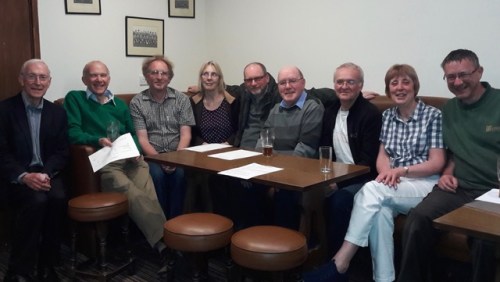
We held our AGM this evening at Old Leo’s Rugby Club. The meeting was reasonably well attended and we had about ten messages of apology.
The following officers and committee were elected:
Chair: Roger Gilbert
Treasurer: Judith White
Secretary: Stephanie Clarke
Committee: Rob Hall; David Hampshire; David Smith
Brian Joice had decided to step down from the committee and there was a vote of thanks for his contribution over the years. Happily, he will still be taking part in our activities in the woods.
The meeting also expressed their appreciation to Steve Joul for the wonderful contribution he has made to the work of FOAW over the last year (and indeed since FOAW was formed in 2009.
The chair delivered the following review of the last year’s activities:
The Chair’s Review of the year May 2017 to May 2018
We have had about twenty events since our last AGM and it has been another varied, interesting and enjoyable year as recorded in our blog. I do recommend the blog which brings back many happy memories.
We have two kinds of events: the tasks and the educational events. In both, we are incredibly lucky to be supported in what we do by Steve Joul, senior ranger with Leeds CC.
Educational/social events
There have been four of these this past year:
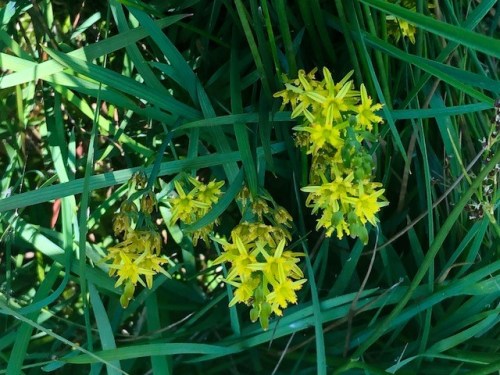
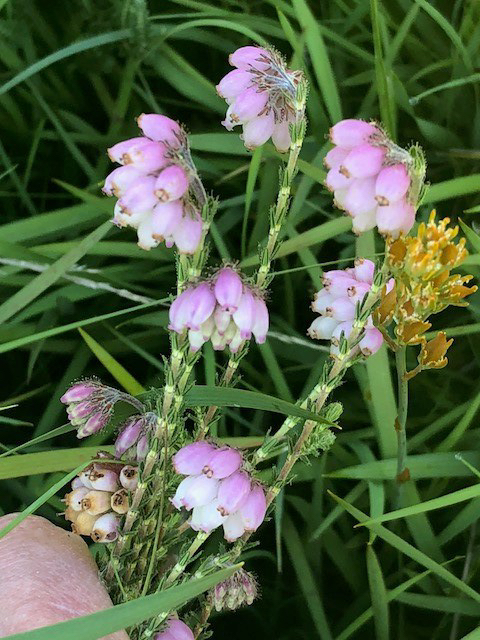
A visit to Alan and Diane Yarker’s small holding and survey of meadow plants on 1st July, to commemorate National Meadows Day.
 This was a beautiful Summer day. About a dozen of us attended. Alan gave a very interesting and informative talk about the local environment and running a meadow, and then we were free to look around. Steve and Alan took us on a tour of Alan and Diane’s meadow, pointing out the many interesting species of plant.
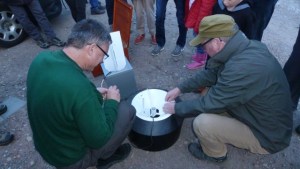 Our next event was on Saturday the 19th August when we had a Moth and Bat Watch, our first ever, and it was well attended by about 25 adults and children. Steve brought a long a couple of moth traps and showed us how they work. We set up one of these, using power from Old Leo’s and left Judith looking after it while the rest of us went off bat hunting. Unfortunately, we only had a couple of sightings of bats and when we returned to the moth traps Judith was frozen nearly to death! On opening the moth trap we found some large yellow underwings. Other moths escaped in the excitement of the young naturalists!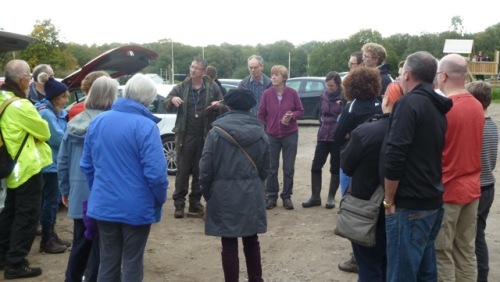
On the 8 October, Steve Joul led a fungal foray. Again this was well attended and I recommend looking at the blog for some pictures of spectacular fungi photographed by Cathy.
 Our fourth event was the birdsong walk last Sunday. This was a beautiful morning and lasted from 7 am to about 11 am. During the course of it we saw or heard 25 species of bird.
Tasks
Again, we have carried out a range of tasks over the last twelve months. We cover a large area and we could easily spend every day of every weekend doing something in the woods. Fortunately, we are not alone. There are other volunteer groups doing work in Adel Woods.
Litterpicking
 Firstly, there has been our regular litterpicking whose importance cannot be overstated. Litterpicking makes a huge difference to the woods. I haven’t kept a tally but we have picked up about 40 bags of litter over the year.
Adel Bog
 We only worked one day on the bog last year – on the 21 May. This is one of my favourite tasks – and I would make it a project if we had the time and manpower. We visited the bog last Sunday at the end of our birdsong walk, and it was wetter and squelchier than ever, but it clearly needs a lot more work doing on it to preserve it
Adel Moor
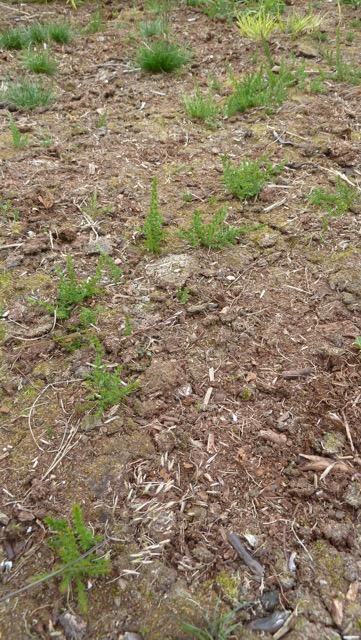
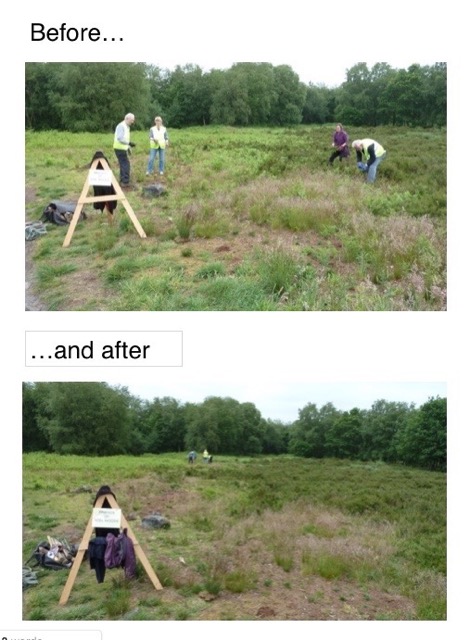
 This is another popular task. We have made Adel Moor a priority for the last couple of years. We had three mornings of bracken bashing and pulling up saplings last year. The parks and countryside department have also done work with volunteers and corporate groups and we are making progress, but it is slow progress, and there is much to be done.
Path improvements
Over the last year Friends have worked on improving paths – clearing mud and cutting back branches – on four and a bit occasions. In December we repaired a step in the steps leading down from the Stairfoot Lane car park to the stream.
 We were also instrumental in getting others to carry out work: in February we advised the parks department that a large tree had fallen across the Meanwood Valley Trail near the picnic area. Within a couple of weeks the tree had been removed. In April this year, we advised the parks department that the path around the interpretation board for the Slabbering Baby was a sea of mud and, within a fortnight, Steve Joul and a team of volunteers cleared the mud and put in a hard surface.
Nest boxes
 We had two days out in January surveying the nest boxes and the good news is that they were almost all used. You can feel pleased that there is a good chance that the great tits and blue tits you see in the woods or your garden were reared in a FOAW nestbox! We also had two nuthatch nests.
The hospice woodland
We have spent two mornings working on the Hospice Woodland this year – clearing brambles from the trees.
Adel Pond
We have worked on Adel Pond every Autumn since the formation of FOAW in 2009. In October this year a team of four volunteers turned out in the face of Storm Brian to help Steve Joul clear silt out of the pond and clear the streams running into it.
The orchid meadow
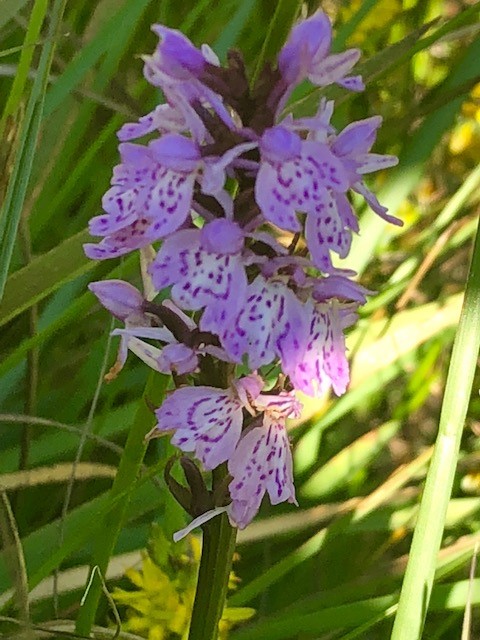
There is a tremendous population of common spotted orchids in a field near the cricket pitch. In the past we have spent a couple of mornings clearing saplings and Himalayan Balsam. We were not able to do that this year, but Steve Joul worked on them with a corporate team in August.
Christmas Garlands:
 We had another session making Christmas garlands which enabled us to raise some funds. Our treasurer will report on that.
Miscellaneous matters
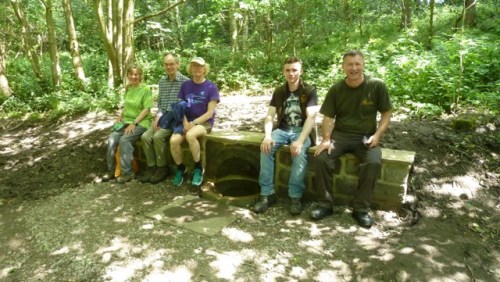
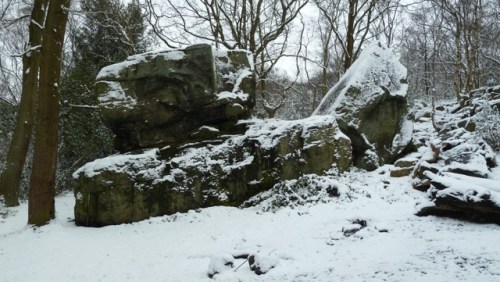
I have mentioned the Slabbering Baby. Whilst the Friends of Adel Woods played no part, the Slabbering Baby was refurbished between November 2016 and May 2017, and it is now a pleasant spot for walkers on the Meanwood Valley Trail to sit and have a sandwich and reflect on life. In October, an interpretation panel was put up. This was all thanks to funds provided by the Leeds City Councillors and work done by council staff, principally Douglas Louis. A new bowl has been carved by Teresa Dybisz, an apprentice stone mason with York Minster, and she has done a super job.
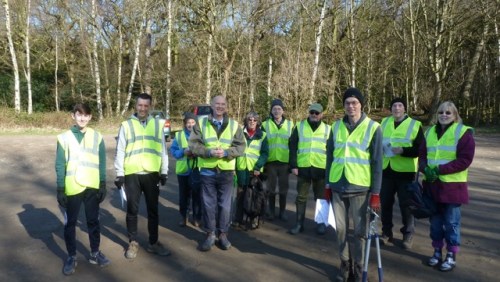
We have also been fortunate in that Councillor Buckley of Leeds CC has provided us with a grant of £250 to buy hard hats, hi vis jackets (endorsed “Friends of Adel Woods”) and tools. We are extremely grateful. The hi vis jackets are excellent and create the impression of a coherent team of workers!
The Future
We have a draft program right up to December with an interesting and varied range of activities.
In particular, we are planning to have the following educational events with Steve:
- Life in Freshwater: session on Sunday 8 July
- Small Mammals trapping on the morning of Sunday 7 October
- Fungal foray on Sunday 11 November
Thanks
To conclude, I would just like to end by thanking all the people we need to thank for supporting us over the last year.
First of all, I would like to thank Steve Joul for all the support – and tuition – he has given us over the year.
I would like to thank Alwoodley Parish Council and our local city councillors for their financial support and encouragement.
I really must thank Tony and Old Leo’s for letting us use their facilities for making the Christmas garlands and have our AGM here. Please after the meeting, can you please drink as much as you can so that they’ll have us again!
I would like to thank our committee and officers for all their support and hard work over the year.
I would like to thank Brian Joice who has served on our committee for a number of years. His support has been much appreciated. I am glad that even though he will not be on the committee he will still be a active worker. A big hand for Brian!
And finally, I would like to thank all our wonderful Friends – whether here or absent – for the hard work you have all put in over the year. I hope that tonight’s summary has reminded you of some happy mornings or evenings and shown you that you have all made a fantastic improvement to the state of Adel Woods and to our local community.
Thank you!
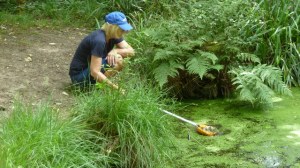
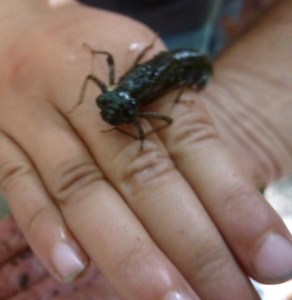
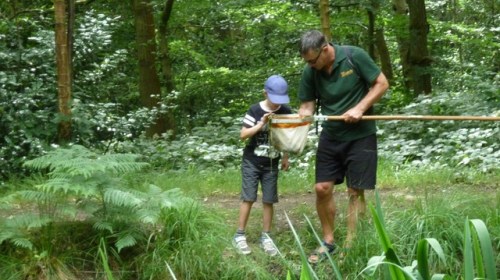
 Yet Another beautiful day in our long Mediterranean Summer, and we had a good turn out of adults and children for our first ever “Life in Freshwater” event with Steve Joul.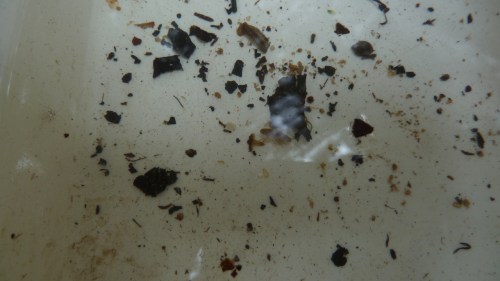

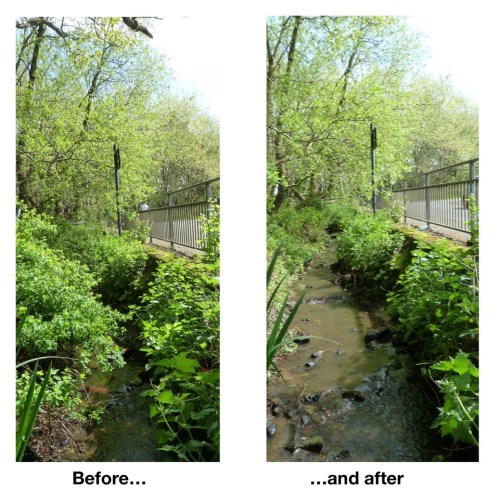
 There were three litter pickers and nine of us set to work on Nanny Beck – clearing away blockages, cutting back vegetation, and removing rubbish and litter. We also cleared thousands of Himalayan Balsam plants from the roadside bank.


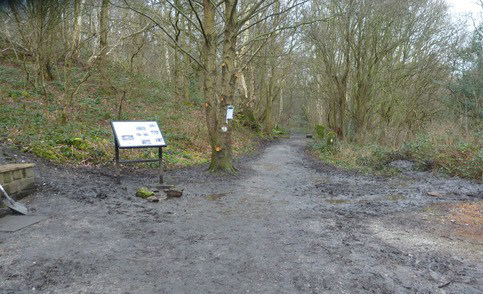
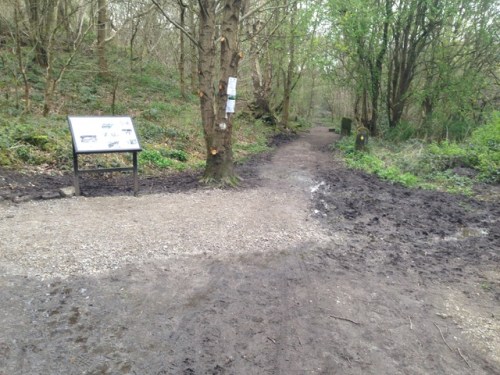
 The clearing of mud from the Slabbering Baby proved a difficult task. It was not the quantity of the mud, so much as the fact that there was no hard surface to work to: the risk was that in clearing mud, one was simply digging a big hole! Providing a hard surface may be something which we focus on in coming months.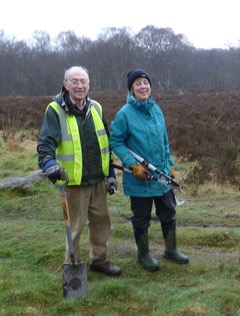


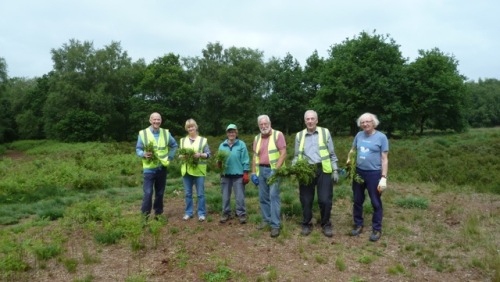
 Two of our party set about picking litter, while the rest of us headed off to clear paths. Note the fine looking hi-vis jackets worn by all our Friends! Their first outing!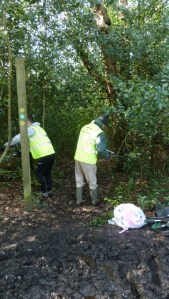
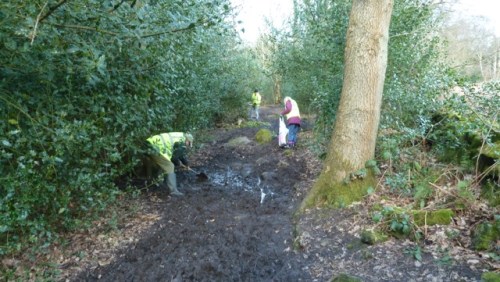
 Today was our first outing with our new Hi-Vis Jackets, purchased with a Members Improvement in the Community and Environment (MICE) grant from Councillor Neil Buckley of Leeds City Council.
