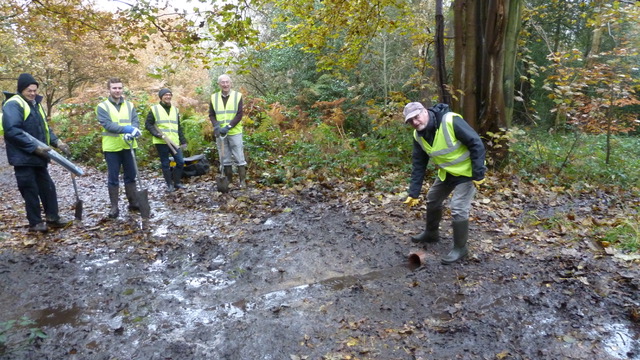
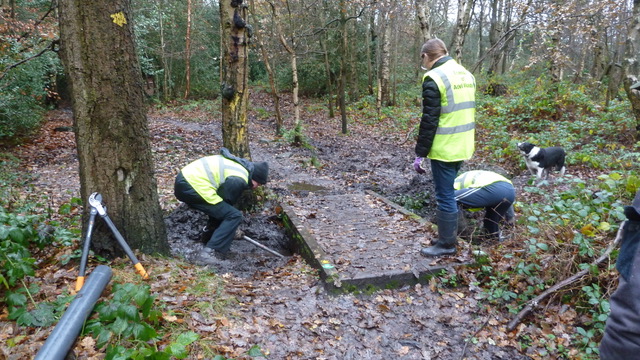
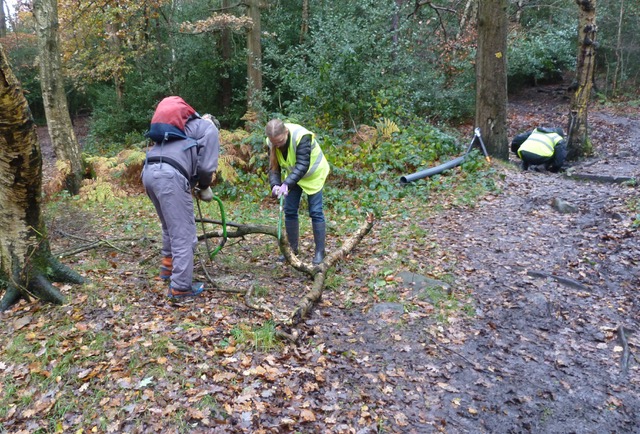
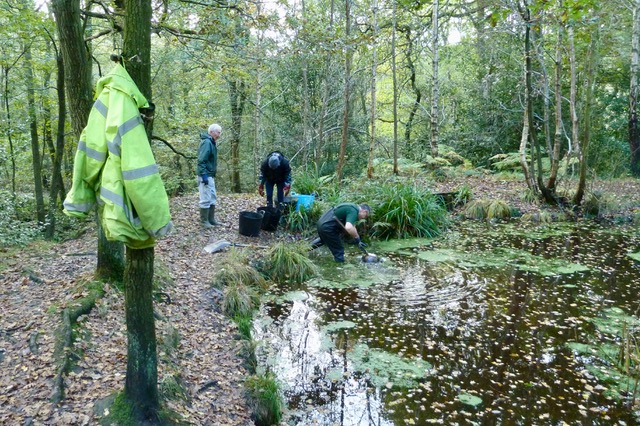
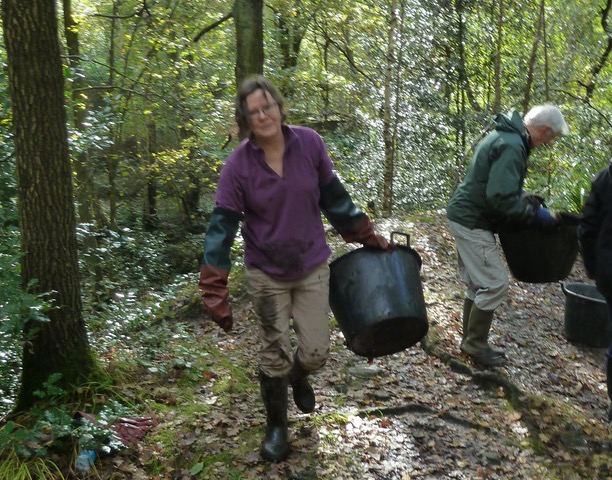
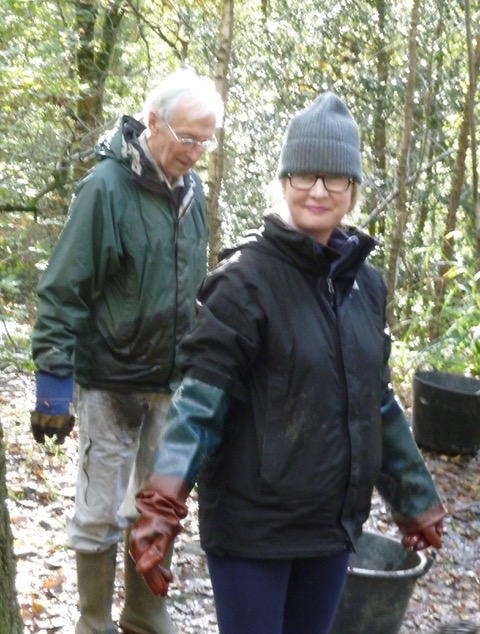
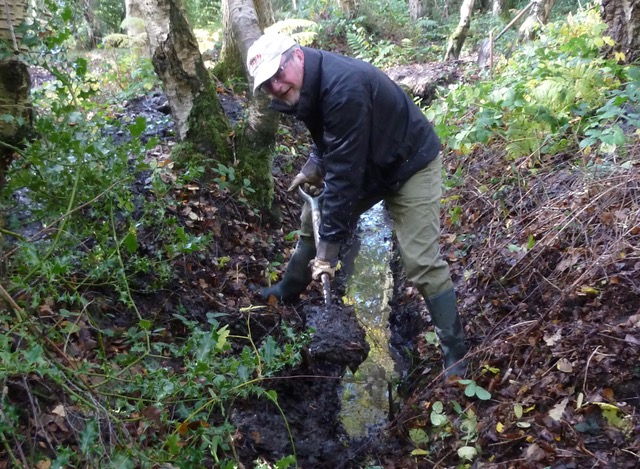
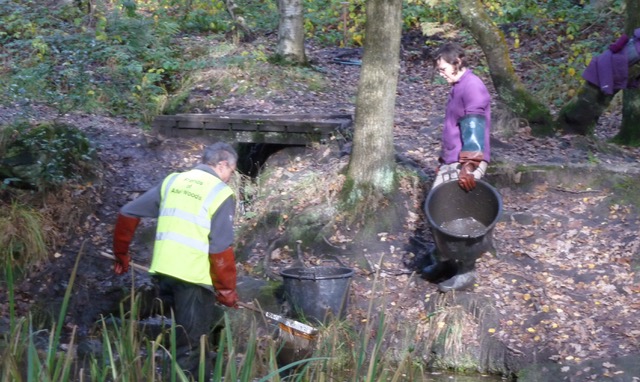
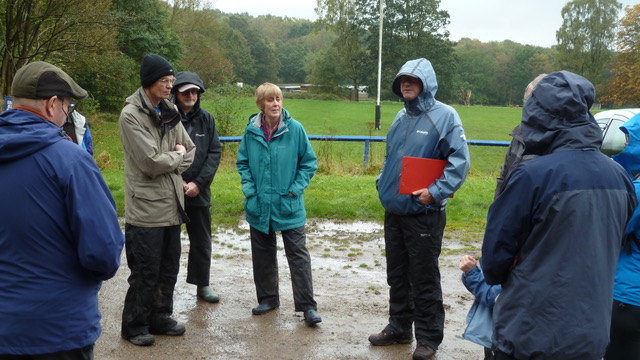
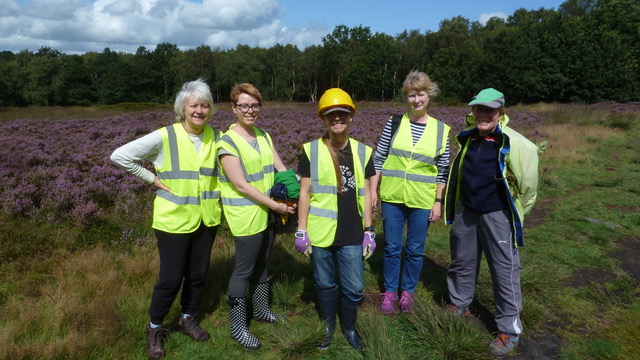
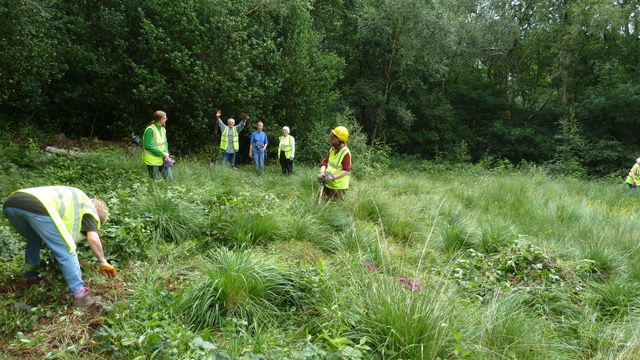
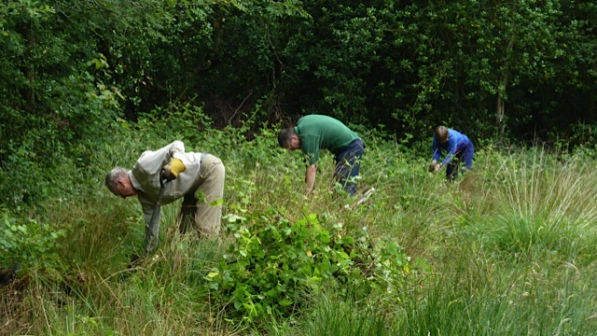
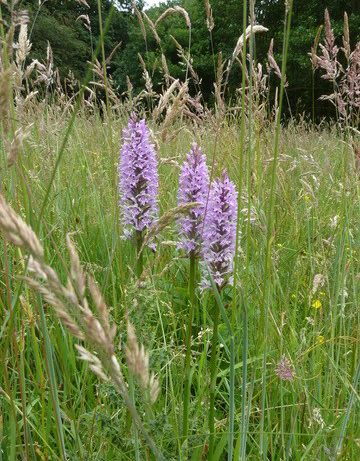
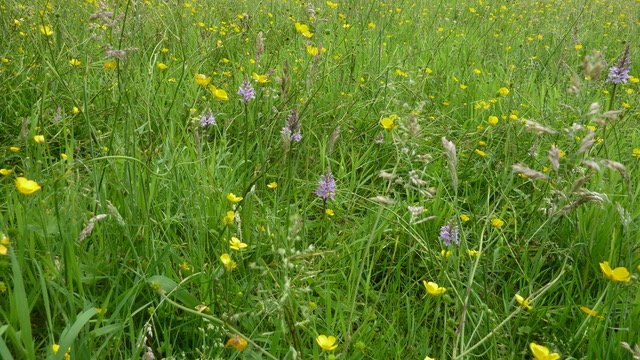
Today we were litter picking and continuing with our mission to clear saplings and bracken from Adel Moor.
It was a fine day and we had a good turn out. Apart from that, your correspondent cannot remember much about it as it was six week ago.
However, one thing that was particularly memorable was that one or two dog owners are allowing their dog to perform its business on the main path traversing the moor and not bothering to pick it up. There were lots of particularly large deposits all along the path and one of our members, a dog owner, volunteered to collect it all up. It took some time.
Your correspondent feels nauseous just thinking about it.
In addition, one of the rangers has advised your correspondent that when he was recently working on the moor he found a number of black doggie doo doo bags thrown into the heather.
Apart from the sheer unpleasantness of having dog faeces all over the place, it also seriously damages the habitat.
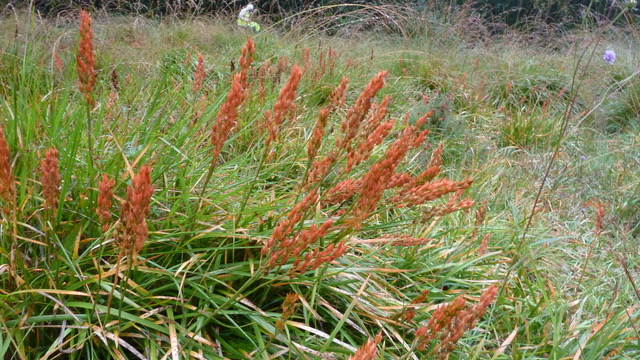
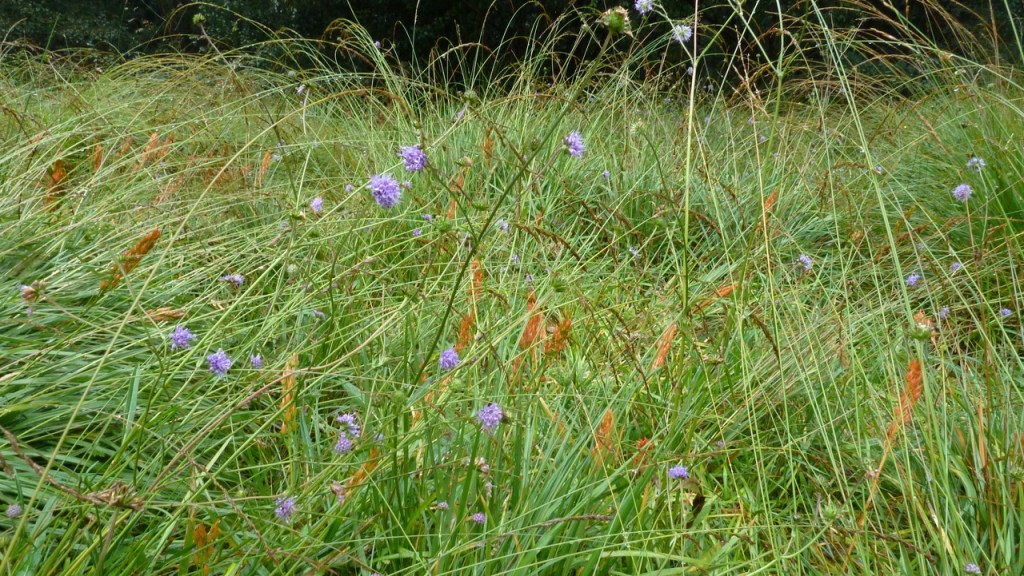
Apart from that, it was really good morning: we cleared a lot of bracken and saplings from the moor, and it was looking particularly fine today.
The weather forecast for today was cloudy with sunny spells in the morning and rain from 2 pm onwards.
Your correspondent woke at 7 am to a glorious day – a blue sky with not a cloud in the sky.
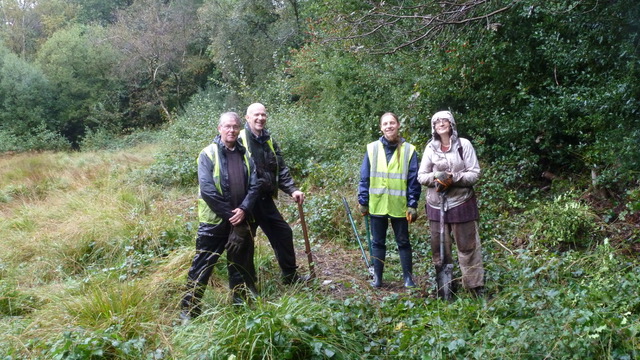
By 10 am it was overcast but still a pleasant morning and twelve of us, including Steve Joul, met in Buckstone Road to work on Adel moor and litter pick. Three of us set off to litter pick and the rest of us set off to the moor.
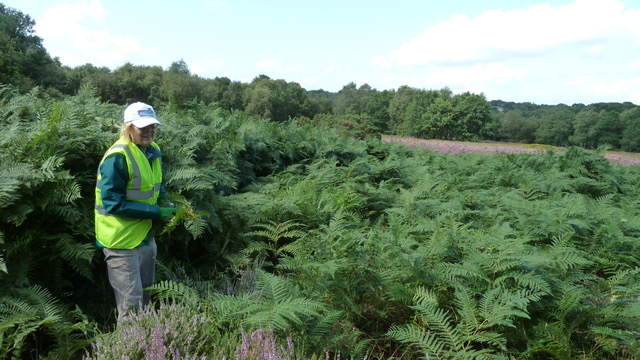
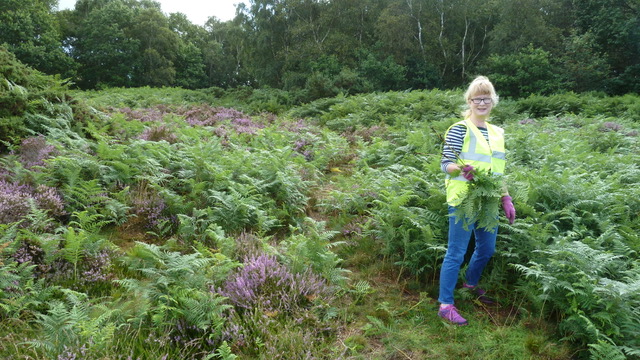
Our task this morning (on the moor) was to dig up brambles and saplings, pull up weeds (like rosebay willow herb), and cut back tree branches encroaching onto the moor. We also had a look at what we could do about trees which have been cut down – or in reality coppiced – in the past.
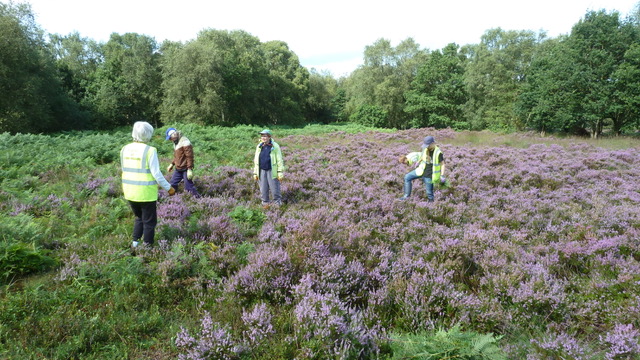
The moor was looking great: the hard work of FOAW and other groups of volunteers led by Steve Joul and the other rangers has really made a huge difference.
The small light green bushes are the coppiced trees.
All was going well until it started to rain at about 11.15. Being hardy souls, we continued with our work, but then the heavens really opened!
Adel Moor: devotion to duty!
We continued working for a few minutes, but it soon became obvious that the rain was not going to stop and we were all completely saturated.
Adel Moor: 11 May 2019
We abandoned ship and packed away our tools – not an easy thing because everything was by now really wet and we had pools of water in our tool bags and wheelbarrow!
Adel Moor: 11 May 2019
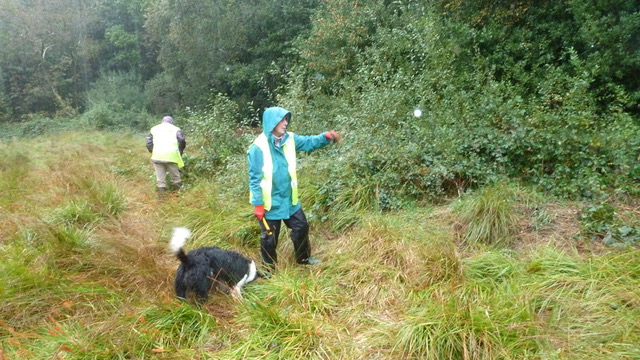
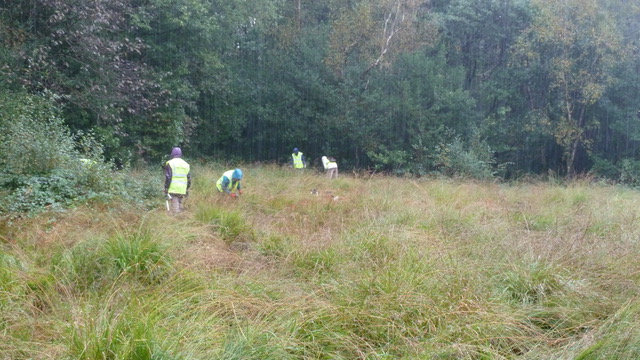
On the way back to the car, we came across our hardy litter pickers!
As always, in good spirits! Note the waterfall coming off the path in the bottom right corner.
Ironically, when we got back to the car, the rain slowed down and eventually stopped and the sun came out!
It was a day of mixed fortunes: your correspondent was delighted that so many Friends turned out today to litter pick work on the moor – which is a lovely place to work, and a favourite among Friends of Adel Woods. But it was frustrating to be rained off when there is so much work to do.
PS It started to rain again at about 1 pm and didn’t stop all afternoon.
Today we had our AGM in the back bar of Old Leo’s Rugby Club. Twelve attended, including Steve Joul of Leeds City Council, with apologies from five Friends.
The Chair gave a review of the last year’s activities before we moved on to the election of officers and committee.
Roger Gilbert was re-elected Chair; Judith White was re-elected Treasurer, and Stephanie Clark was re-elected Secretary. Rob Hall, David Hampshire and David Smith were re-elected members of the committee.
The Chair’s review of the year’s activities will be published to this blog shortly.
Thank you to Old Leo’s Rugby Club for letting us hold our AGM in their clubhouse.
A beautiful, but distinctly chilly, morning and about sixteen of us met with Steve Joul at 7 am in the car park of Old Leo’s Rugby club for our ninth (!) annual birdsong walk.
Unfortunately, your correspondent forgot to take any photos and so he will borrow some photographs from the RSPB website.
Steve made some introductory remarks, handed out some binoculars and bird sheets and we had a look round to see what we could see or hear from the car park. We certainly heard a chaffinch and saw a wood pigeon and carrion crows.
Our route
From the car park we made our way down the lane to the cricket pavilion, pausing to observe the birdlife on the fields. We saw or heard chiffchaffs, blackcaps, wrens, a song thrush, magpies , jackdaws and a mallard (flying overhead).
Male Blackcap (thanks to RSPB)
Chiffchaff (thanks to RSPB)
From there, we passed behind the cricket pavilion and made our way down the path towards the Slabbering Baby. Before we reached the Slabbering Baby we ascended one of the paths up to Adel Moor. We crossed the moor and made our way round the western end and then descended to the Slabbering Baby.
At the Slabbering Baby, we were surprised to find that our nest box on one of the trees adjacent to the bridge over Nanny Beck had disappeared. We searched the ground but there was no trace of it. It seems extremely unlikely that the nest box had simply fallen from the tree because it was made of woodcrete and was very sturdy and very securely attached to the tree. The nest box has been a favourite because for several years it has housed nuthatches – see our blog entry for 27th January 2019.
Nuthatch
From Nanny Beck we made our way up to the pond and then along the path to Bridge Cottage. From there we ascended the steps to the Stairfoot Lane car park where, it being 9 o’clock, most people bid farewell. However, Steve, your correspondent and David, another of our committee members continued up to the Hospice Woodland, through Alwoodley Plantation before returning to the car park.
What we saw or heard
In all we saw or heard 23 species of bird – as listed below. Throughout the walk we were accompanied by the calls of chiffchaffs, black caps and robins.
We had a good sighting of a pair of black caps down by Meanwood Beck, but the highlights of the morning (at least for your corresondent) were sightings of tree creepers and a robin.
As we made our way along Meanwood Beck we were treated to excellent sightings of tree creepers on three occasions – on one occasion a pair. We were able to watch them at leisure as they systematically ran along the underside of branches searching for food.
Treecreeper (thanks to Norfolk Wildlife Trust)
For those of us uncertain of the robin’s song, we had an excellent opportunity to learn it because as we approached the Stairfoot Lane car park we all stopped to listen as a robin sang his heart out perched on a branch just six feet from us. He seemed totally unphased by our presence.
We recorded the following 23 species of bird – including a cockerel in the neighbouring small holding: – Chaffinch – Woodpigeon – Carrion Crow – Wren – Chiffchaff – Song Thrush – Magpie – Jackdaw – Mallard (flying overhead) – Dunnock – Black Cap – Robin – Great Tit – Blue Tit – Blackbird – Bullfinch – Tree Creeper – Long tailed Tits – Greater Spotted Woodpecker – Red Kite
and after most people had left, Willow Warbler, Jay and Jungle fowl (a cockerel).
A turkey has been seen recently in Adel Woods (really!). Unfortunately, it did not make an appearance today.
Willow Warbler
Cocidius
We have a genuine ancient monument in Adel Woods – a Celtic carving made about 1700 years ago on a rock. The carving is believed to show a god called Cocidius. We had a clear view of the carving this morning – and for some reason it was even more clear when photographed – so here it is!
Today, Friends of Adel Woods joined in a Great British Spring Clean organised by the charity “Keep Britain Tidy” for the month from 22 March to 23 April 2019. We concentrated on picking up litter in the woods, while our friends in “Litter Free Adel” worked on Stairfoot Lane.
We had a great turn out of 10 Friends of Adel Woods, and we probably picked up 15 bags of litter. As a special reward, one of our Friends, Jen, on her way home, saw a deer in the field north of Crag Lane between Old Leo’s and the picnic area!
Old Leo’s car park
Alwoodley Village Green
We met in Old Leo’s carpark and then set forth in a constellation of directions – some up to the north of the woods; some along Crag Lane and along the stream to the Slabbering Baby; some along Crag Lane to King Lane; some heading down to the cricket club. Your correspondent joined two Friends in picking up litter in the woods between the cricket ground and the village green and then working our way round the circumference of the green down to the bridge over Nanny Beck.
Alwoodley Village Green
The bridge over Nanny Beck
At Nanny Beck we were joined by a Geoff and Sylvia and while Sylvia and Brian picked up litter, Geoff and your correspondent cleared some of the branches which had fallen across and into the stream.
In the limited time available (30 minutes) we were able to remove a number of branches which had fallen across the stream, but not all. However, the stream did look a lot more open by the time we had finished.
Sizing up the job! We cleared all the branches across the stream except for the Y shaped trunk in bottom centre.
Despite a dire weather forecast of heavy rain and strong winds for this morning, six of us turned out for this morning’s event. As it turned out, the rain stopped at about 10 am and the sun almost came out, and we had a very pleasant morning.
The plan was to work on Nanny Beck, but the very heavy rain overnight meant that this was not practical.
Nanny Beck at about 10.10 am on Saturday 16th March 2019
We decided to do a litter pick, and two of us set off to pick up litter around the cricket ground and Crag Lane – and picked up seven bags of litter!
The rest of us headed down to the Meanwood Valley trail. A few months ago we had spotted half a dozen charity bags, each filled with several hundred charity bags, dumped in the middle of some holly near Adel Bog, and an abandoned tent nearby in the middle of the woods and we thought that today would be a good opportunity to remove them.
After an intensive search for the charity bags we were unable to find them, so it seems likely that someone else has removed them from the woods. However we were able to find the abandoned tent which was in shreds.
It took us half an hour to gather up all the abandoned cans, bottles and general detritus and in the end we had thirteen bags of rubbish and two chairs.
So, as it turned out, it was a very successful morning: twenty bags of rubbish in two hours!
A Friend of Adel Woods took this short video of Adel Pond at about 1 pm today. The movements in the surface of the pond are caused by frogs, and if you listen carefully you can hear them humming (croaking is not really the right word!). Spring is in the air!
A beautiful morning. We met in the Stairfoot Lane carpark with a group of about five or six people from Litter Free Adel.
While the litter pickers set off along Stairfoot Lane, six of us set off to work on the Hospice Woodland.
In the Hospice Woodland we have been clearing brambles from the young trees, and we have also been thinning out the trees under the guidance of Steve Joul, ranger with Leeds City Council.
The work we have been doing over previous years has clearly been helpful because the areas we have worked on were still very clear. Today we concentrated on areas to the north of the woodland (near Stairfoot Lane) and to the south. Our aim is simply to clear the brambles from the trees while leaving areas of brambles to provide cover for nesting birds and small mammals.
The Hospice Woodland, 17 February 2019
Finishing work at 12 we returned to the car park and three of us set off up Stairfoot Lane to remove a fallen birch tree which was threatening to slide onto the carriageway.
Victory over the tree trunk!
Having removed it we we returned to the car park with an old tyre and a plastic drum which had been dumped in the field.
We placed these with the large amount of litter collected by our gallant team of litterpickers.
Rubbish collected from Stairfoot Lane and environs on 17 February 2019
Today I had the pleasure and privilege of speaking to the Mothers’ Union at St John’s Moor Allerton about Adel Woods and the work done by Friends of Adel Woods.
We had a good audience who were interested in and very supportive of our work.
A lizard on Adel Moor in 2011.
I talked about the history of Alwoodley (for which I am indebted to Steven Burt and Graham Branston), about the work we do in the woods (for which I am very grateful to all our Friends), and about the natural history. Admittedly, I am not very hot on the natural history, but I am very grateful to Steve Joul, countryside ranger with Leeds City Council, and expert on all things natural historical, for all the knowledge he has shared over the years, whether on tasks or talks, which enabled me to look like I knew what I was talking about!
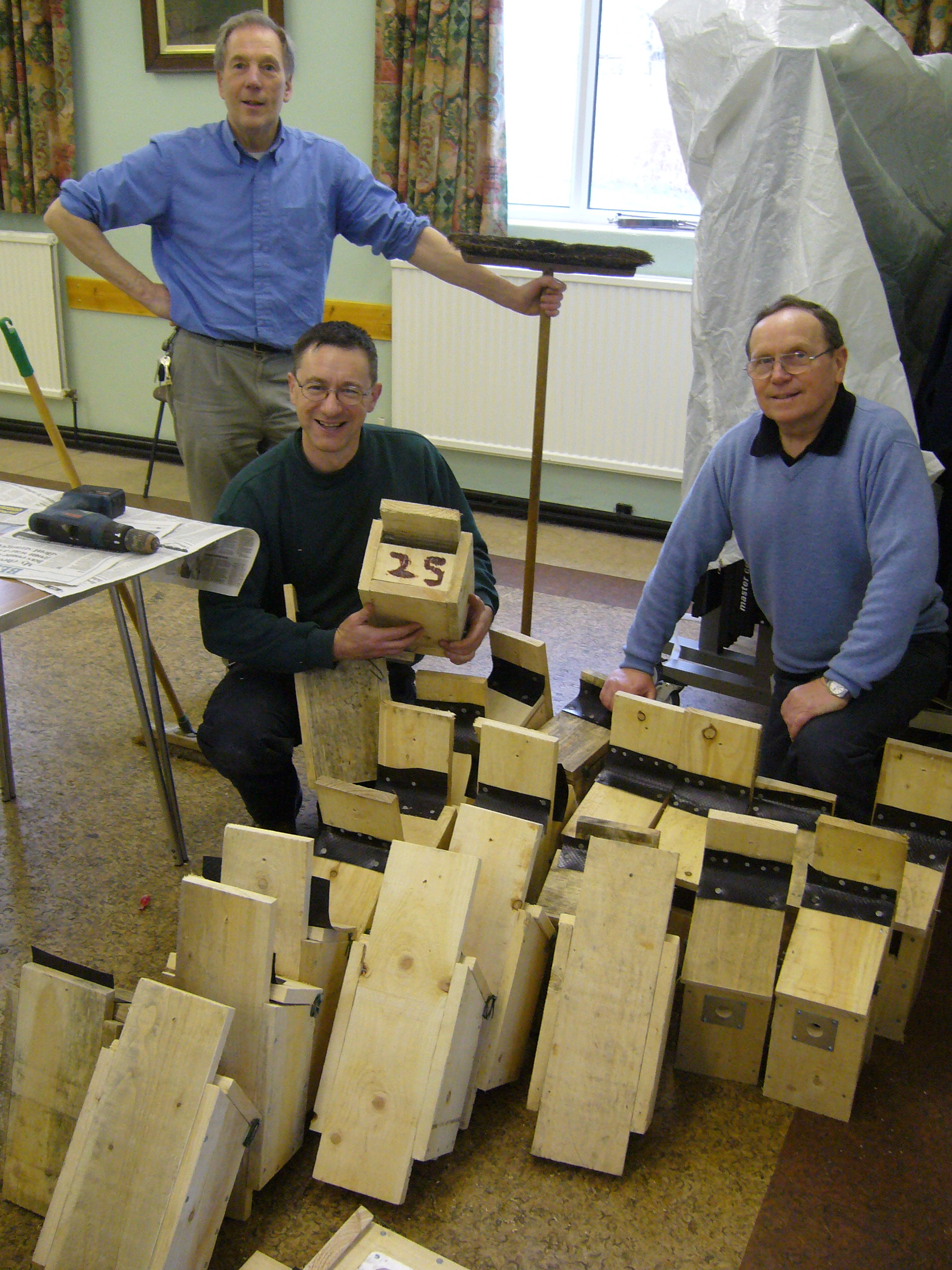
Making nest and bat boxes in January 2010.
Thank you to Beryl for inviting me to do the talk, and to Jocelyn who sorted out the IT – and to the ladies who made me so welcome.
And thank you to Diana for coming to the talk and taking the photos!
A beautiful morning. Three of us met up with Steve Joul in Old Leo’s carpark at 10 am to complete the survey of the nest boxes in Adel Wood – on the stretch of the Meanwood Valley Trail from the Slabbering Baby to the Seven Arches.
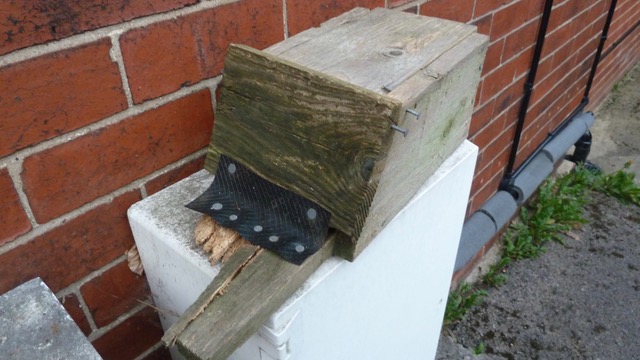
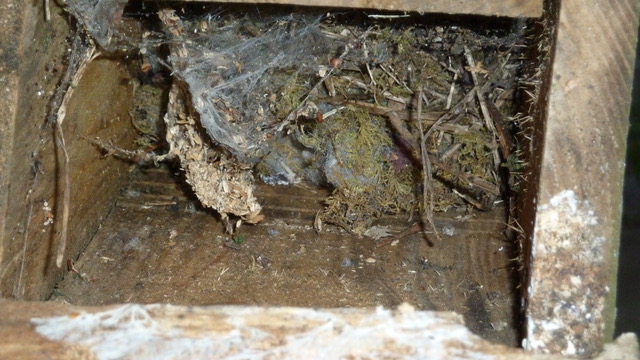
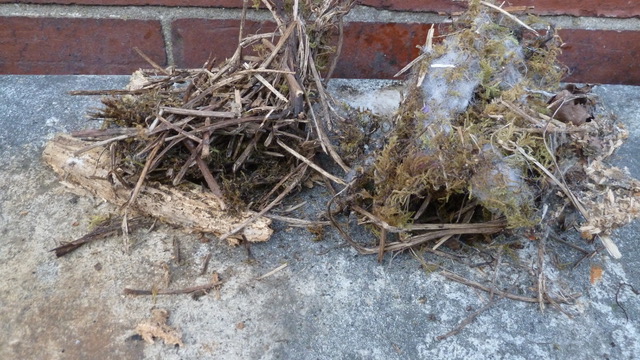
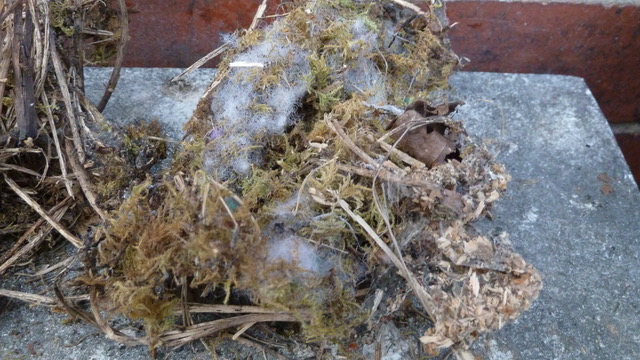
We set off down to the Slabbering Baby where our first nest box was number 38 by the bridge over Nanny Back. This seems to be a nest box favoured by nuthatches, and we weren’t disappointed this year. You can always tell in advance when a nest box has been used by nuthatches because they fill all possible gaps in the structure of the nest with mud. When you open the box, the nest is made of chips of bark, whereas the tit nests are made from a variety of materials – moss, manmade fibres, grass and hair. There are some pictures of a nuthatch nest below.
We then surveyed the fourteen nest boxes from the Slabbering Baby to the Seven Arches. On our way we were joined for 45 minutes or so by David – for which we were grateful!
Most of the nest boxes were used in the 2018 breeding season. There were a couple of particularly interesting observations.
Box 40, which is about halfway between the Slabbering Baby and the Seven Arches, had a long story to tell. It contained a lot of nesting materials and an unhatched tit egg, which indicates that it was successfully used for breeding. However, upon examining the contents of the nest material, Steve found a number of dead bumble bees which presumably used the box for nesting too. This hypothesis is supported by the presence of a large number of wax moth cocoons and larvae. The species of bumble bee was bombus hypnorum which migrated to the UK from Europe since the beginning of the 21st century. This species likes to nest in nest boxes.
Box number 48, the next nest box down from number 40, was used by nuthatches. Interestingly, nuthatches started to use this nest box in 2017 – we could tell by the mud plastered around the outside of the box – but were clearly driven off by tits because when we surveyed it (in January last year), the box contained a tit nest.
We finished the nest box survey at about 1.30 pm after a thoroughly enjoyable morning in Adel Woods.
Thank you Steve Joul! and thanks to all who helped in this gargantuan task.