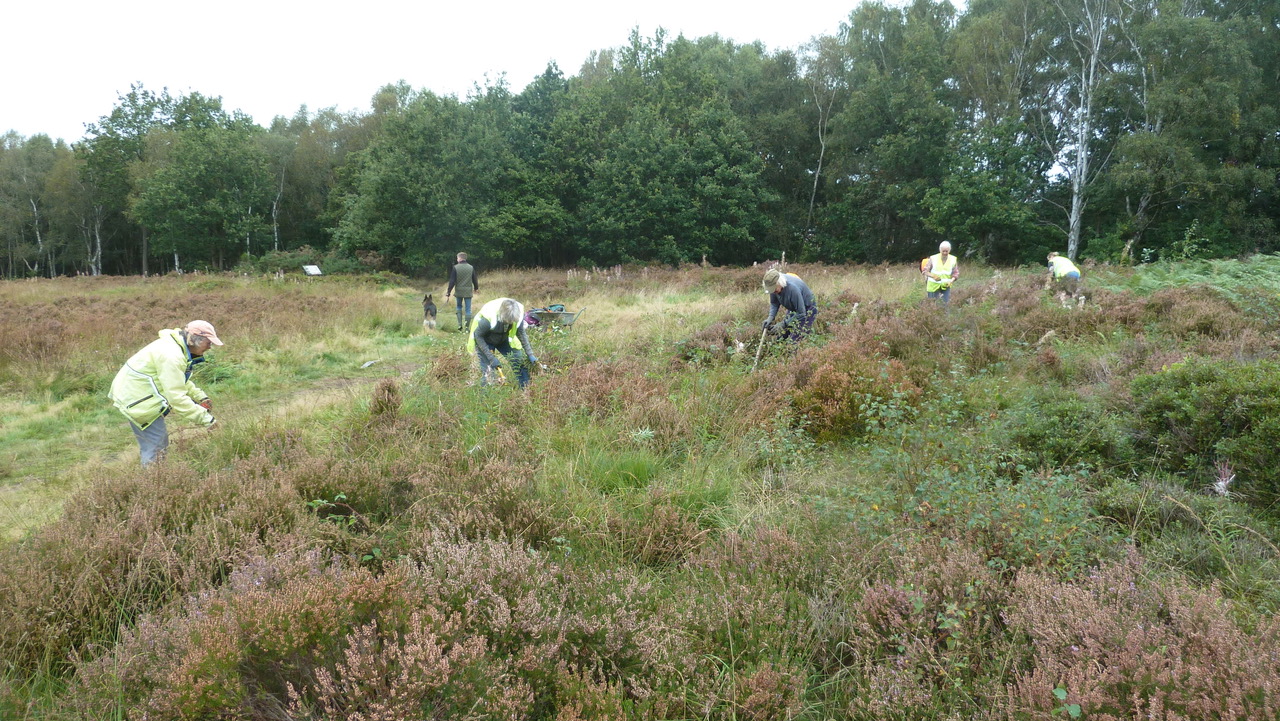
Over the last few years the Friends of Adel Woods have tried to spend at least three mornings over the Summer period clearing invasive species from Adel Moor – and we and the other groups who have worked with Leeds City Council rangers have made a great difference.
Due to Covid 19, this was our first outing on the moor this year and there was plenty to do.
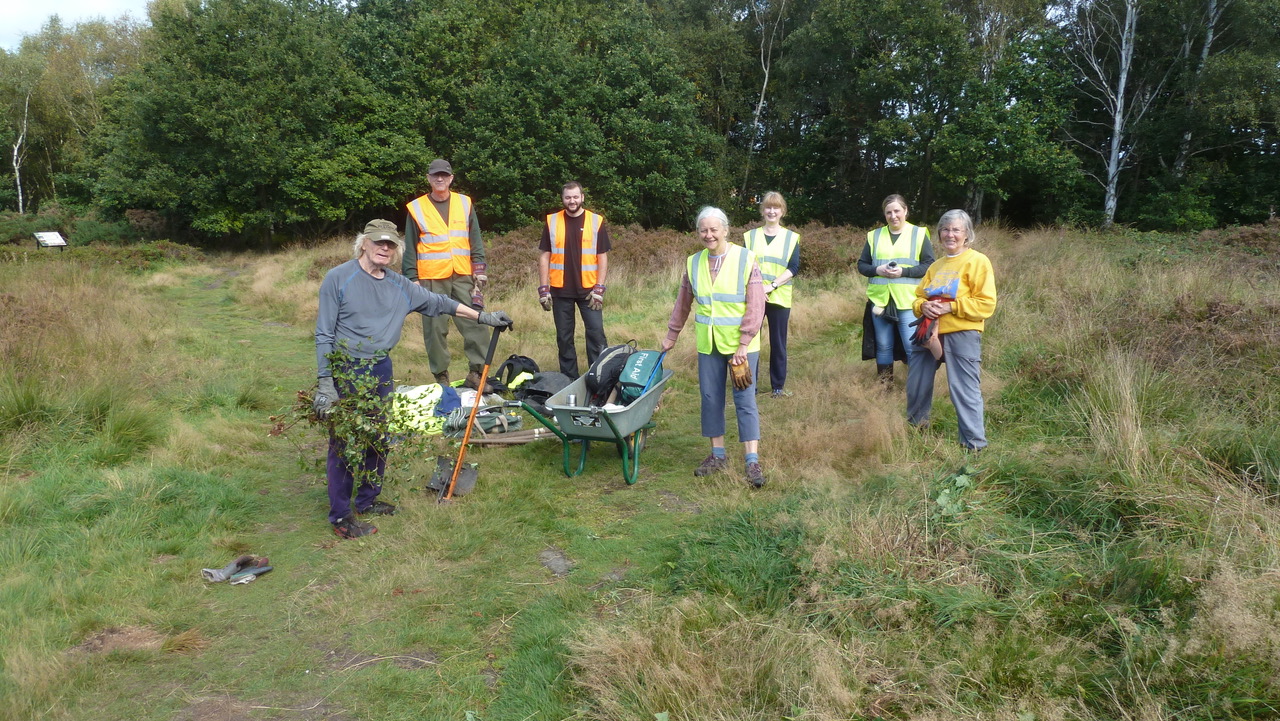
Fortunately, we had a good turn out, and it was a lovely morning.
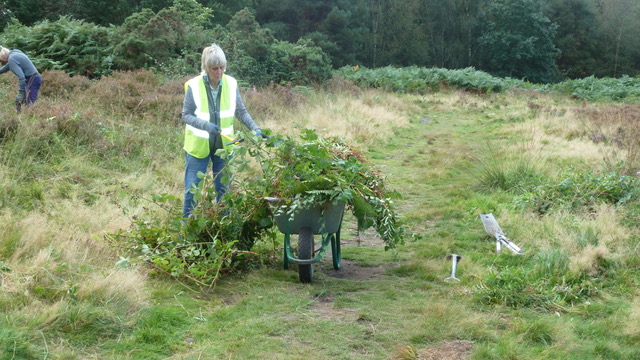
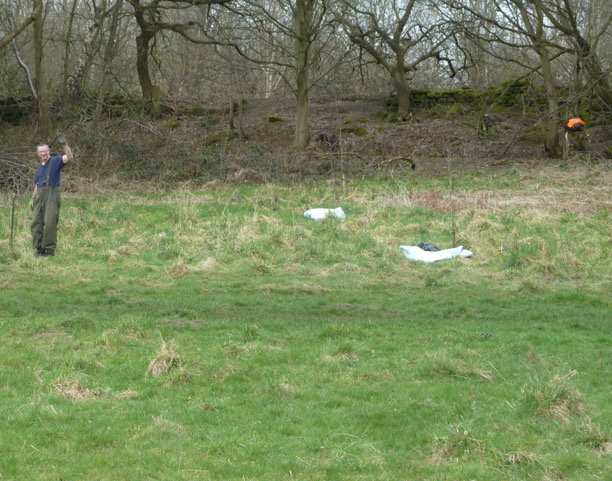
Our objective this morning was to help Steve Joul remove bracken, brambles and tree saplings – mainly silver birch and oak. The purpose is to retain this last piece of heathland in Leeds and to ensure that it remains suitable for our population of viviparous or common lizards. They are called “viviparous” because they give birth to live young rather than lay eggs. We occasionally see them on the moor but didn’t find any today, even though the sun came out later in the morning. You can find out more about these lizards at the Woodland Trust website here.
Steve brought along a “tree popper” a tool which your correspondent had never heard of before but which proved to be incredibly effective: you put the trunk of a sapling in the jaws of the tree popper, pull down a lever and the sapling comes out of the ground in one piece. Your correspondent took control of this device and removed about forty saplings in about forty minutes – a very considerable saving of time. The largest sapling was about four feet high with a trunk perhaps 4 cm thick and it could well have taken five to ten minutes to dig a similar sapling up using a spade and a mattock.
All in all, it was a very enjoyable and productive morning.
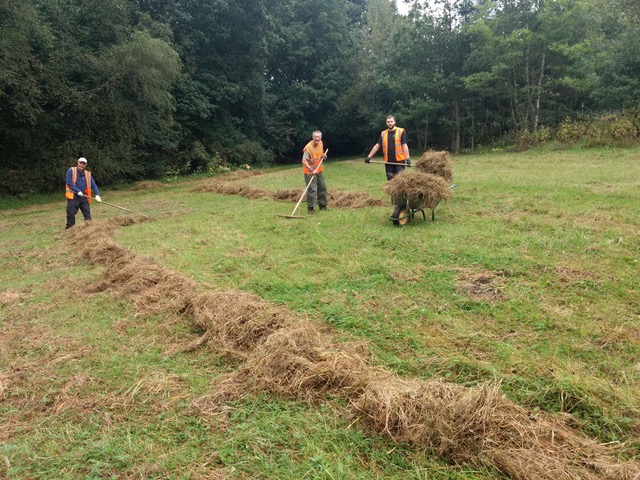
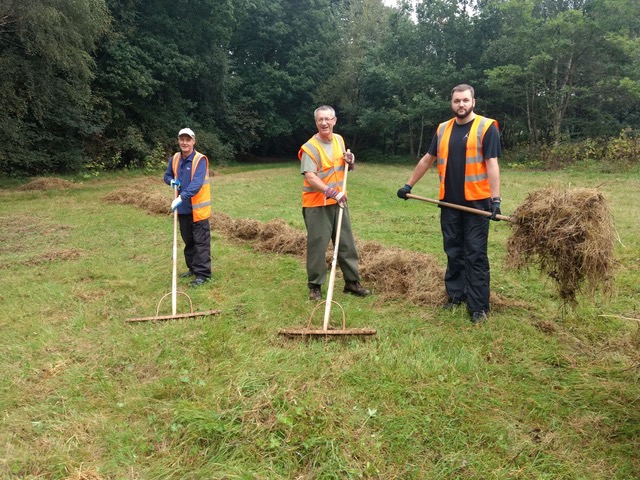
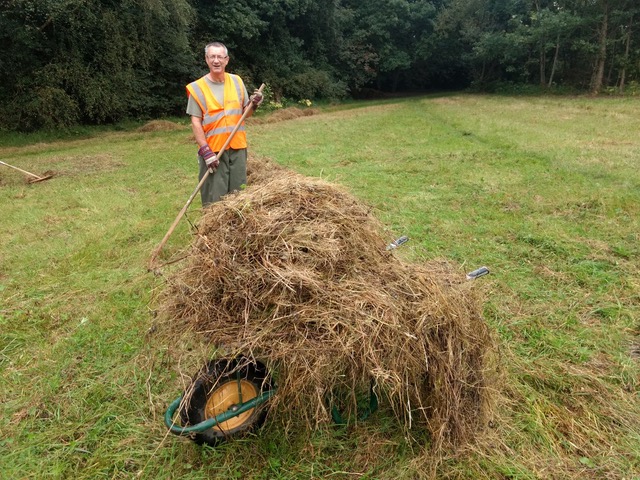
This morning, a small crack team, which you could call “the orchid squad”, completed the raking of the grass mowings from the orchid meadow. This was a job which FOAW began on Sunday 22nd August. Despite light drizzle in the early morning, it was a pleasant dry day.
Why mow and rake the orchid meadow?
By mowing and raking the meadow, we maintain a wide variety of wild flowers which are the fabric which supports much of our wildlife.
Whilst the orchid meadow is not mown for hay, we are following the traditional management cycle of hay meadows to promote the abundance of wildflowers, particularly the population of common spotted orchids.
The annual management of a hay meadow begins in March when the livestock is excluded from the meadow. Then, through the spring and early summer, various species of wildflowers will bloom in succession. The wildflowers all depend on the ability to set seed to create new generations of plants.
Hay is usually cut in July to September, depending on the type of wildflowers present and the weather. Changing the time of year, rather than cutting at the same time each year is beneficial for a hay meadow. So is leaving unmown strips along the edges of fields.
If hay is being made, the mowings are laid in rows to dry and then turned at least once a day to dry the crop. This also may shake out any wildflower seed which may remain in the flower heads. When the hay is dry, after three to five days, it is bailed and taken away for storage.
A few weeks after haymaking, livestock may be let onto the meadow for grazing and the cycle eventually begins again. Friends of Adel Woods don’t have any livestock unfortunately!
The lines in the heading are from Haymaking by John Clare – the full poem is printed below. We weren’t exactly haymaking but Steve Joul asked Friends of Adel Woods to help with raking off the mowings from the orchid meadow which he mowed earlier this week.
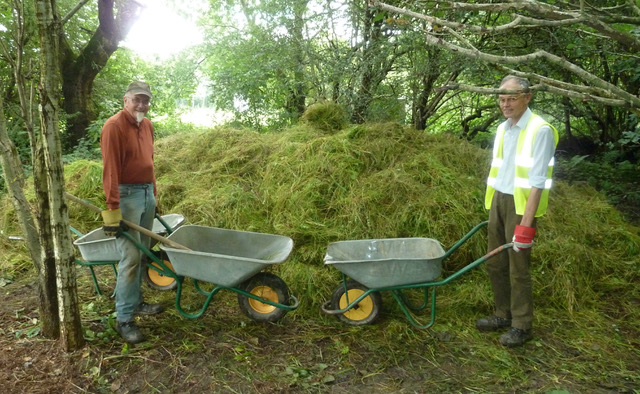
It was a beautiful morning and we had a great turnout of eleven volunteers, in addition to Steve himself. This was amazing bearing in mind that yesterday it rained all day, and for a period yesterday afternoon the rain was torrential, causing Nanny Beck to burst its banks and flood over the path down from the Slabbering Baby to Adel Beck.
21st August 2021: Nanny Beck in full torrent.
Two Friends litter picked in the woods and did a fantastic job, joining the rest of us at the meadow in the late morning.
Those of us working on the meadow raked the mowings into heaps , while others valiantly loaded the mowings into wheelbarrows and transported them to two large compost heaps amongst the bordering trees.
‘Tis daytime and the red-complexioned sun Was scarcely up ere blackbirds had begun Along the meadow hedges here and there To sing loud songs to the sweet-smelling air Where breath of flowers and grass and happy cow Fling o’er one’s senses streams of fragrance now While in some pleasant nook the swain and maid Lean o’er their rakes and loiter in the shade Or bend a minute o’er the bridge and throw Crumbs in their leisure to the fish below – Hark at that happy shout – and song between ‘Tis pleasure’s birthday in her meadow scene. What joy seems half so rich from pleasure won As the loud laugh of maidens in the sun?
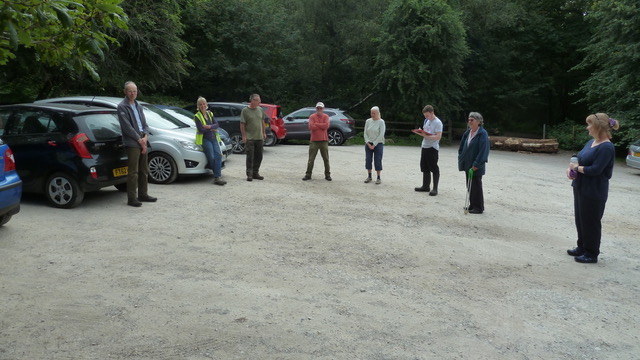
Friends of Adel Woods in Stairfoot Lane Carpark: glad to be back!
Our first Friends of Adel Woods event since 13th December, and the first after so-called Freedom Day (July 19th), when most of the covid 19 restrictions were removed.
Would anyone turn up? There was no need to worry: eleven of us came, full of enthusiasm, to help Steve Joul with a range of tasks in the woods. Even better, the forecast thunderstorms did not arrive, and it was a beautiful day.
Four of us set off to pick up litter – and picked up lots of broken glass around Adel Crag before dispersing to pick up litter around the picnic area and in the beech wood.
Repairing the steps from Stairfoot Lane carpark down to Adel Beck
The rest of us set off to the steps down from the carpark to Adel Beck to repair a couple of the steps and to clear mud from the rest of them. We last did this eighteen months ago in January 2020 (Oh, those innocent days before covid!) and in parts they were turning into a muddy bank – caused in part by the activity of some very energetic moles!
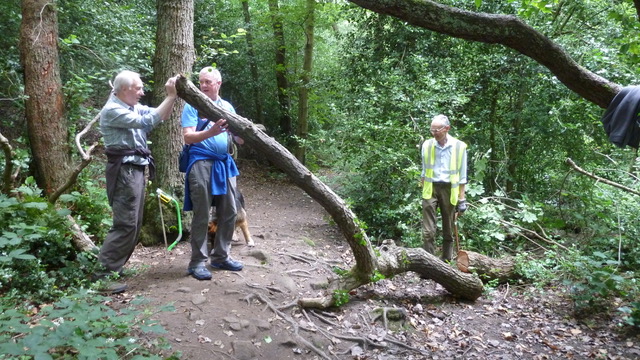
As we worked on the steps, the two Davids went to remove a tree which had fallen across the path along the side of the stream. Having sawn the trunk into three, they then got a passerby to move the trunk for them!
The path by the Adel Beck, Adel Woods
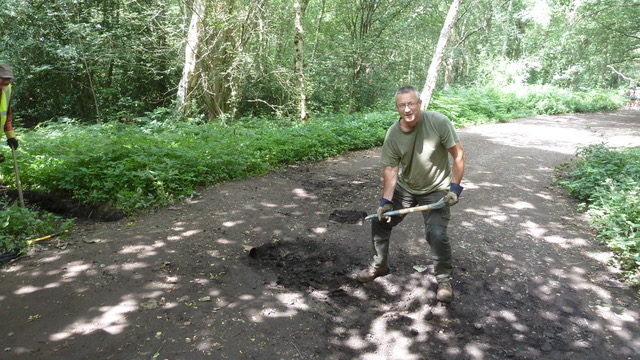
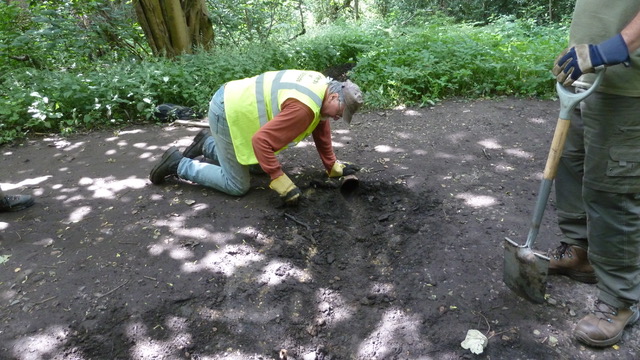
Having cleared the tree, the two Davids set about creating some drainage channels to stop the path turning into a quagmire whenever it rains.
Meanwhile, back at the steps, some of us were still removing mud and repairing the second step, while Steve and Roderic had moved to Crag Lane to clear a drainage pipe near the picnic area.
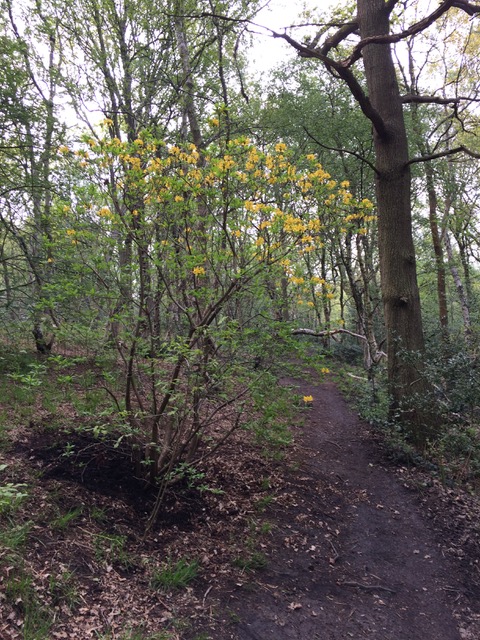
For the last couple of months, I have walked along Crag Lane to the carpark and down and back up the steps down to the stream, and in May, as I started down the steps or reached the top on the way back, up I would smell a beautiful fragrance. I did a quick recce, but was unable to find out where it was coming from.
Then, on 28th May, Steve Joul sent me a WhatsApp message about a yellow Azalea (rhododendron luteum) a short way along the path which goes to left, about five steps down from the top of the steps. It is a plant which Steve has been looking after since 1984.
I went and had a look, and there it was – complete with beautiful fragrance.
The azalea is not native to Adel Woods and it is believed that it was planted as a memorial tree.
As well as having an intoxicating fragrance, the azalea also has beautiful yellow flowers. They are no longer there now, but it is well worth making a note to pay a visit to this wonderful plant next May.
Azalea luteum, Adel Woods, 29 May 2021
Then earlier this month, as I walked along Crag Lane and reached Stairfoot Lane carpark, I noticed another wonderful scent. This time I recognised it as a lime tree and realised that there is a very large lime tree on the west side of the carpark.
If you have never smelt a lime tree, it is well worth making a note to do so. They are a common tree in the UK, and come into flower in June or July. By the way, although they are called lime trees, they have nothing to do with lime fruits.
When in flower, they are very easy to recognise – partly because of the fragrance, but also because they are covered in flowers as shown below.
Lime tree flowers, Stairfoot Lane carpark 18 July 2021
Each set of flowers is accompanied by a pale odd shaped leaf called a bract – you can see a couple in the photo above.
Again this is a tree which is well worth visiting when in flower – it is probably coming to an end by now (25th July).
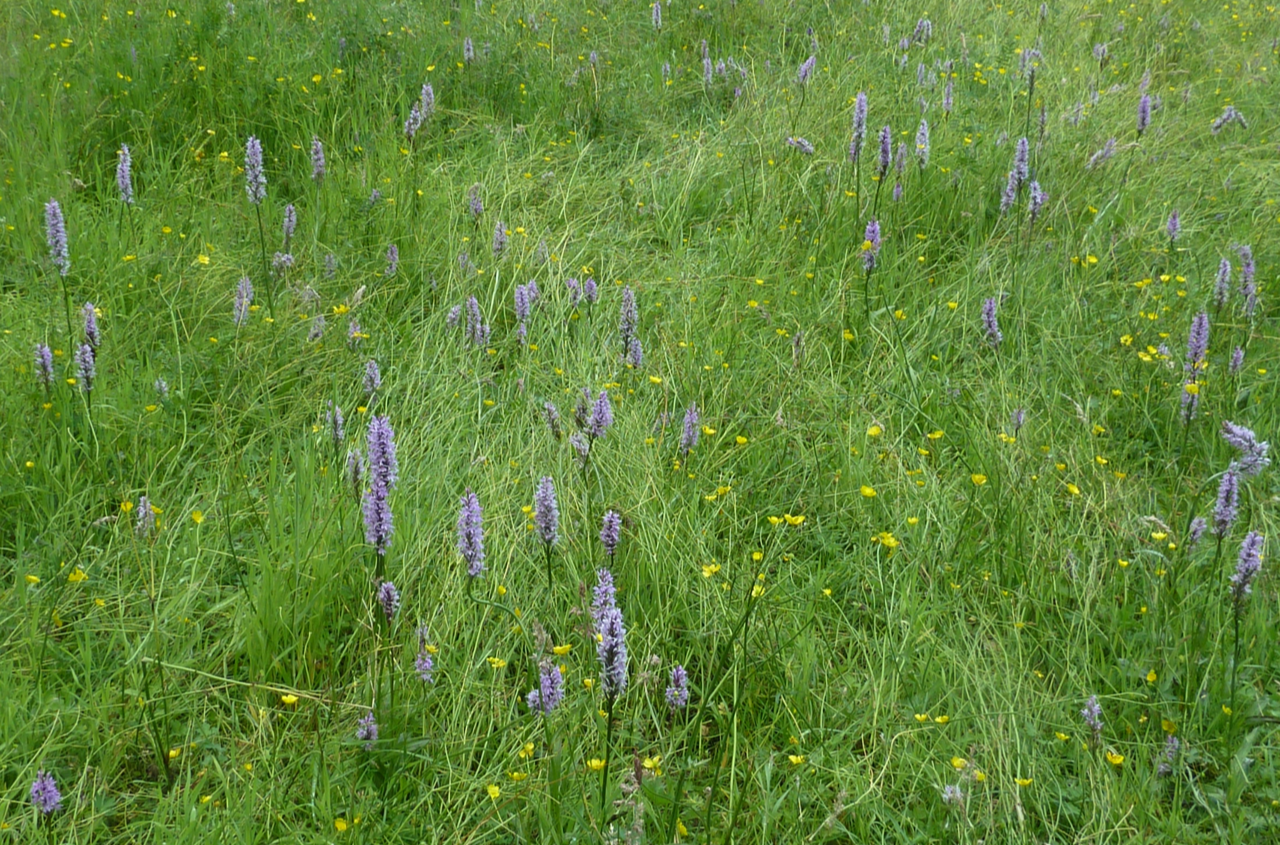
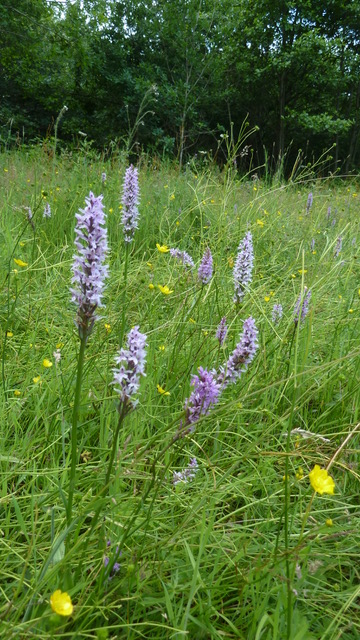
The orchid meadow is looking great again this Summer. It was “discovered” by Judith about eight years ago, when the meadow was in danger of disappearing under invasive trees, brambles and Himalayan Balsam. Since then Steve Joul has led Friends of Adel Woods and his own team of volunteers in looking after the meadow and the work has really paid off. For more information about the work have a look at this blog entry.
Common spotted orchid and buttercup in the orchid meadow, Adel Woods: 10th July 2021.
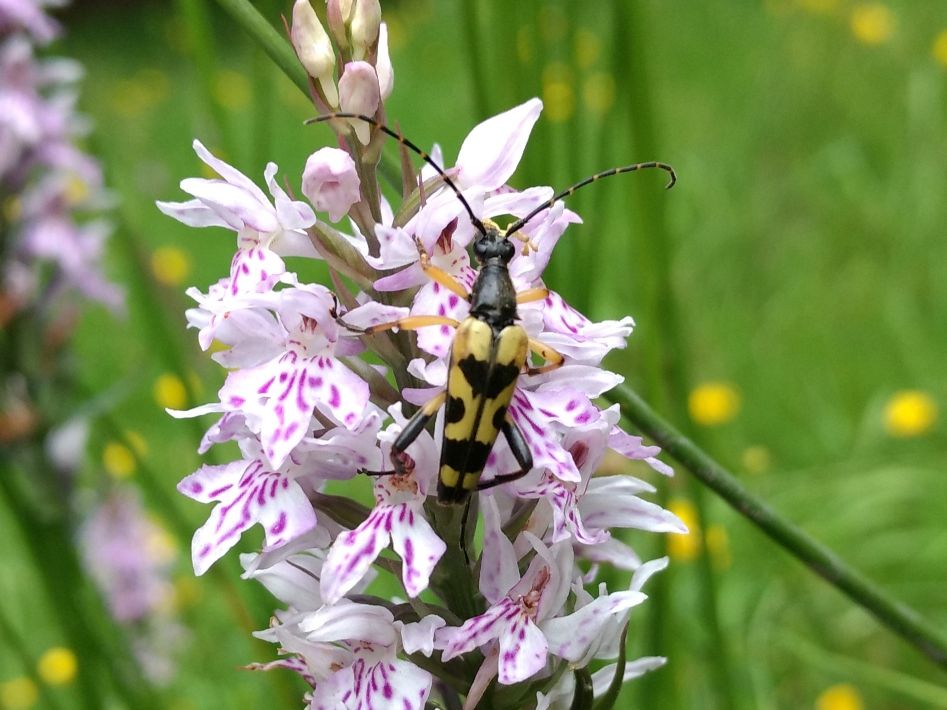
Coincidentally, Steve Joul went to have a look at the meadow the following day and took this magnificent photo of a black and yellow longhorn beetle (rutpela maculata).
Black and yellow longhorn beetle on common spotted orchid, the orchid meadow, Adel woods: 11th July 2021
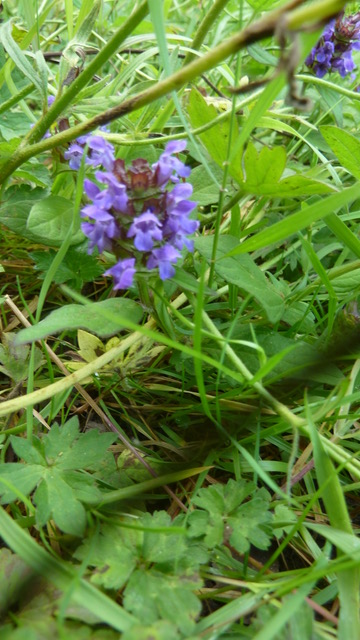
I cannot compete! here is a photo of a selfheal flower and a couple of photos the orchids which I took.
We held our Annual General Meeting this evening by Zoom. All the current committee members stood for re-election and were duly appointed.
Roger Gilbert was appointed chair, Judith White treasurer and Stephanie Clarke was appointed secretary. Rob Hall agreed to check the annual accounts.
The constitution provides for a committee of 10 members. Currently, we have six committee members, so we are keen for new volunteers to join the committee. If you are interested in joining the committee and having an input into the work done by Friends of Adel Woods please put yourself forward – you can do this by contacting Roger Gilbert by posting a comment on this website. The duties of the committee are not onerous. In a normal year we have about four meetings when we decide on our program of work, discuss and approve fund raising and expenditure, and deal with the matters which arise from time to time.
The Chair’s review of activities from May 2019 to May 2020
Our last AGM was on the 9th May 2019. We couldn’t have an AGM in person in May 2020 due to Covid 19 restrictions and it has been put off until today. So we have two years to review.
May 2019 to May 2020
From May 2019 to May 2020 we carried out the following:
eight litterpicking mornings
three mornings working on Adel Moor
two mornings working on Adel Bog
four mornings of path clearing including repairing the Stairfoot Lane steps
one morning clearing mud and debris from Adel Pond
one morning working in the hospice woodland
two days of nest box cleaning and surveying with S Joul
one day when David S and I replaced a missing nest box by the bridge below the pond – this particular location being a popular one for nuthatches to nest in.
In addition Steve Joul let a very successful Fungal Foray in October.
We also had a stall on the village green in August when Kibitz played.
In addition it is worth saying that 2019 was our tenth anniversary year and we celebrated this with a meal at the Olive Branch attended by 58 people, and the sale of a FOAW 2020 calendar which sold 50 copies.
The Friends of Adel Woods 2020 Calendar
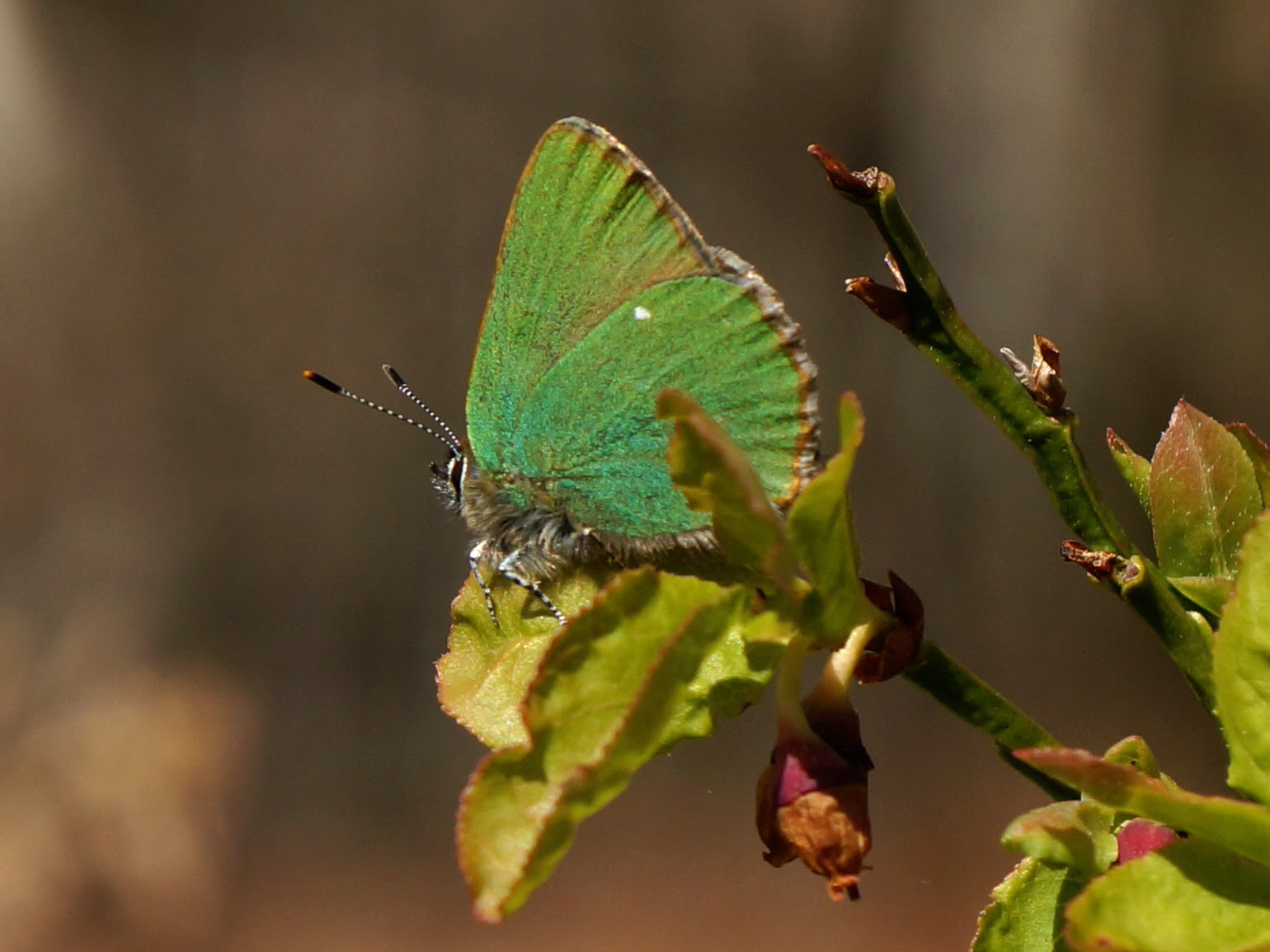
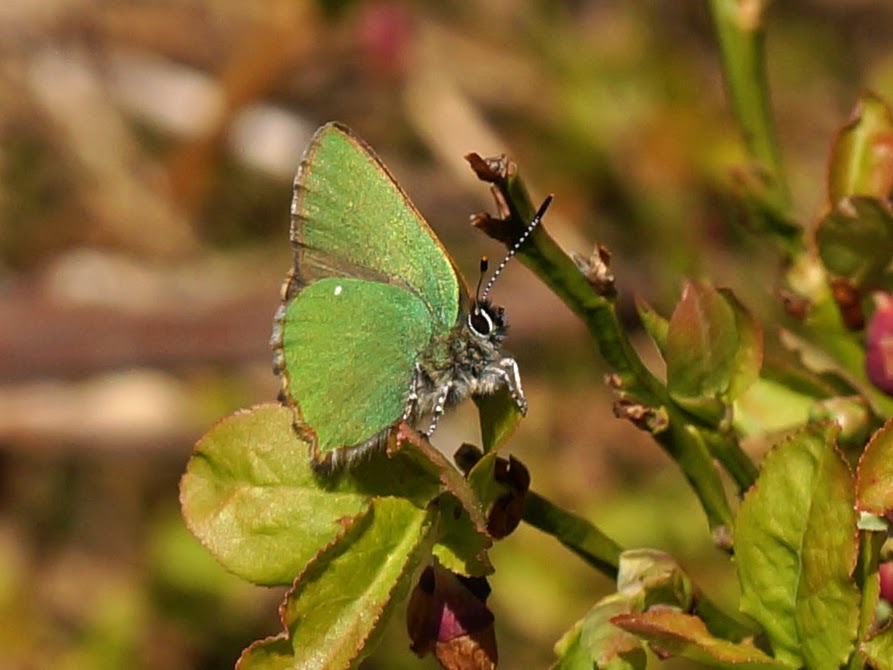
Our last event in this year was the path clearing in March 2020. However, we had a great discovery when Lisa and Andy Worrilow found a colony of green hairstreak butterflies on Adel Moor – hitherto the only colony in the Leeds area was on Otley Chevin.
May 2020 to May 2021
Our activities were severely curtailed from March 2020 due to the Covid 19 lockdown.
We were not able to have our AGM or our annual birdsong walk in May 2020. We did, however, manage to have some events from May 2020 to today.
In September we spent a day raking mowings from the Orchid Meadow after Steve and a volunteer, Jim, mowed it. We also had a morning in December when we extended the northern boundary of the meadow. I should say that the Orchid Meadow has been a great success after all the work which FOAW and Steve have done on it. See the pictures on the blog for June 2020.
In October we had a morning of dredging Adel Pond, working on the ditches draining into the pond, and Judith cleaned out the Slabbering Baby.
We also had a day in the Autumn path clearing, but I don’t seem to have put a blog entry or have any photos!
Other notable events are the installation of the new interpretation boards – Adel Moor, Alwoodley Crag, and Buckstone Road entrance and the planting of a new orchard in the practice rugby field.
The Interpretation boards: in June, David Preston helped some of us choose sites to place them. In September, we helped Steve Joul clear the sites and mark them. In March David and his colleagues installed them for us – and they look wonderful.
David Preston putting the finishing touches to one of the new interpretation panels in Adel Woods
Steve has planted ten fruit trees – eight apple and two conference pear trees – in what used to be the practice rugby ground to the north west of Old Leo’s clubhouse..
Oh, and I should say that the Green Hairstreaks were seen on Adel Moor in April, but we are concerned that they may not have been able to breed before the rather wet weather we have had in the last month.
Apart from that, I have put some entries in the blog about ring necked parakeets in Leeds and murmurations of starlings, badgers and yellow hammers
One thing is clear is that Adel Woods has been a very popular recreational spot during the lockdowns – as evidenced by the large number of extra paths that have appeared for the first time in the last year.
Green Hairstreak on Adel Moor on 24th April 2021: photo taken by David Cockburn
Last April, we were very excited when local nature enthusiasts, Lisa and Andy, found a colony of Green Hairstreak butterflies on Adel Moor – the first sighting in the Leeds area other than on Otley Chevin.
Well, they were back this year and the counts were: 22nd April – 1 seen; 24th April – 2 seen; 25th April – 4 seen.
Unfortunately, the weather has not been kind since the end of April. Let’s hope that they were able to breed and they will be back next year.
If you would like to find out more about Green Hairstreaks and see the photographs from last year, have a look at our blog entry for the 25th April 2020.
Green Hairstreak on Adel Moor on 24th April 2021: photo taken by David Cockburn
Steve Joul spent today planting ten sapling fruit trees in the disused rugby field to the north of Crag Lane. If you can’t see them very clearly in the photograph, it is because they are only about a metre and a half in height and they are planted well apart so that they have space to develop fully.
The location of the new “orchard”.
The fruit trees are as follows:
two Cox’s Orange Pippin apple trees
four James Grieve apple trees
one Belle Boskoop apple tree
one Egremont Russet apple tree
two Conference pear trees.
They are grafted onto M25 root stock which means that they needed to be planted eight metres apart as, with tender loving care, they have the potential to grow into magnificent trees. The tender loving care will involve ensuring that they get adequate water during the Summer until their root systems have recovered from being uprooted and replanted.
The planting of the trees is part of Leeds City Council’s Woodland Creation Scheme. In 2019 the Council declared a climate emergency and set a target to become carbon neutral by 2030, part of which is to be achieved by the planting of trees.
The Council is also a member of the White Rose Forest, a community forest for North and West Yorkshire. The White Forest strategy for Leeds has set a target of increasing tree cover from 17% to 33% by 2050 and is intended to ensure that no household in Leeds is further than 500 metres from wooded spaces.
These ambitious plans involve planting 5.8 million trees on Leeds City Council land by 2045. Each year from 2020 to 2045, fifty hectares of parks and green spaces will be identified and planted up with 4,500 saplings per hectare, a planting target of 225,000 trees each year, to create an additional 1,250 hectares of new woodland per year throughout the city on Council owned land.
The benefits of planting trees are many:
they remove carbon dioxide from the atmosphere and provide oxygen – crucial in reducing the effects of greenhouse gas emissions
they act as air filters, capturing harmful pollutants by trapping them on their leaves and bark
trees and woodlands are important habitats for wildlife
mature trees provide shade and reduce urban temperatures
trees prevent flooding by keeping soil in place and soaking up water
Woodlands provide a place to connect with nature, helping people to relax and unwind, which benefits both mental and physical health
The planting of fruit trees in Adel Woods was at the request of one of our local councillors. Here is a little more information about each of the tree species – obtained from https://www.orangepippintrees.co.uk (save for Belle de Boskoop) :
Cox’s Orange Pippins
Considered by many to be the finest of all apples, primarily a variety for eating fresh, but also excellent for juice, cider and baking.
James Grieve
Raised in Scotland at the end of the 19th century, this is a mid-season variety which is picked in early-mid September. It is a very juicy apple grown for eating and cooking. It is an excellent pollinator for many other apple varieties.
Belle de Boskoop (information from Wikipedia)
This is an apple cultivar which originated in Boskoop, Netherlands, where it began as a chance seedling in 1856. It is firm, tart and fragrant and can contain more than four times the vitamin C of Granny Smiths or Golden Delicious.
Egremont Russet
A classic English russet apple from the Victorian era, popular with discerning apple lovers who appreciate its unique flavour and appearance. It works well in savoury salads and is good for juicing.
Conference Pear
The most widely-grown pear variety in the UK. It crops heavily and reliably and has an excellent flavour.
If your mouth is now watering, have a look at the orange pippin trees website.
Installing the interpretation panel by the side of the path down to the Slabbering Baby
As part of the Wilderness on Your Doorstep project in the Meanwood Valley, funded by the Heritage Lottery Fund, Adel Woods was allocated three interpretation panels to be sited by the path into the woods from Buckstone Road, on Adel Moor and on Crag Lane near Adel Crag.
After a long delay due to covid 19, they have at last been installed by David Preston and Louise and Emma of the Parks and Countryside ranger team.
On Tuesday, 2nd March, they installed the panel on the path from Buckstone Road(see pictures above) and the panel on Adel Moor (see pictures below).
Installing the interpretation panel on Adel Moor.
They installed the final panel on Crag Lane on Wednesday 3rd March.
The interpretation panel on Crag Lane, near Adel Crag.
They look great! So thank you to everyone involved in applying for the grant from the Heritage Lottery Fund, to Dan Malster who organised the design of the panels, to Steve Joul who assisted in clearing the locations for them, and to David, Louise and Emma who installed them – and of course to everyone else who played a part in the long journey from imagining their existence to their installation.
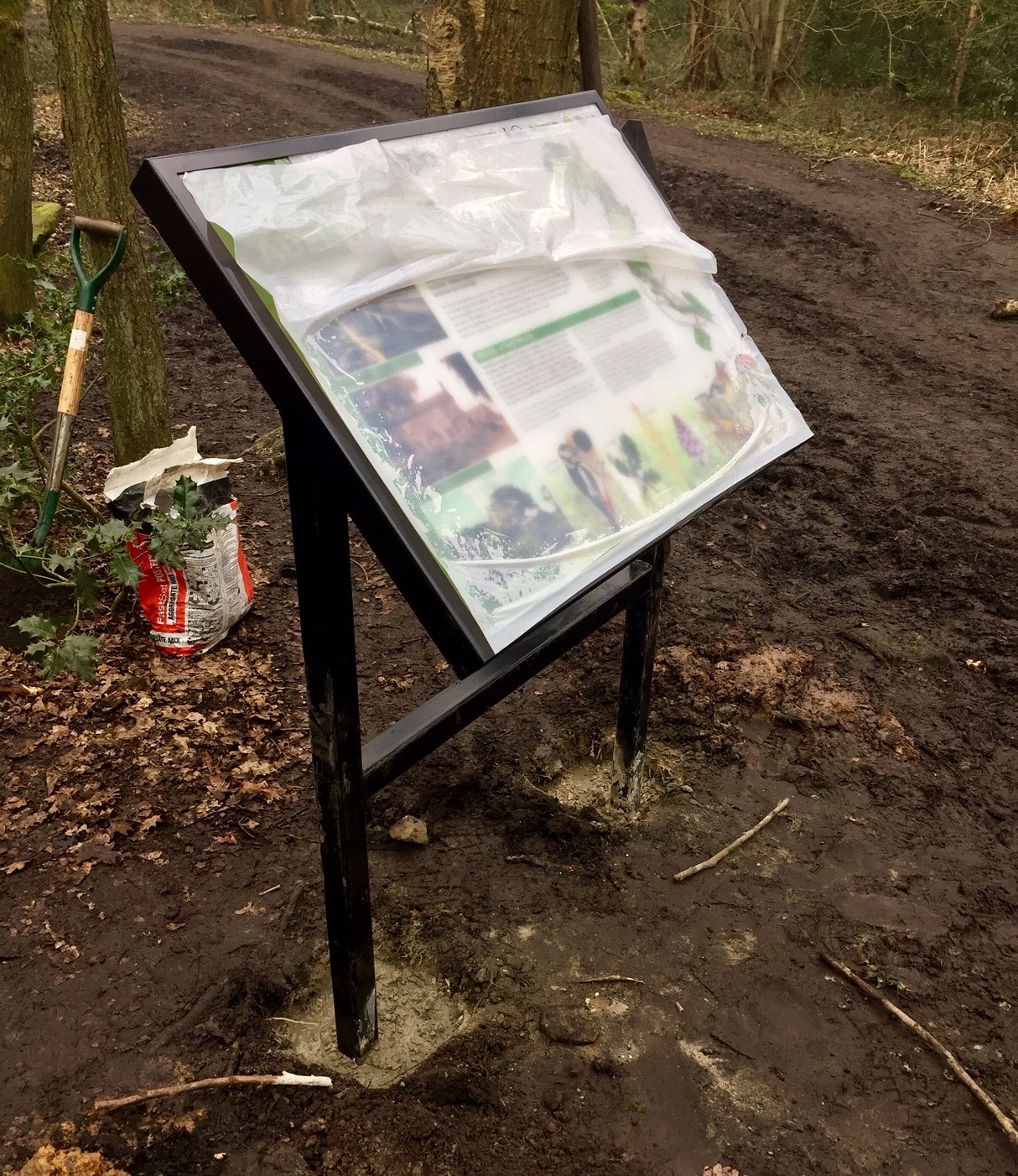
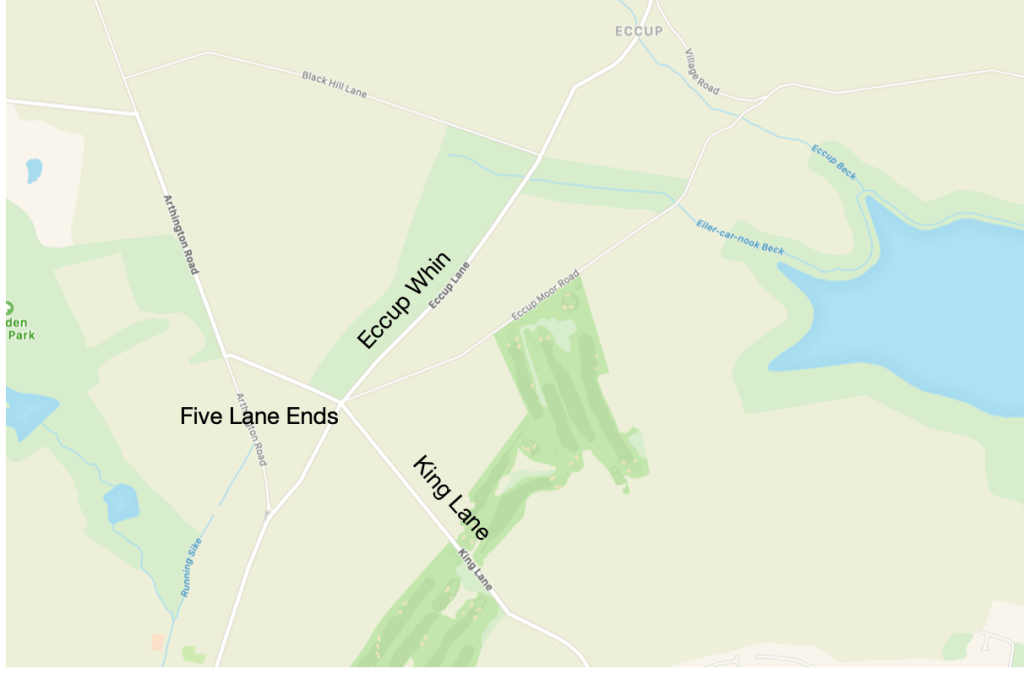
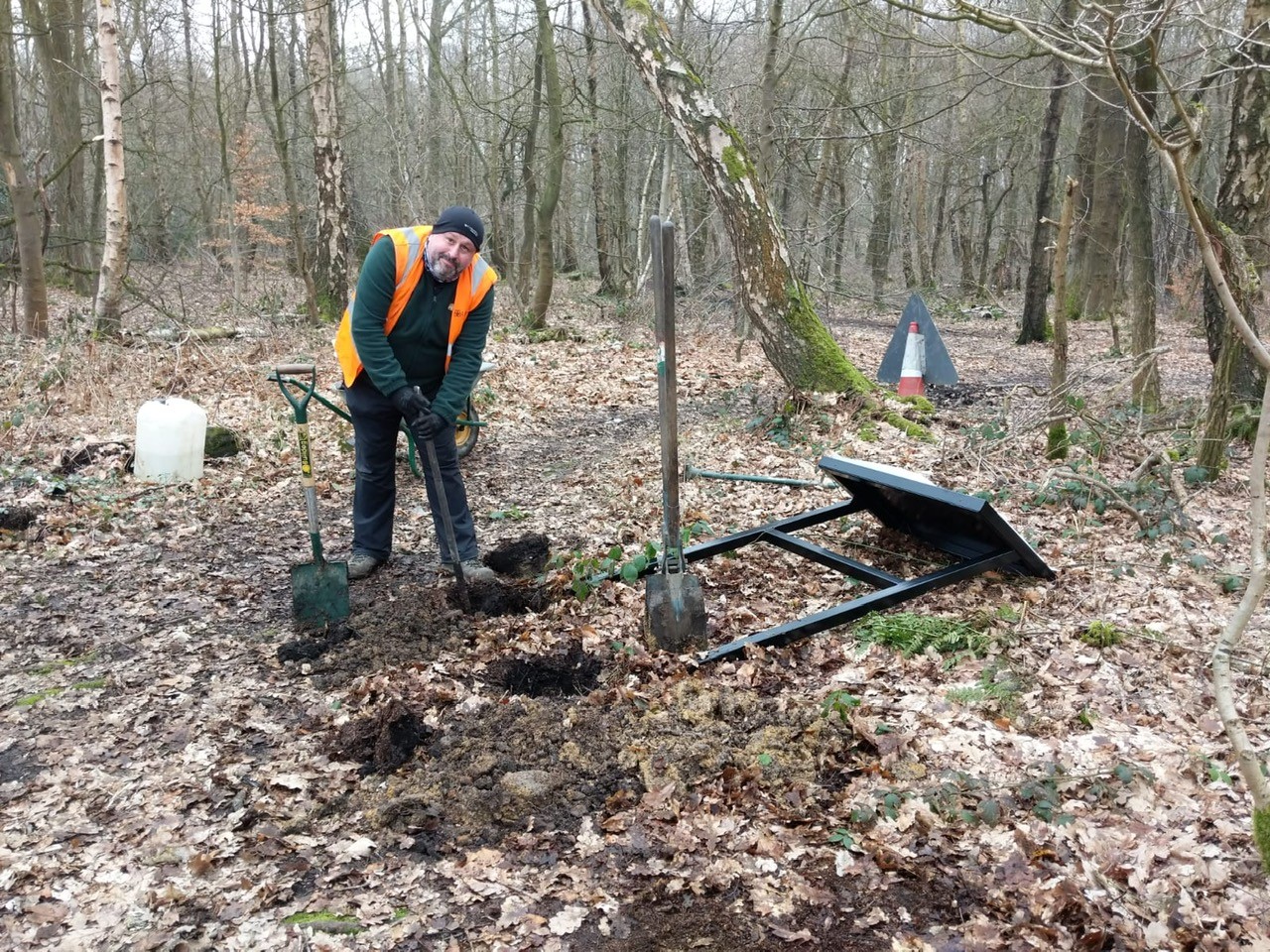
I should say that the lottery funding also covered the cost of installing an interpretation board at Adel Whin on Eccup Lane. Adel Whin isn’t part of the area looked after by FOAW but here is a picture of David installing the panel.




















 Friends of Adel Woods